

OHM Founder Sathi Roy brings global AI and Consciousness tour to New Delhi following Bangkok launch with The AI Collective

New Delhi : India has one of the largest populations of AI users and builders in the world. As the technology becomes woven into everyday life, the questions surrounding it are beginning to shift. Less about what AI can do. More about what it is doing to us.
In February, New Delhi hosted the India AI Impact Summit, the first of the global AI summits to be held in the Global South. Months later, the conversation has moved well beyond policy rooms and into boardrooms, startup communities and everyday life, where founders, investors and leaders are increasingly asking what rapid advances in artificial intelligence mean for human agency, identity and consciousness.
Against this backdrop, Our Highest Mantra (OHM) brought its global AI and Consciousness speaking tour to New Delhi. Following its opening event in Bangkok, presented in partnership with The AI Collective, OHM convened a private gathering of founders, investors, technologists, creators and operators to explore one of the defining questions of the AI era: how humanity evolves alongside increasingly intelligent machines.
The private gathering featured OHM Founder and CEO Sathi Roy alongside James Pimentel-Pinto, award-winning technologist, UK Regional Director of The AI Collective, Apple’s first iPhone developer in Europe, and Chief Product Officer of OHM. Together, they led a discussion exploring how increasingly intelligent technologies are reshaping not only the way we work, but the way we think, relate, make decisions and experience being human.
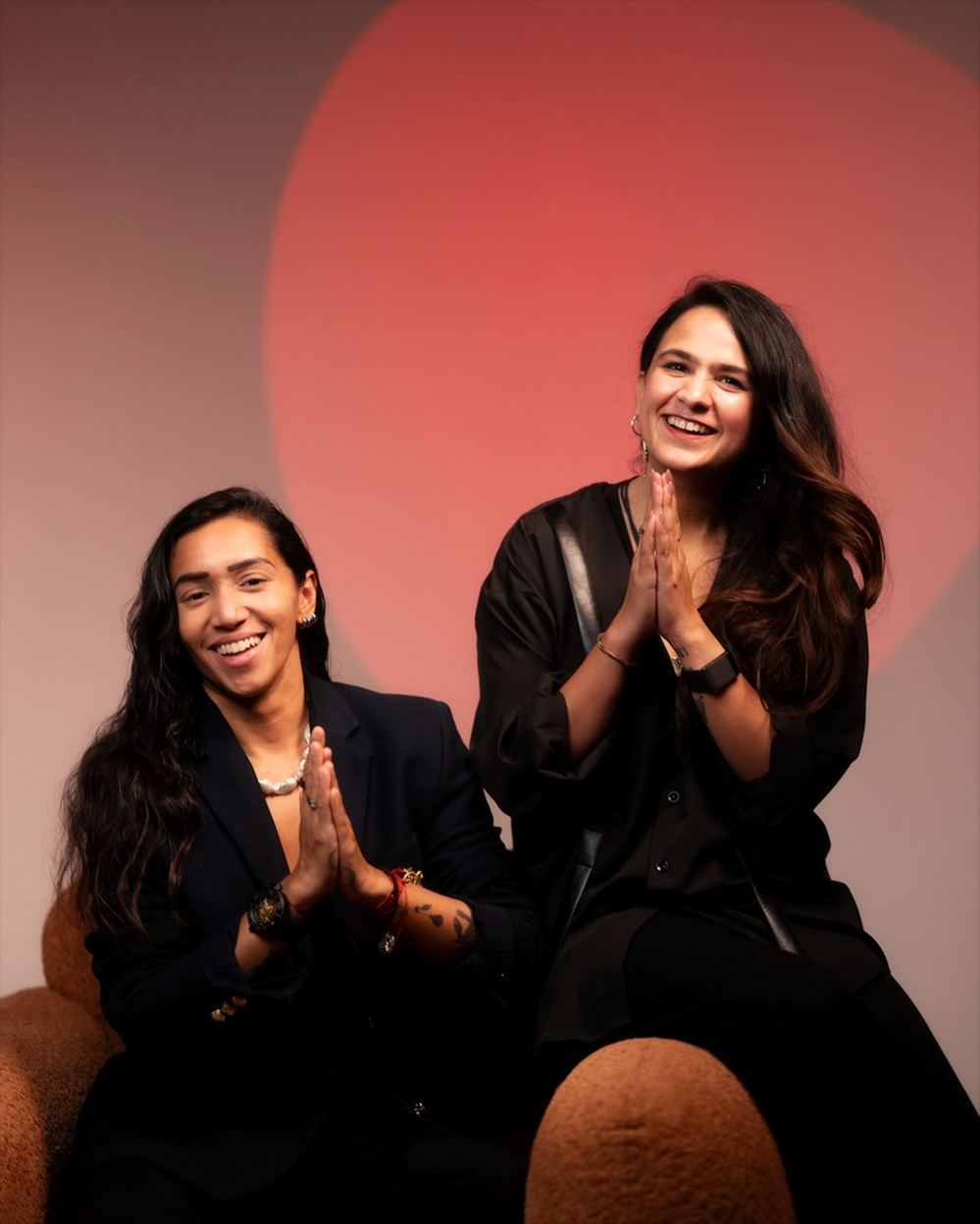
Having followed Roy’s work on AI, consciousness and modern spirituality, conscious entrepreneur Nathasha Kumar, Founder and Managing Partner of Maloka and Founder of NeoYug, invited her to continue the conversation through a filmed discussion for her platform exploring AI, consciousness and spirituality with founders, investors and modern India.
Roy comes to the subject from inside high-growth business rather than from outside it. She spent more than a decade scaling companies, including one that moved from 30 million dollars to 7 billion dollars in valuation, worked within the family office of a billionaire real estate principal, led teams across the United States and Asia, and has mentored over 1,000 people. She built OHM after watching what that pace does to the people sustaining it.
“It was a slow accumulation of evidence,” Roy says. “I watched people achieve the outcomes they were trained to pursue. But instead of arriving at steadiness, they were scattered and dysregulated.”
Roy is currently leading OHM’s global AI and Consciousness speaking tour alongside James Pimentel-Pinto in partnership with The AI Collective, bringing conversations on artificial intelligence, consciousness and human agency to founders, investors and technology leaders across major cities worldwide. She believes AI and consciousness is one of the defining questions of the decade, as societies work out what increasingly capable technology means for human identity, agency and experience.
In New Delhi, she pushed back on a common assumption: that intelligence and consciousness are the same thing. AI may turn out to be one of the most powerful tools we have ever built, she said, but it is not the same as being alive.
“Artificial intelligence is becoming part of the operating system of modern life. It can organize information, speed up work, identify patterns and help us solve problems at a scale previously unimaginable,” said Roy. “But intelligence is not the same as consciousness. Consciousness is lived experience: memory, emotion, intuition, meaning, relationships and the ability to be transformed by life itself.”
The more urgent question, she argued, is not whether AI will replace people. It is what kind of people we become as we live with it.
“The deeper risk is not that machines become more capable,” Roy said. “It is that we begin surrendering our own agency without realizing it. We can outsource calculations and repetitive tasks, but we must be careful not to outsource curiosity, discernment and the discomfort of not knowing. Some of humanity’s greatest growth emerges from uncertainty, reflection and direct experience.”
AI, in her reading, does not create that condition. It magnifies it.
“Technology amplifies whatever internal state it touches,” she says. If founders are scattered, the tools accelerate the scatter. If they are steady, the same tools extend their clarity. Which is why, she told the room, the next real advantage will not be speed. It will be internal stability.
She also expects the language around this to change as it goes mainstream.
“What will enter the mainstream will not look like spirituality,” Roy says. “It will look like emotional literacy, nervous system regulation and cognitive resilience. The future will call it good design.”
India, she said, sits in an unusual place in this. It has the demographic weight, the engineering talent and the pace. It also has a tradition that has been asking what consciousness actually is for several thousand years, and Roy reads that tradition as a set of internal technologies for regulation and inquiry rather than as belief or heritage.
“India carries a deep inheritance of universal spiritual wisdom,” she says. “Sharing that intelligently may be its most meaningful global contribution.”
Nathasha Kumar, Founder and Managing Partner of Maloka, said: “We need more humans like Sathi. An insider to the AI revolution, moving from dharma, not just bluntly building and optimizing. Consciousness and awareness are the core seeding of these actions, not just an afterthought or a good-to-have.”
The evening was one of a series of conversations Roy is having with founders, investors and researchers around the world about the responsibilities that come with building the next chapter of technology.
