


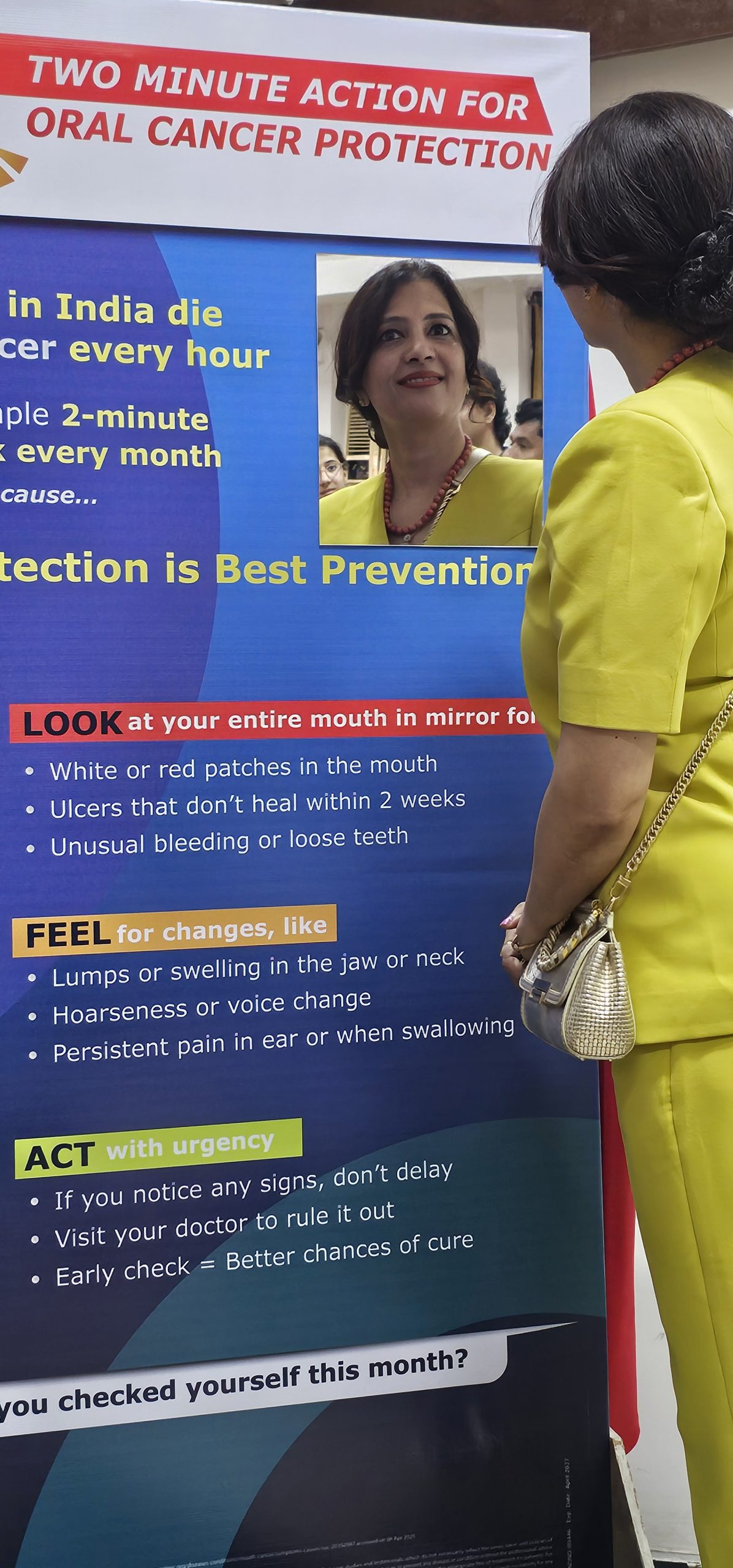
Mumbai: With head and neck cancers rising across India and oral cancers accounting for approximately 62% of cases, strengthening awareness and encouraging regular self-examination are critical for early detection. Reinforcing the importance of timely detection, renowned oncologist Dr. Sewanti Limaye, Director of Medical & Precision Oncology, Sir H. N. Reliance Foundation Hospital, is urging Mumbaikars to adopt a simple yet effective habit- taking just two minutes to feel, look, and act against oral cancer.
As part of the ongoing Head & Neck Cancer Awareness Month, the “Two-Minute Action for Oral Cancer Protection” campaign initiated by Merck Specialities Private Limited, under the hashtag #ActAgainstOralCancer, has gained significant momentum in Mumbai, encouraging individuals to prioritise early self-checks and proactive health action.
Head and neck cancer is a broad term that encompasses epithelial malignancies that arise in the paranasal sinuses, nasal cavity, oral cavity, pharynx, and larynx. Almost all of these epithelial malignancies are squamous cell carcinoma of the head and neck (SCCHN), for which the most important risk factors are tobacco and alcohol consumption. However, increasing evidence has also documented human papillomavirus (HPV) as a cause of specific subsets of SCCHN.
“Head and neck cancers, including oral cancers, present with early signs such as persistent mouth ulcers, non-healing wounds, difficulty in swallowing, voice changes, or neck swelling, while advanced stages may lead to severe pain, weight loss, bleeding, and difficulty in eating or speaking. In India, nearly 80% of head and neck cancers are linked to tobacco use, and other causes can be areca nut (supari) chewing, alcohol, and infections like HPV.
Around 30% of all cancer cases diagnosed in many tertiary care settings are head and neck cancers, and of these, nearly 62% are oral cancers alone. Most patients, nearly 65-70%, are above 50 years of age, while about 25% are below 50 years, indicating a gradual shift towards younger populations as well. Despite being largely preventable, around 60% of patients reach the hospital at stage III or IV, where treatment becomes more complex. Cancer recurrence is seen in nearly 10–15% of patients, even after successful treatment, highlighting the importance of regular follow-up and continuous monitoring for early detection of relapse,” said Dr.Sewanti Limaye, Director of Medical & Precision Oncology, Sir H. N. Reliance Foundation Hospital.
Dr. Sewanti Limaye further added, “Oral cancer is seen more in men than women, with around 75% of cases in men and 25% in women. In India, oral cancer cases among non-tobacco users and non-smokers are rising, with studies and expert reports indicating a ~20% increase, and nearly 30–40% of new cases now occurring in individuals without tobacco exposure, largely driven by poor oral hygiene, HPV infection, and genetic factors. Head and neck cancer incidence has continued to rise over the last decade, largely driven by persistent tobacco chewing and smoking, which remain the dominant risk factors for oral cavity cancers. At the same time, there is a shift toward younger age groups (30–50 years) and a growing contribution from non-tobacco factors such as HPV infection and poor oral hygiene, particularly in oropharyngeal cancers. If not diagnosed or treated on time, these cancers can spread to other organs, reducing survival and quality of life. Diagnosis is confirmed through clinical examination, imaging like CT/MRI, Oral Visual Inspectio
n (OVI), and biopsy. Treatment options include surgery, radiation therapy, chemotherapy, and increasingly, immunotherapy in selected cases. Early screening, tobacco cessation, quitting alcohol, and awareness of warning signs remain the most effective preventive strategies.”
Dr. Sewanti Limaye said that this campaign is an eye-opener, and everyone should adopt a simple 2-minute monthly self-check, as early detection remains the best form of prevention. She urged, “ Look carefully inside the mouth for white or red patches, ulcers that do not heal within two weeks, or any unusual bleeding or loose teeth. Feel for any lumps or swelling in the jaw or neck, hoarseness or voice changes, and persistent pain in the ear or while swallowing. If any of these signs are noticed, act immediately without delay and consult a doctor for timely treatment and improved outcomes.
