


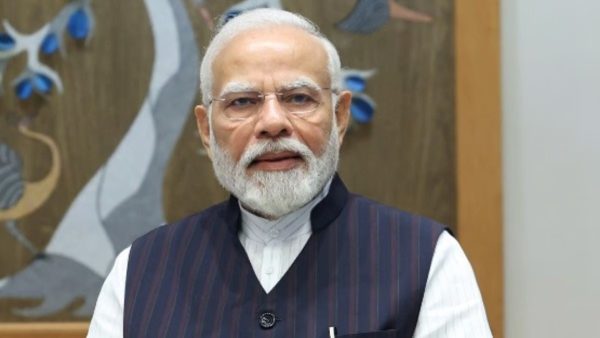
Prime Minister Narendra Modi will reach Gothenburg today on a two-day visit to Sweden, marking a historic milestone in the deepening alliance between New Delhi and Stockholm. Mr Modi will hold bilateral talks with his Swedish counterpart Ulf Kristersson to review the entire gamut of bilateral relations and explore new avenues of cooperation to enhance bilateral trade as well as collaboration in green transition, AI, emerging technologies, startups, resilient supply chains, defence, space, climate action and people-to-people ties.
The two Prime Ministers will also address the European Round Table for Industry, a leading pan-European business leaders forum, along with President of the European Commission Ursula von der Leyen. This engagement represents the third leg of the Prime Minister’s broader European tour and his first visit to the continent since the landmark India-European Union Free Trade Agreement (FTA) took effect in January 2026. This journey is designed to review bilateral relations and explore cooperation in an era of rapid technological shifts and complex geopolitical challenges.
The visit follows a high-growth trajectory in economic engagement, with bilateral trade reaching a record 7.75 billion US Dollars in 2025 and Swedish FDI into India totalling 2.825 billion dollars between 2000 and 2025. This foundation was laid during the Prime Minister’s 2018 visit, which led to the Joint Innovation Partnership for a Sustainable Future. Akashvani correspondent reports that Sweden, one of the world’s most innovative economies, finds a natural synergy with India’s digital talent pool. Currently, over 280 Swedish companies operate in India, while 75 Indian firms have established themselves in Sweden.
A unique highlight of the visit is the joint address by the Prime Ministers to the European Round Table for Industry alongside the European Commission President. Defense and security cooperation have evolved into a central pillar, moving toward industrial integration. This relationship is anchored in a 2009 defense cooperation agreement and a 2019 General Security Agreement. Industrial trust is exemplified by the Swedish major establishing a fully owned production facility in Haryana under ‘Make in India.’ Such investments drive local employment and capacity building.
Collaboration in Artificial Intelligence (AI) and emerging technologies provides the bedrock of this partnership. Future cooperation prioritizes AI, digitalization, and the Internet of Things. Furthermore, the two nations are collaborating on space exploration, with the Swedish Institute of Space Physics providing instruments for ISRO’s Venus Orbiter Mission. The green energy transition is central to the bilateral agenda. A standout success is the LeadIT initiative, launched in 2019 to guide heavy industries toward a low-carbon economy. At COP28, the two Prime Ministers launched LeadIT 2.0 (2024-2026), emphasizing technology transfer and the Industry Transition Platform to mobilize technical support.
In conclusion, the Prime Minister’s visit to Gothenburg links historical trust with future-ready goals. By focusing on green transition, AI, and defense integration, India and Sweden are providing a model for north-south cooperation in a period of global uncertainty. The synergy between the India-EU FTA, the LeadIT initiative, and industrial defense integration ensures this relationship remains a defining pillar of the global landscape.
