


By Suresh Unnithan
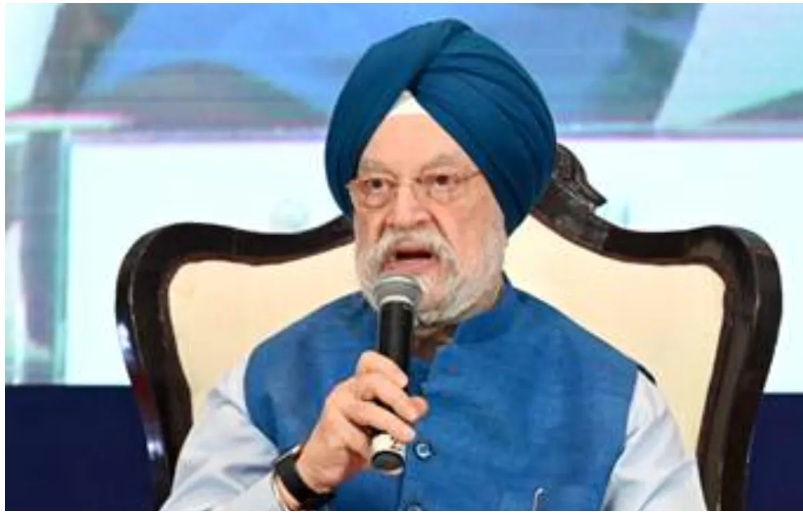
In a startling revelation, Union Minister Hardeep Singh Puri has admitted to multiple meetings and email exchanges with Jeffrey Epstein, the convicted sex offender and financier whose network of influence ensnared global elites. Puri’s own acknowledgments in recent press conferences and interviews paint a picture of repeated interactions with a man whose criminal history was in public knowledge since his 2008 conviction for procuring underage girls for prostitution. These ties, spanning 2014 to 2017—well after Epstein’s guilty plea—raise profound questions about Puri’s judgment, ethics, and fitness to hold high public office in the Indian government.
Puri, who served as Vice President and later Secretary General of the Independent Commission on Multilateralism at the International Peace Institute (IPI) in New York during this period, has claimed that his encounters with Epstein were strictly professional, limited to three or four meetings as part of official delegations. Puri maintains he met Epstein through his then-boss, Terje Rød-Larsen, the former IPI president with known deep connections to the disgraced financier. Yet, unsealed emails from the U.S. Department of Justice tell a different story—one of familiarity, warmth, and proactive engagement that goes beyond mere delegation duties.
Consider the email trail. In December 2014, Puri wrote to Epstein: “Dear Jeff, seasons greetings. Please let me know when you are back from your exotic island. I would like to come across for a chat, apart from giving you some books to excite an interest in India. Warmly, Hardeep.” This casual reference to Epstein’s “exotic island”—widely understood to allude to Little St. James, the infamous site of alleged sex trafficking—followed by an offer to visit personally with gifts, reeks of chumminess. Puri later dismissed the phrase as innocuous, claiming he uses it with everyone, and added in a follow-up: “Give me a shout when you are back. And, have fun. Not that you require encouragement from others for that.” Such playful language, directed at a known predator, is deeply troubling.
The communications extend further. In October 2014, Epstein asked Puri for help securing a visa for his assistant to attend a wedding in India. Puri promptly intervened, directing the request to contacts and ensuring priority processing through Cox & Kings Global Services. Why would a seasoned diplomat extend such favours to the entourage of a convicted sex offender? In November 2014, Puri sent a lengthy email to both Epstein and LinkedIn co-founder Reid Hoffman, enthusiastically promoting India’s “Digital India” initiative, highlighting internet growth statistics, and endorsing Epstein’s own suggestions for “less of ‘goody goody’ and more of internet based entrepreneurial ideas.” Epstein was copied on sensitive discussions about India’s economic opportunities, positioning him as a confidant in networking efforts.
Scheduled meetings at Epstein’s New York residence—9 East 71st Street—were arranged multiple times: February 2015, January 2016, and May 2017, facilitated by Epstein’s assistant Lesley Groff (later implicated in his crimes). Earlier exchanges in 2014 included Epstein introducing Puri to Hoffman with the words: “reid hardeep is your man in india.” These one-on-one arrangements contradict Puri’s claims of purely group delegation interactions. Even in June 2017, months before joining the Modi cabinet, Puri inquired if Epstein was back in town to “drop by for a chat.”
Epstein’s 2008 conviction was no secret—his notoriety was global. Yet Puri continued engaging, scheduling meetings years later. In interviews, Puri has admitted to Googling Epstein after the first encounter and eventually realizing “what the guy was,” claiming he cut off contact. But the timeline betrays this: interactions persisted into 2017. Puri was a private citizen then, but his actions reflect poor discernment. Helping Epstein’s assistant, warmly referencing his island escapades, and treating him as a valuable networker for India’s interests—all while Epstein remained a listed sex offender—demonstrate a shocking lapse in moral and professional standards.
This is not mere name-dropping, as Puri’s party initially dismissed. Public figures worldwide who associated with Epstein post-conviction—Prince Andrew, Bill Clinton, and others—faced severe backlash, resignations, or stripped titles. In India, where ministers are held to account for integrity, Puri’s continued warmth toward a paedophile enabler demands scrutiny. His arrogance in press conferences, dismissing critics as “buffoonery” while failing to fully address the emails’ tone, only compounds the issue.
Puri’s rise owes much to Prime Minister Modi’s patronage, but such associations undermine public trust. By his own admission, these were willing engagements with a declared flesh trader. In an era demanding zero tolerance for links to sexual exploitation, Puri’s explanations ring hollow. He should resign from the cabinet, face disqualification if necessary, and allow an independent probe into these ties. The Indian public deserves leaders untainted by the shadow of Jeffrey Epstein. Anything less is a betrayal of ethical governance.
