

RSS Leader Dattatreya Hosabale Asserts Shared Ancestry of Indian Muslims with Hindus, Calls for Dialogue to Foster Harmony

From Our Correspondent
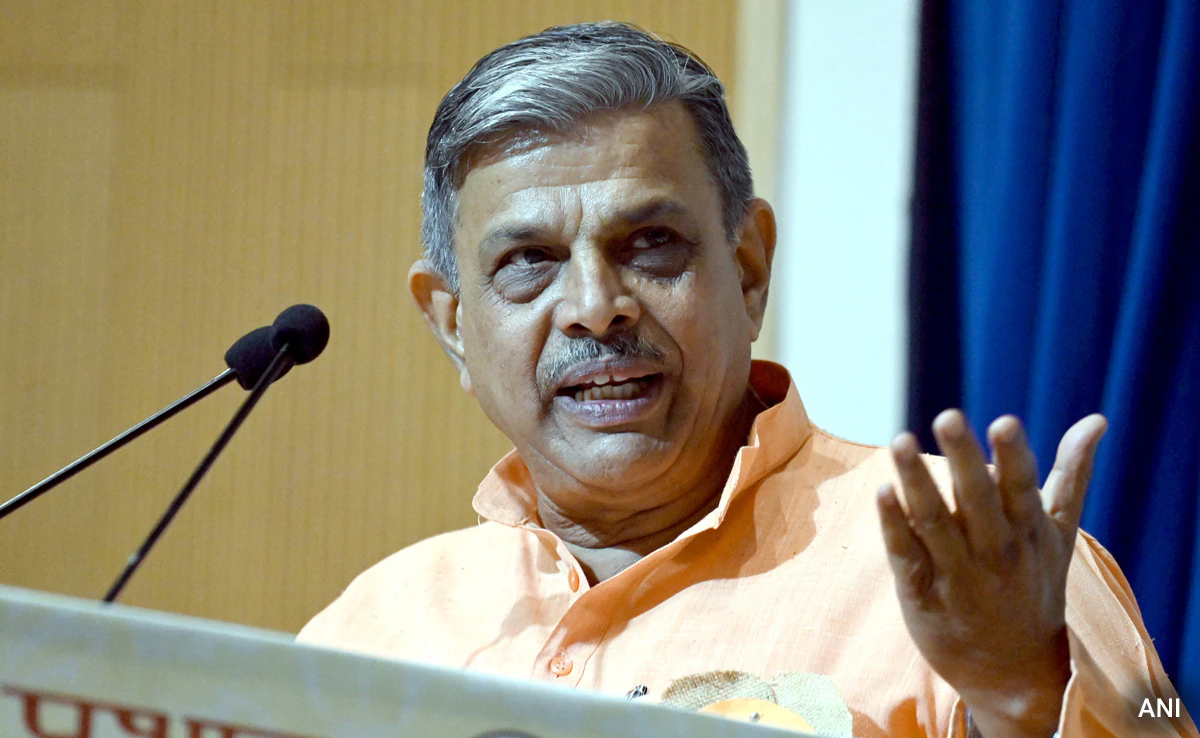
Washington DC: Rashtriya Swayamsevak Sangh (RSS) General Secretary Dattatreya Hosabale has sparked widespread debate with his remarks on the ancestry of Indian Muslims, made during an interaction in Washington DC around April 23-24, 2026.
Hosabale stated that the forefathers of Indian Muslims were Indians who had been Hindus, asserting that “99.9%” or “99.99%” of Muslims in India are descendants of Indian-origin Hindus and remain “part and parcel of our society.” He clarified that while they may have changed their “mode of worship and their religion,” they have not altered their “nationality or civilisational roots.”
The comments came in response to questions about the RSS’s view of Indian Muslims and efforts to address community perceptions of the organisation. Hosabale emphasised ongoing dialogue with Muslim leadership over the past few years to remove “misgivings” stemming from “certain other mechanisations and political interests” that occasionally cause tensions. He framed the RSS position as one of inclusion, rejecting labels of “Hindu supremacist” and describing Hindu identity as civilisational rather than strictly religious.
The statement, delivered during the RSS’s centenary-year outreach in the US—including interactions at the Hudson Institute—quickly circulated in Indian media and on social media platforms. Hosabale also addressed broader issues such as misconceptions about India and the RSS in the West, while flagging internal security concerns like illegal infiltration and demographic shifts.
Many in Hindu nationalist and right-leaning circles welcomed the remark as a factual recognition of historical conversions and a positive step toward cultural unity. Supporters argued it highlights shared ancestral and civilisational ties, distinguishing religious practice from national roots, and aligns with the RSS’s emphasis on “Bharatiyata” (Indian-ness) that transcends conversion. Social media reactions portrayed it as a call for harmony and evidence of the organisation’s dialogic approach to nation-building.
Genetic and historical studies have long indicated that a substantial majority of Indian Muslim populations carry significant indigenous South Asian ancestry, resulting from conversions over centuries influenced by social, political, and Sufi factors, particularly in regions like Uttar Pradesh, Bengal, and the Deccan. Hosabale’s figure broadly reflects this scholarly consensus on local origins for most Indian Muslims, though smaller groups, especially certain Ashraf communities, have historically claimed Central Asian, Persian, or Arab paternal lineages.
The statement has also drawn critical and mixed reactions. Some viewed it as an attempt to undermine Muslim religious and cultural autonomy or to push a majoritarian narrative of assimilation. Critics on forums like Reddit described the 99.9% figure as potentially exaggerated or oversimplified, pointing to regional variations and the role of self-perception in identity. Muslim organisations and secular voices expressed concerns that such remarks could pressure communities, even as Hosabale positioned Muslims as integral to society.
Left-leaning and opposition commentators often interpreted the comments within the context of ongoing political and cultural debates, though outright condemnations remained relatively muted in early coverage. Discussions have centred on the balance between acknowledging historical roots—supported by medieval chronicles, census data, and DNA studies—and respecting distinct faith-based identities shaped by lived experience, syncretic traditions like Ganga-Jamuni tehzeeb, or Islamic universalism.
Hosabale’s intervention fits into the RSS’s efforts to project a service-oriented and dialogic image internationally during its centenary period. Whether it leads to deeper engagement between the RSS and Muslim leadership or remains a point of contention in India’s diverse democracy will depend on how different stakeholders respond.
The episode has reignited broader conversations on history, genetics, national integration, and the political use of identity narratives. In a pluralistic society like India, statements linking ancestry, faith, and belonging continue to elicit strong, varied responses across ideological lines.
