

Saffron Brigade in Bind: Shankaracharya Support Wave Signals Potential Embarrassment for BJP

By Suresh Unnithan
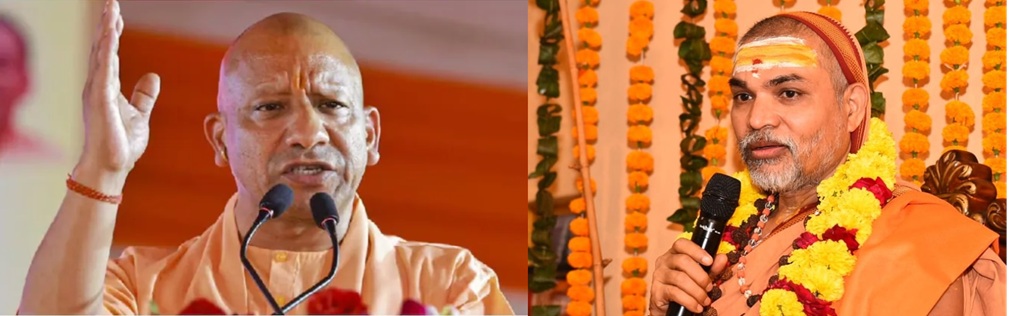
The ongoing tussle between Shankaracharya Swami Avimukteshwaranand Saraswati and Uttar Pradesh Chief Minister Yogi Adityanath has emerged as a potential fault line. This conflict, rooted in perceptions of disrespect toward a revered religious guru, threatens to fracture the Bharatiya Janata Party’s (BJP) core Hindu vote bank—a demographic that has been the party’s bedrock since its rise to prominence. As the 2027 Uttar Pradesh assembly elections loom, this dissonance could reshape electoral dynamics, forcing the BJP to navigate between loyalty to its Hindutva ideology and internal power struggles. The implications extend beyond UP, potentially influencing national politics, but the immediate focus remains on how this row might erode the party’s dominance in India’s most populous state.
The Shankaracharya’s position as a dharma guru commands widespread reverence among Hindus, transcending regional or sectarian boundaries. In contrast, Yogi Adityanath, while a prominent mahant of the Gorakhnath Math and a symbol of assertive Hindutva, is seen by many as a political leader first. This disparity places the BJP in a precarious position: alienating the Shankaracharya risks offending a broad swath of devout Hindus who view him as an embodiment of Sanatan Dharma. Sources indicate that the party has little choice but to align with the Shankaracharya to safeguard its image as the protector of Hindu interests. Internal divisions within the UP government underscore this dilemma. For instance, while Yogi has indirectly criticized “Kaal Nemi-like forces” disguised as saints—a Ramayana reference implying deceitful elements undermining dharma—Deputy Chief Minister Keshav Prasad Maurya has publicly supported the Shankaracharya, referring to him as “bhagwan Shankaracharya” and promising an inquiry into alleged administrative overreach. This open clash marks a rare fracture in the state unit, with Maurya’s stance hinting at ambitions to consolidate OBC support and position himself as a potential successor.
Yogi’s isolation in this matter is increasingly evident. Despite his strongman image and popularity in certain quarters, the lack of overt backing from central BJP leaders like Prime Minister Narendra Modi and Home Minister Amit Shah speaks volumes. The Rashtriya Swayamsevak Sangh (RSS), the ideological parent of the BJP, has maintained a conspicuous silence, possibly to avoid exacerbating a split within the Hindu fold. This reticence empowers anti-Yogi factions within the party, who see the controversy as an opportunity to sideline him. Reports suggest that the tussle has triggered outrage among BJP cadres, with viral videos, open letters, and even resignations emerging as signs of discontent. Some self-proclaimed RSS spokespersons have made inflammatory remarks against the Shankaracharya, but these appear isolated and not reflective of official positions, further highlighting Yogi’s vulnerability.
A critical factor amplifying the political fallout is the widespread support for the Shankaracharya among Hindu seers. All four major Shankaracharyas—from the Jyotirmath, Dwarka, Puri, and Sringeri peeths—are reportedly uniting in his defense, planning a historic meeting in Delhi on March 10-11, 2026, the first in nearly two decades. While ostensibly focused on issues like a nationwide cow slaughter ban, this gathering could evolve into a broader front against Yogi and the BJP, potentially leading to resolutions condemning the UP administration’s actions. Such a rebellion among saints could galvanize protests, including a proposed march to Delhi, eroding the BJP’s Hindutva credentials. Most Hindu seers aligning with the Shankaracharya raises alarms for the party, as it risks portraying the BJP as antagonistic toward traditional religious authorities. This perception is particularly damaging in a state like UP, where religious sentiments heavily influence voting patterns.
The most direct impact will likely manifest in the 2027 UP assembly elections. UP, with its 403 seats, is a bellwether for national trends, and the BJP’s 2022 victory relied heavily on consolidated Hindu votes under Yogi’s leadership. However, internal surveys reportedly indicate declining support in eastern UP, exacerbated by issues like the recent reservation scam and now this religious row. The tussle could fragment the Hindu vote bank, with devout followers viewing the BJP’s handling as an insult to Sanatan Dharma. Opposition parties, such as the Samajwadi Party and Congress, are already capitalizing on this, accusing the government of hypocrisy and politicizing sacred rituals. Narratives pushing that the BJP might lose under Yogi’s stewardship are gaining traction, potentially forcing the party to replace him with someone like Maurya to appease OBCs and religious figures. Analysts argue this is part of a broader anti-Yogi conspiracy, designed to tarnish his image ahead of the polls and divide the Hindutva ecosystem. If unresolved, it could lead to a sharp decline in seats, reminiscent of the party’s setbacks in the 2024 Lok Sabha elections due to internal discord.
Broader national implications cannot be ignored. The BJP’s strategy of leveraging Hindutva for electoral gains could backfire if this tussle portrays the party as prioritizing political power over religious harmony. In states like Bihar, where recent assembly results favored security, identity, and prosperity over caste politics, UP’s outcome might set a precedent. A weakened Yogi could also disrupt succession plans within the BJP, especially if he is seen as a post-Modi prime ministerial contender. Social media trends like #BJPHatesBrahmin and calls for boycotting the party underscore growing unrest among key communities, potentially spilling over into other Hindi heartland states.
In conclusion, this tussle represents more than a personal or administrative spat; it is a litmus test for the BJP’s ability to maintain Hindu unity. With most seers backing the Shankaracharya, the party faces a Hobson’s choice: isolate Yogi to preserve its broader appeal or risk vote bank erosion. As 2027 approaches, strategic adjustments—possibly including leadership changes—seem inevitable to mitigate damage. Failure to address this could not only cost the BJP dearly in UP but also undermine its national narrative of being the unequivocal guardian of Hindu interests. The coming months will reveal whether this conflict fizzles out or ignites a larger political firestorm.
