

Congress Upsurge in Assam: Sarma’s Incendiary Orations and BJP’s Polarising Campaigns Backfire

By Geetha V P
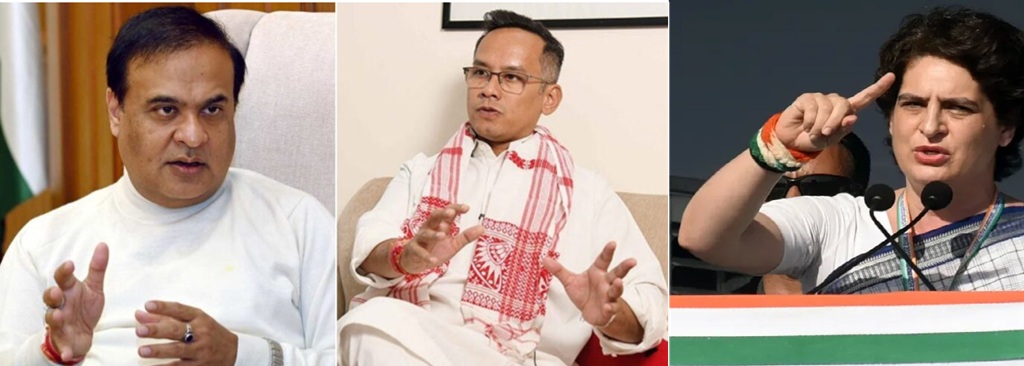
As Assam Assembly elections are fast approaching, the Indian National Congress is progressively gaining impetus, benefiting from voter fatigue with the Bharatiya Janata Party’s (BJP) divisive demeanour and focus on inconsequential issues. The opposition’s revival is bolstered by dynamic leadership and the ruling party’s reliance on polarization, exemplified by Chief Minister Himanta Biswa Sarma’s repeated anti-Muslim speeches and national leaders’ amplification of petty controversies.
Leading Congress’s charge are Gaurav Gogoi and Priyanka Gandhi Vadra. Appointed Assam Pradesh Congress Committee president in May 2025, Gogoi—son of three-time Chief Minister Tarun Gogoi—has effectively highlighted grassroots concerns like tea garden healthcare, river erosion, and flood management during his two terms as MP from Jorhat. His parliamentary interventions and efforts to forge alliances with regional outfits like Raijor Dal and Assam Jatiya Parishad have revitalized the party’s structure.
Priyanka Gandhi’s appointment this year as chairperson of the candidate screening committee adds electoral firepower, drawing from her successful mobilization in other states. This duo’s blend of local authenticity and national appeal is energizing workers and appealing to voters seeking inclusive governance over confrontation.
In sharp contrast, Sarma’s provocative rhetoric targeting Muslims, particularly Bengali-origin “Miya” communities, is emerging as a major BJP liability. Building on a history of controversies—including past probes into the Saradha chit fund scam and Louis Berger case that faded after his 2015 Congress-to-BJP switch—Sarma’s recent statements have intensified scrutiny.
In late January 2026, Sarma openly advocated harassing Miya Muslims economically, suggesting that if a rickshaw fare is five rupees, people should pay only four, stating, “Only by troubling them will they go back.” He called for “creating trouble” during electoral roll revisions, predicted delisting 4-5 lakh “Miya” votes via the Special Intensive Revision, and defended the derogatory term “Miya” while asserting decades-long polarization is needed to protect Assamese identity.
These remarks drew fierce backlash, including hate speech complaints and condemnations from groups like the All India Muslim Personal Law Board. Similar past utterances—linking communities to population growth, justifying crackdowns perceived as minority-targeted, and comments on cultural practices—reinforce perceptions of Sarma waging a “war” against Muslims, as critics allege. In a state with a 34% Muslim population holding sway over numerous seats, this risks solidifying minority opposition while alienating moderates and indigenous groups valuing harmony.
Sarma’s divisiveness overshadows BJP achievements in infrastructure, insurgency peace accords, and disaster management, fueling anti-incumbency.
This pattern was evident during Union Home Minister Amit Shah’s January 2026 Assam visit. Instead of spotlighting governance successes, Shah devoted rally time to accusing Rahul Gandhi of disrespecting Assamese culture by “refusing to wear” the traditional gamosa at the President’s Republic Day ‘At Home’ reception on January 26.
The remark ignited a row, with BJP framing it as an insult to the Northeast. However, videos from the event showed Rahul Gandhi accepting the gamosa, holding it in his hand throughout much of the proceedings, and not setting it aside entirely. Congress quickly circulated these clips, countering that Rahul respected the gesture by keeping it with him till the event concluded, accusing the BJP of spreading misinformation and exaggerating a non-issue for political gain. This exchange highlighted how petty cultural controversies can be weaponized, distracting from real challenges like unemployment, tea workers’ wages, and flooding, while portraying the ruling party as resorting to fabricated narratives.
Critics argue such tactics exemplify misinformation proliferation in polarized politics, eroding trust among neutral voters who prioritize development.
With delimitation reshaping constituencies and incumbency pressures mounting, Sarma’s inflammatory jabs—from economic boycotts and voter delisting threats to sustained polarization calls—combined with national leaders’ focus on trivia, are distancing swing voters. Congress is capitalizing effectively, emphasizing unity, anti-hate legislation, and equitable progress. As elections near, these strategic missteps risk undermining the BJP’s decade-long dominance.
