


By Nanditha Subhadra
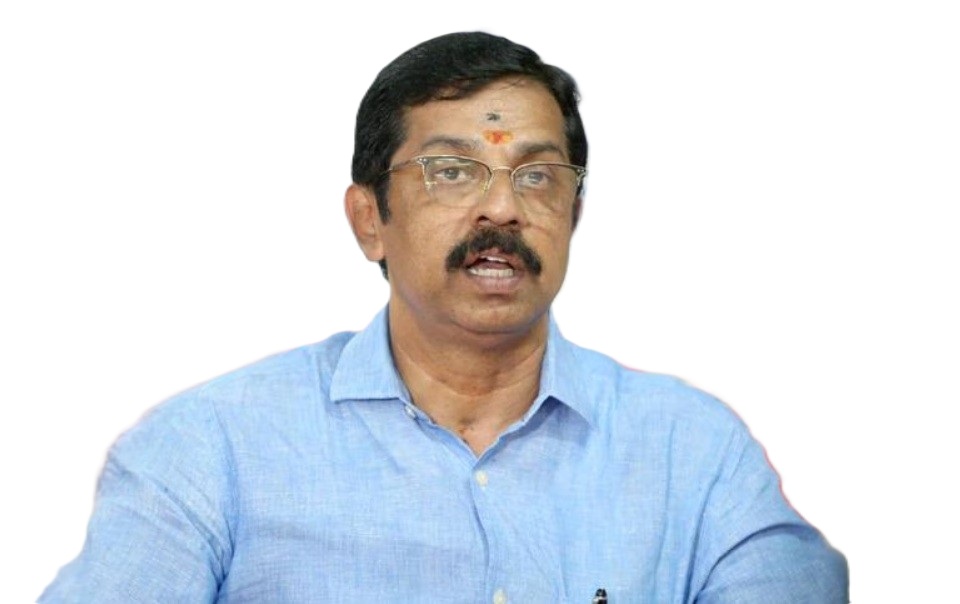
In a state like Kerala, where the Bharatiya Janata Party (BJP) sparing no efforts to gain political supremacy against entrenched rivals- the CPM and Congress, the saffron party can ill afford the taint of sexual misconduct allegations against a prominent leader like C. Krishnakumar, its state vice-president. With the local body polls just a couple of months away and assembly elections set for the middle of 2026, such serious charges could hurt the BJP’s carefully crafted image of discipline and moral superiority. Such allegations could also put the party’s ideological mentor, the Rashtriya Swayamsevak Sangh (RSS) in dilemma. The RSS, known for its uncompromising stance on character and ethical conduct, has little tolerance for controversies that undermine its ethos of ‘sanskriti’ and ‘charitra.’ If mishandled, this scandal could derail the BJP’s momentum in a state where it is already fighting an uphill battle, alienating voters and weakening the RSS’s aura of moral authority.
The controversy erupted on August 26, 2025, when a woman, reportedly a relative of Krishnakumar, leveled serious allegations of sexual assault against him. In a detailed email complaint sent to BJP state president Rajeev Chandrasekhar, she accused Krishnakumar of misconduct dating back several years, framing it within the context of a longstanding family property dispute. The complainant demanded Krishnakumar’s urgent dismissal from the party, highlighting the gravity of the charges and their potential to undermine the BJP’s stance on women’s safety and justice. This development comes amid a politically charged atmosphere in Kerala, where similar allegations have recently rocked the Congress party, adding fuel to speculations that this could be the “explosive” revelation hinted at by Opposition Leader V.D. Satheesan.
Krishnakumar, a veteran BJP leader who lost the 2024 Palakkad Assembly bypoll against Congress’s Rahul Mamkootathil, has denied the accusations. He dismissed them as a fabricated conspiracy orchestrated by the Congress to divert attention from the sexual misconduct charges against Mamkootathil, who was suspended from the party for six months on August 25, 2025. Krishnakumar pointed out that a related civil case was dismissed by a court in July 2024, and no police action followed earlier complaints from 2014, suggesting the matter had been resolved. “This is a case that was already dismissed by the court,” he stated, emphasizing that the timing—coinciding with the BJP’s aggressive protests against Mamkootathil—smacks of political vendetta.
The backdrop to this scandal is Kerala’s turbulent political landscape, intensified by a wave of MeToo-like revelations in the state’s film and political spheres. Just days back, the Congress faced its own crisis when multiple women accused Mamkootathil of harassment, leading to his resignation as Youth Congress president followed by a short term suspension from the . The BJP had capitalized on this, staging protests and demanding Mamkootathil’s ouster, with leaders like Krishnakumar at the forefront. Now, the tables have turned, exposing the BJP to accusations of double standards and potentially weakening its moral high ground in a state where it struggles for dominance.
However, the implications of such allegations for the BJP are profound, especially with local body polls slated for late 2025 and assembly elections in 2026 looming. In Palakkad, a district where the BJP has been constantly gaining strength, this could wear down voter trust, particularly among women who prioritize issues of their safety and accountability. The party’s vote share, which hovered around 13% in the 2021 assembly polls, risks stagnation or decline if such scandal lingers, allowing rivals like the CPM-led LDF and Congress-led UDF to exploit it. Moreover, the RSS’s involvement adds another layer: as the ideological fountainhead, it has a history of enforcing strict codes, such as jettisoning members for ethical breaches to preserve its image of incorruptibility. A failure to act decisively could signal cracks in this facade, disillusioning followers who view the Sangh as a beacon of unblemished nationalism.
As of today, Chandrasekhar’s office has acknowledged the complaint, assuring action upon his return, but no immediate steps have been announced. Social media reactions, including posts from outlets like Mathrubhumi, indicate the story is gaining traction, with hashtags linking it to broader political rows in Kerala. Whether this allegation fizzles out as a dismissed case or escalates into a full-blown crisis will depend on investigations and party responses. For now, it serves as a stark reminder: in politics, the fall from grace can be swift, and the stains on a party’s image—let alone its parent organization’s—may prove indelible if not scrubbed clean with transparency and accountability.
The public habitually views the Bharatiya Janata Party (BJP) and the Rashtriya Swayamsevak Sangh (RSS) as closely intertwined, given the visible involvement of RSS volunteers in BJP’s election campaigns. Drawing ideological strength from the RSS, the BJP prides itself on its unwavering dedication to ethical principles and moral discipline. The party diligently maintains a culture of integrity, ensuring its leaders and members reflect its core values. Consequently, it is the moral and ethical duty of BJP workers and leaders to uphold conduct that safeguards the reputation of their ideological parent, the RSS.
