


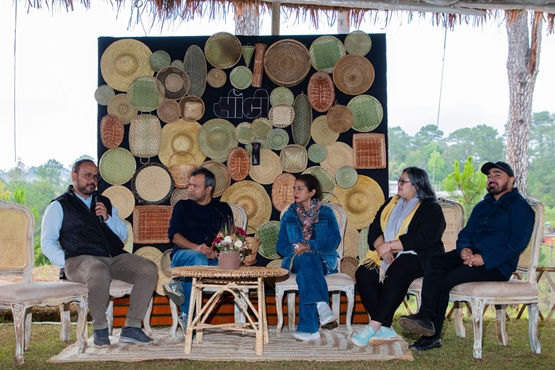
Shillong : SEETI 2.0, a five-day culinary immersion, brought together around 50 chefs, creators and storytellers for an experience that moved far beyond conventional food tourism. Designed as a deeply curated cultural platform, the programme enabled participants to experience Meghalaya through its communities, landscapes and living traditions.
Unlike traditional festivals, the initiative prioritised meaningful engagement over surface-level exposure. Built on the idea of generosity and exchange, it created a space where the food and beverage community could come together not just to experience, but to contribute, collaborate and carry stories forward. The result was not a moment, but a growing body of ideas, relationships and narrative capital that extends well beyond the event.
“This year’s Meghalaya experience was about doing things differently. We wanted to understand what we could bring to the North East, and equally what we could take from here to the rest of the country and the world. The focus was not just on showcasing food, but on creating platforms for local chefs and communities to participate, engage and lead the narrative,” said Priya Raje, Co-Founder of the SEETI Movement.
The programme was preceded by nearly a year of on-ground research, mapping Meghalaya’s diverse food systems, communities and landscapes. This translated into a series of highly contextual experiences — from meals following visits to sacred forests to immersive sessions at tea estates overlooking Umiam Lake each designed to reflect the cultural and ecological depth of the region. The structure of the experience was rooted in the identities of the Khasi, Jaintia and Garo communities.
“Designed as a cultural platform rather than a conventional event, the focus was on creating real connections between people and place. When experiences are truly rooted, they shift from being observed to being felt. That sense of participation is what stays with you and what ultimately drives long-term impact,” said Sid Mewara, Co-Founder of the SEETI Movement.
He added, “Many guests arrived with a limited understanding of the region’s food. What they discovered was a remarkable depth — from nuanced vegetarian traditions to layered, subtle flavours all set against some of the most striking natural environments in the country.”
The programme also highlighted the inherent sustainability of local food systems from hyper-local sourcing and low-waste practices to deeply community-driven models of production and consumption. At the same time, it reinforced the importance of responsible tourism, encouraging engagement with heritage spaces such as sacred forests and community ecosystems with sensitivity and respect.
While the on-ground experience was intentionally intimate, its impact has been designed to scale through its participants a curated mix of globally recognised chefs, hospitality leaders, investors, media and content creators. As storytellers, they extend the narrative into wider audiences, shaping how the region is seen, understood and experienced.
The Meghalaya edition also intersected with the state’s Culinary Cascades initiative, enabling deeper engagement with local producers, chefs and stakeholders, along with conversations around the future of the region’s food, craft and cultural economy.
Organisers acknowledged the role of the Meghalaya Government in enabling the initiative, noting that coordinated support across departments made it possible to execute a programme of this depth and scale. Such collaboration allows for the creation of platforms that extend far beyond individual events and begin to influence broader ecosystems.
Following the success of the Meghalaya edition, the platform is now positioned to expand across the North East, the rest of India and international locations carrying forward a format that combines food, community and storytelling into a deeply immersive experience. A long-format film documenting the journey is also in development, further extending its reach.
