

Sex, Oxytocin and the Heart: How Partnered Intimacy Supports Cardiovascular Health and Longevity

From Our Health Desk
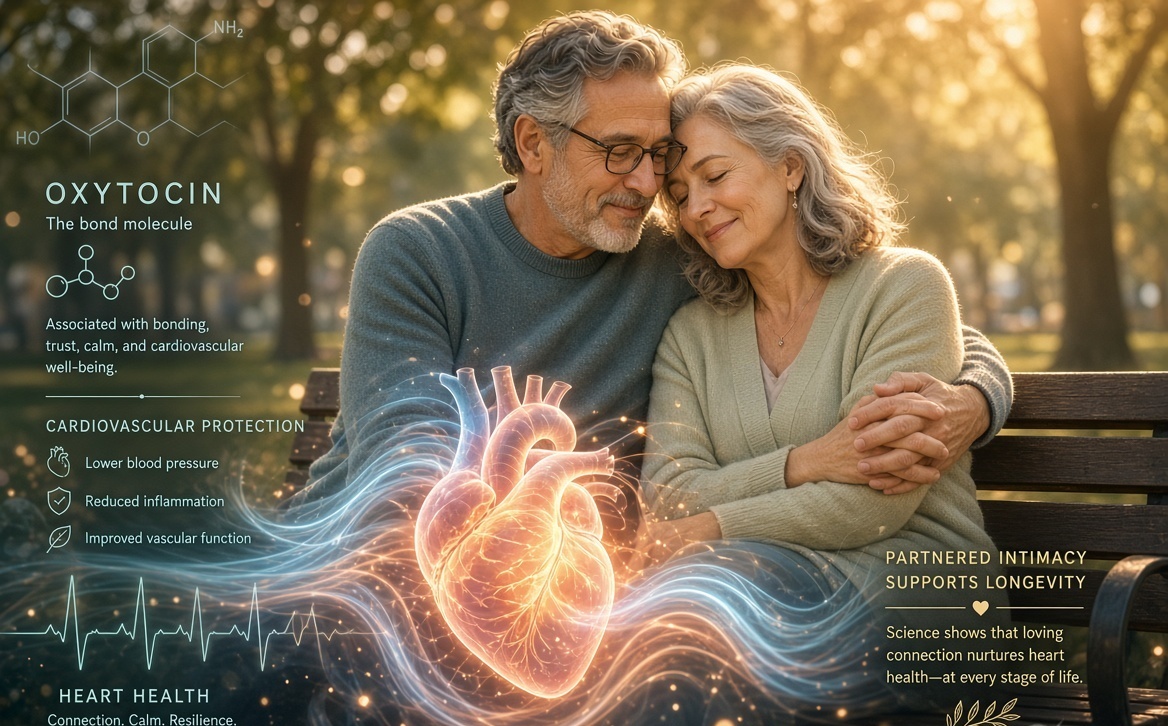
Partnered sexual activity offers more than emotional closeness. Scientific evidence links regular, mutually satisfying sex with measurable cardiovascular benefits, stress reduction and associations with healthier aging and longer life expectancy. These effects appear especially protective for women and are partly explained by the powerful actions of the hormone oxytocin, released during arousal, intimacy and orgasm.
A key 2016 study by Hui Liu and colleagues, published in the Journal of Health and Social Behavior, analysed longitudinal data from the National Social Life, Health and Aging Project involving more than 2,200 older adults. Researchers examined partnered sexual activity and sexual quality (physical pleasure and emotional satisfaction) against later cardiovascular risk markers, including hypertension, elevated C-reactive protein, rapid heart rate and general cardiovascular events.
The results showed clear gender differences. High-frequency sex (once a week or more) was linked to higher subsequent risk of cardiovascular events in older men. For women, however, quality mattered more than frequency: those who found sex extremely physically pleasurable or emotionally satisfying had lower odds of developing hypertension years later. The study found little evidence that existing cardiovascular problems strongly predicted later declines in sexual activity.
These findings fit a wider pattern. Longitudinal data, including the Caerphilly study of middle-aged Welsh men, have associated higher orgasm frequency with substantially lower mortality over a decade. Analyses of large U.S. survey data have similarly linked more frequent sexual activity to lower all-cause mortality and, in some reports, reduced cardiovascular and cancer deaths. While healthier people tend to remain more sexually active (raising questions of reverse causation), the associations persist after adjustment for many confounders.
Oxytocin: A Central Mechanism Linking Sex to Heart Protection
Sexual activity and orgasm are potent physiological triggers for oxytocin release from the hypothalamus into both the brain and bloodstream. This “bonding hormone” acts on oxytocin receptors present in the heart (cardiomyocytes and endothelium), blood vessels and kidneys, producing a cascade of cardiovascular effects.
Oxytocin lowers blood pressure through several routes. Centrally, it enhances parasympathetic (vagal) tone and dampens sympathetic outflow, reducing heart rate and cardiovascular reactivity to stress. Peripherally, it promotes endothelium-dependent vasodilation via activation of endothelial nitric oxide synthase and nitric oxide production, decreases peripheral vascular resistance, and stimulates release of atrial natriuretic peptide (ANP) from the heart. ANP in turn promotes natriuresis and diuresis, lowering blood volume and preload. The hormone also exerts mild negative chronotropic and inotropic effects—slowing heart rate and reducing contractile force—which decreases myocardial oxygen demand while lengthening diastole and improving coronary perfusion.
Beyond acute haemodynamic benefits, oxytocin activates pro-survival signalling pathways. These include the reperfusion injury salvage kinase (RISK) cascade (PI3K/Akt–eNOS and ERK1/2), AMP-activated protein kinase (AMPK), and related mitochondrial protection routes involving PGC-1α and TFAM. The result is reduced oxidative stress, inhibition of the mitochondrial permeability transition pore, lower reactive oxygen species, better energy homeostasis, and decreased apoptosis. Oxytocin also exerts anti-inflammatory actions by down-regulating cytokines such as TNF-α, IL-1β and IL-6, reducing immune-cell infiltration, and limiting superoxide production in vascular cells and macrophages. Experimental models of myocardial infarction, ischaemia–reperfusion and pressure-overload heart failure show that oxytocin reduces infarct size, fibrosis and hypertrophy while improving cardiac function and promoting angiogenesis and scar vascularisation.
These molecular actions help explain why satisfying partnered sex—particularly the high-quality experiences linked to better outcomes in women—can support blood-pressure control and broader cardiovascular resilience. The same pathways contribute to stress buffering: oxytocin release coincides with declines in cortisol, further protecting vessels and myocardium from chronic stress damage.
Additional Pathways Supporting Health and Longevity
Sexual activity itself functions as moderate physical exercise, elevating heart rate and blood flow. The combination of physical effort, endorphin release, improved sleep that often follows orgasm, and strengthened emotional bonding creates a multi-layered benefit. Strong social and intimate relationships are independently associated with lower mortality and, in some epigenetic studies, slower biological aging. Partnered sex reinforces these bonds while delivering the hormonal and circulatory advantages described above.
Collectively, the evidence positions regular, consensual and mutually enjoyable partnered sex as one element of a heart-healthy lifestyle—alongside diet, aerobic and resistance exercise, adequate sleep and stress management. The quality of the sexual relationship appears especially important for women’s cardiovascular protection, consistent with the 2016 findings.
Important Caveats
Most studies remain observational; definitive proof of causation is limited. Individual health status, medications, relationship dynamics and physical limitations all influence outcomes. People with known heart disease should consult a physician before increasing sexual activity, although evidence indicates that sex is rarely a trigger for acute cardiac events in stable patients and is generally safe to resume after recovery. Frequency is less critical than sustainability and mutual satisfaction.In summary, partnered intimacy engages oxytocin’s multifaceted cardiovascular machinery—lowering blood pressure, enhancing nitric oxide and ANP signalling, activating cellular survival pathways, reducing inflammation and oxidative stress, and supporting autonomic balance. When combined with the exercise, sleep and relational benefits of a rewarding sexual life, these effects help explain observed links to better heart health, healthier aging markers and improved life expectancy. For couples able to enjoy satisfying intimacy safely, the science suggests it is a worthwhile component of long-term cardiovascular care.
