

Sheikh Hasina: A Fallen Leader’s Uncertain Horizon; Sentenced to Death by the Court She Created

By Suresh Unnithan
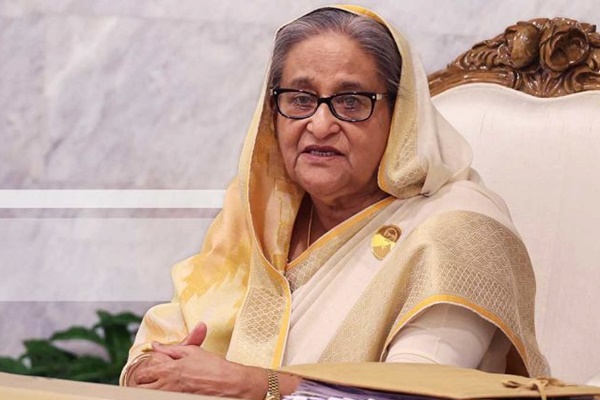
In a striking twist of poetic justice—or retribution, depending on one’s perspective—Bangladesh’s International Crimes Tribunal (ICT) on November 17, 2025, sentenced former Prime Minister Sheikh Hasina to death in absentia for crimes against humanity. The 78-year-old, who fled to India in August 2024 amid a student-led uprising, was found guilty of orchestrating a deadly crackdown on protesters that killed hundreds—potentially up to 1,400, according to the United Nations’ human rights office. Her former Home Minister, Asaduzzaman Khan Kamal, received the same sentence. The verdict has reignited debates over justice, vengeance, and the very institution Hasina herself weaponized against her political foes.
The Tribunal She Built: A Tool Turned Against Its Creator
Ironically, the ICT that condemned Hasina was established under her own leadership. In 2010, her Awami League government re-established the tribunal to prosecute crimes from the 1971 Liberation War. What began as a promise of accountability for historical atrocities quickly became a controversial mechanism to target her political adversaries, particularly leaders from the opposition Bangladesh Nationalist Party (BNP) and the Islamist Jamaat-e-Islami.
During Hasina’s 15-year rule, the ICT was widely accused of conducting unfair trials that failed to meet international standards. Human rights organizations, including Human Rights Watch and Amnesty International, criticized the proceedings for procedural flaws, lack of due process, and political bias. The tribunal handed down numerous death sentences, leading to the execution of many of Hasina’s rivals—figures she portrayed as collaborators with Pakistan during the 1971 war. Critics argued these trials were less about historical justice and more about eliminating opposition, consolidating her power, and settling old scores.
Now, the same court—operating under the interim government led by Muhammad Yunus—has turned the tables. Hasina stands accused of masterminding the 2024 massacre of protesters, with the prosecution labelling her actions as surpassing “every criminal on earth.” While victims’ families celebrate the verdict as long-overdue accountability, rights groups have condemned the death penalty and questioned the trial’s fairness, noting echoes of the very flaws that plagued the ICT during Hasina’s era. Hasina herself dismissed the ruling as the product of a “rigged tribunal” under an “unelected government with no democratic mandate,” a charge that underscores the irony but also highlights ongoing concerns about the tribunal’s politicization on all sides.
From Power to Peril
Hasina’s downfall was as rapid as it was dramatic. Once dubbed the “Iron Lady” of Bangladesh for her role in economic growth and infrastructure development, she faced accusations of electoral fraud, corruption, and authoritarianism. The 2024 protests, initially sparked by job quota reforms, snowballed into a nationwide revolt against her regime’s repression, including enforced disappearances and media crackdowns. When security forces opened fire on demonstrators, the death toll mounted, sealing her fate.
Fleeing by helicopter on August 5, 2024, Hasina sought refuge in India—a long-time ally that had benefited from her cooperation on security and trade. Her ouster marked the end of a dynastic era: as the daughter of Bangladesh’s founding father, Sheikh Mujibur Rahman, she had positioned herself as the guardian of his legacy.
Isolation and Uncertainty
Today, Hasina lives a shadowed existence in New Delhi, reportedly in a secure, low-profile residence under Indian protection. Far from the grandeur of her former office, she is surrounded by a small circle of family and loyalists. Her son, Sajeeb Wazed, has dismissed the verdict as politically motivated from afar. Health concerns, compounded by stress, have been whispered in media reports, painting a picture of a once-formidable leader grappling with isolation, regret, and the indignity of dependence on a foreign host.
Her Awami League party lies in tatters, with many leaders arrested or in hiding. For her remaining supporters, the sentence feels like victor’s justice; for her detractors, it is the reckoning she evaded for years. The party’s call for a nationwide shutdown in protest labeled the ICT a “kangaroo court,” amplifying fears of renewed unrest ahead of February 2026 elections.
Will India Hand Over Hasina?
Bangladesh wasted no time demanding Hasina’s return. On November 17, Dhaka formally urged New Delhi to extradite her and Khan under the 2013 bilateral treaty. Previous requests have been met with silence or evasion from India, which views her as a strategic asset and questions the tribunal’s legitimacy.
Experts doubt extradition will happen soon. The treaty allows refusal if offenses are deemed political, and India has cited concerns over fair trial standards. Geopolitical realities—shared borders, counterterrorism cooperation, and influence in the region—tilt in Hasina’s favor. The United Nations has expressed regret over the death penalty, indirectly supporting India’s hesitation.
An Uncertain Future
Hasina’s plight embodies the perils of unchecked power. She may appeal through international bodies or seek formal asylum, though options are limited. Short-term, she remains in India, perhaps in disguised house arrest. Long-term scenarios include a quiet relocation to a third country or prolonged diplomatic stalemate until Bangladesh’s 2026 elections reshape the landscape.
It is destiny; the woman who executed her adversaries through the ICT she created now faces the gallows from the same bench. Whether this marks true justice or merely the pendulum of vengeance, Hasina’s story serves as a stark reminder: in politics, the instruments of power can one day become the chains of downfall. Her exile is not just geographical—it’s a fall from grace that history will judge harshly. This is a repeated caution for those who are power-drunk, imagining they are unquestionable. It has happened to all those autocrats who ignored the public and tried to suppress them with brute force—toppling not just regimes, but the illusions of invincibility that sustain them.
