


By Suresh Unnithan
In a nation of 1.4 billion, where the common man is perpetually one missed EMI away from existential dread, Prime Minister Narendra Modi has delivered a masterclass in paternal advice. Work from home. Skip the gold. Carpool that scooter. Ditch foreign honeymoons. Use less LPG, less edible oil, less everything. The nation faces an economic crisis sparked by the Iran-US conflict, soaring crude prices, and a rupee doing its best impression of a falling leaf in a monsoon. Patriotism, it seems, now means tightening the belt until the buckle snaps.
One can almost picture the scene: a weary middle-class family in a 2BHK flat in Ghaziabad, rationing dalda oil while scrolling through visuals of the PM’s impending five-nation tour. The irony is thicker than the ghee they’ve been asked to skip.
Till recently, the government narrative was one of abundant reserves and robust fundamentals. Defence Minister Rajnath Singh and others had reassured that India holds around 60 days of crude and natural gas stocks and 45 days of LPG. Yet here we are, with the PM urging “economic patriotism” as oil crosses $100+ per barrel and the rupee hits record lows. Experts had warned precisely of this vulnerability: India imports 85-90% of its crude, making it hostage to West Asian storms. The Strait of Hormuz disruption was a predictable nightmare.
Rahul Gandhi’s Crystal Ball
Leader of Opposition Rahul Gandhi had sounded the alarm months earlier. As the US-Iran-Israel conflict escalated, he cautioned in Parliament that the “pain has just started.” Disruptions to energy supplies through the Strait of Hormuz—carrying a fifth of global oil—would hammer India’s import-dependent economy, spike LPG and fuel prices, and expose the hollowness of claims about strategic reserves and diversified sourcing. Gandhi questioned why India’s energy security was outsourced to geopolitical whims, warning of LPG shortages and broader economic fallout. Earlier cautions from economists about over-reliance on imports, fiscal deficits, and lack of sufficient domestic buffers echoed the same. The government, busy projecting “all is well,” largely dismissed such notes as partisan pessimism. Now, the public gets the sermon.
The Extravaganza Files
While citizens are told to revive COVID-era WFH and cancel destination weddings abroad, let us examine the ledger of prudence at the top. The BJP’s declared expenditure for the 2024 Lok Sabha elections stood at a staggering ₹1,737.68 crore — the highest by any party. This covered massive propaganda, media blitzes, campaign travel, and star campaigner logistics. Overall election spending estimates for 2024 touched enormous figures, making it one of the costliest democratic exercises globally.
Prime Minister Modi’s foreign travels between 2015 and 2025 cost the exchequer ₹762 crore. The annual spend crossed ₹100 crore in 2024 and peaked at over ₹175 crore in 2025 alone. His upcoming five-nation tour comes precisely at a time when citizens are explicitly told to postpone non-essential foreign trips to save foreign exchange.
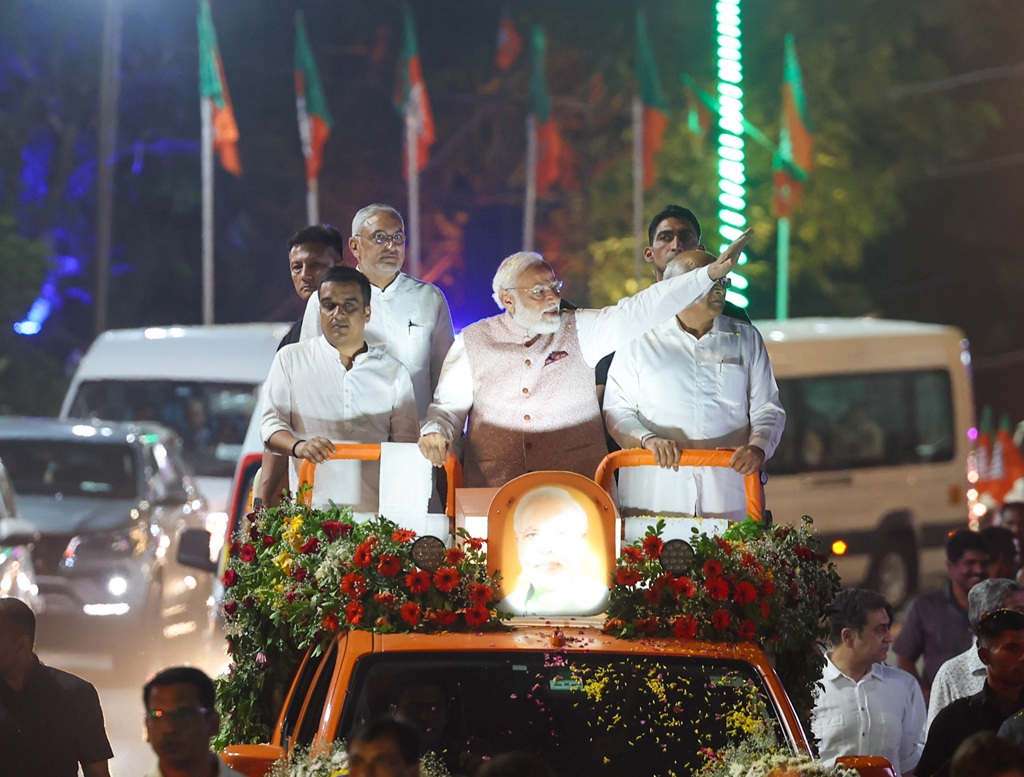
Security costs add another dizzying layer. Older estimates pegged the Special Protection Group cover for the PM at around ₹1.62 crore per day. Roadshows and rallies feature massive motorcades — often dozens of vehicles, including heavy armoured SUVs with poor mileage of 4-8 kmpl, police escorts, jammer vans, and ambulances. These guzzlers idle in traffic, burn fuel at alarming rates during low-speed processions, and trigger city-wide congestion that wastes tens of thousands of litres in public vehicles.
VVIP Protocol Fuel Costs: The Hidden Gallons
India’s VVIP security protocols reveal the scale of this contradiction. A typical PM motorcade can include 20–50+ vehicles. Armoured BMWs and SUVs, weighed down for protection, deliver dismal efficiency, especially in stop-go roadshows. A single multi-kilometre event can consume hundreds of litres directly, while road closures cause indirect societal waste — one Delhi study estimated a single VIP movement leading to around 46,000 litres of fuel lost to idling traffic.
Air travel magnifies the burn. The Boeing 777 “Air India One” consumes roughly 7-9 tonnes of jet fuel per hour on long hauls. A Europe-bound round trip can easily exceed 100-200 tonnes. Helicopters for last-mile rally hops add hundreds of litres of ATF each. With crude prices elevated, these high-consumption protocols continue unabated even as the public is urged to switch off ACs and skip that extra spoonful of oil.
Ministers and senior bureaucrats mirror this VVIP culture with chartered flights, luxury delegations, and frequent overseas jaunts. The machinery of state hums on imported fuel and taxpayer largesse while the aam aadmi is lectured on sacrifice.
Hollowness 101
A leader whose government spent hundreds of crores on elections and global tours now asks the salaried class, already squeezed by inflation and stagnant real wages, to skip gold for weddings (a cultural bedrock) and edible oil for health and patriotism. Reduce chemical fertilizers by half, embrace natural farming — sound advice, perhaps, but delivered amid a crisis that prudent policy could have mitigated earlier through aggressive strategic reserves, refinery optimization, or renewable acceleration.
Economists note the current account deficit widening, rupee pressure, and potential growth slowdown if oil stays elevated. Forex reserves provide a buffer (around $700 billion range), but the import bill for oil (over $134 billion in recent years), gold (record highs), and edible oil remains a structural vulnerability. Experts had cautioned Modi’s government repeatedly about these risks. The “sudden” urge for public austerity feels less like foresight and more like deferred reckoning.
True leadership in crisis begins at the top. Let the PM’s office and ministries publish quarterly austerity reports: fuel consumed by official fleets and VVIP convoys, foreign trips deferred or downsized, gold-free events in the corridors of power. Let ministers carpool to Parliament. Let bureaucrats embrace WFH when possible. Optimise protocols with smaller convoys where feasible, hybrid events, and electric pilot vehicles. Only then does the sermon land with moral weight rather than hollow echo.
Until that day, the public will greet the call with the weary chuckle it deserves. In the theatre of Indian politics, the script remains familiar: sacrifice for thee, but not for me. The nation doesn’t need more lectures on patriotism through penny-pinching. It needs consistency, foresight, and leaders who walk the talk — or at least drive a smaller convoy — before asking 1.4 billion to tighten their belts.
The oil burns. The irony thicker. And the aam aadmi, as always, is expected to carry the can — er, the carpool.
