

The Chief Justice of India and the Law Minister Inaugurated the World’s Largest Moot Court at Jindal Global Law School

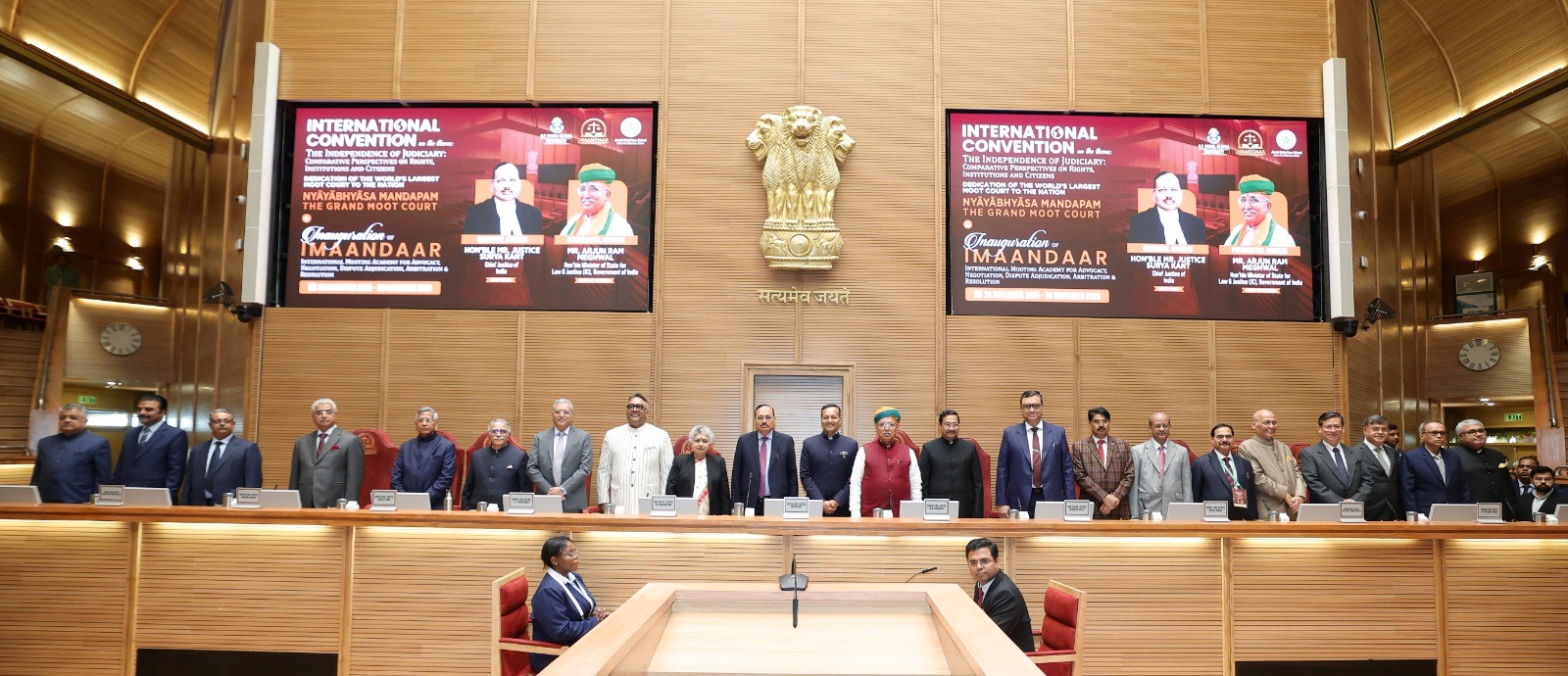
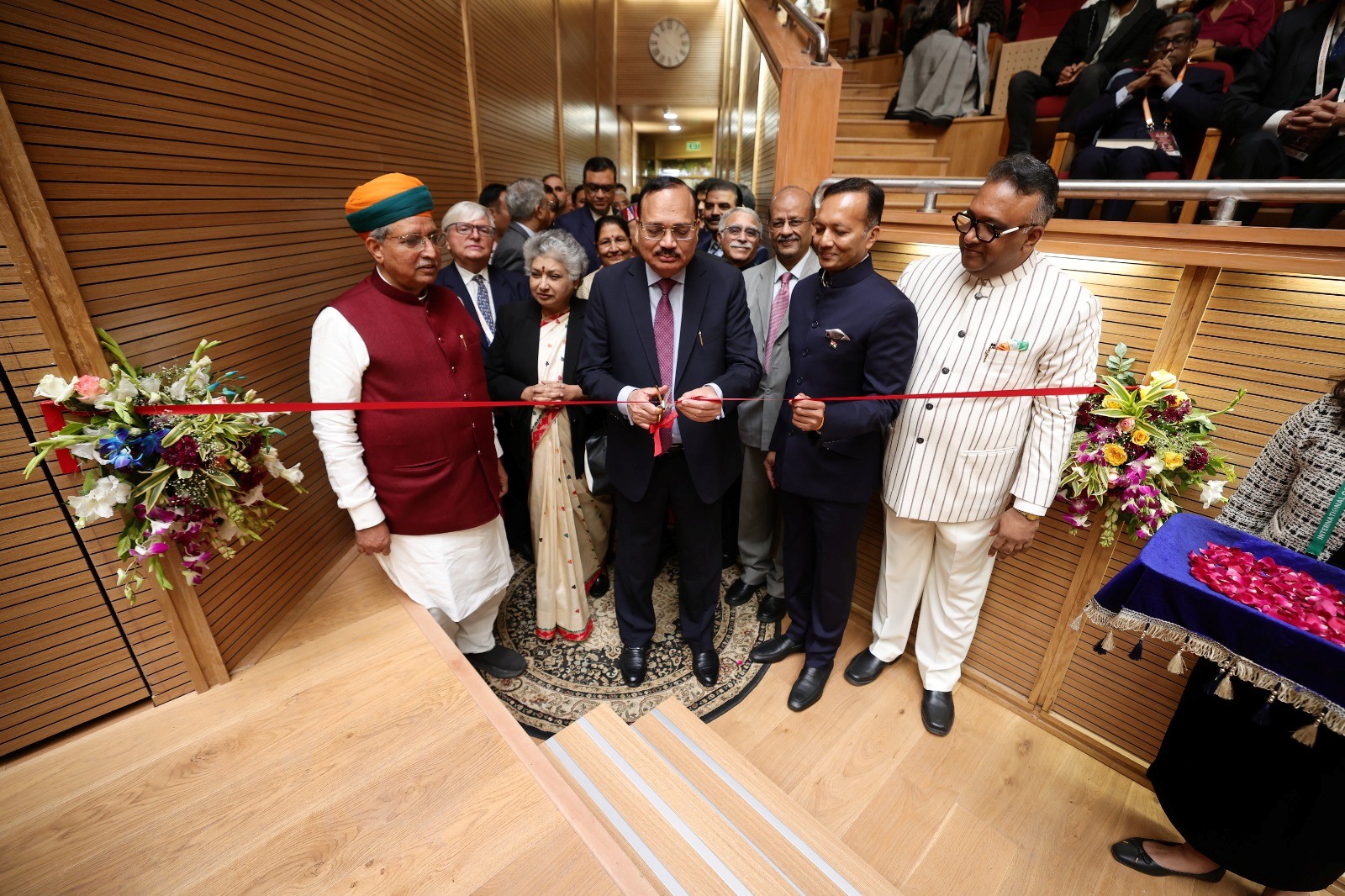
Sonipat: Justice Surya Kant, Chief Justice of India and Arjun Ram Meghwal, Minister of State for Law & Justice, inaugurated the world’s largest Moot Court, NYĀYĀBHYĀSA MANDAPAM – The Grand Moot Court and dedicated it to the nation. The event also saw the inauguration of IMAANDAAR (International Mooting Academy for Advocacy, Negotiation, Dispute Adjudication, Arbitration and Resolution) in the presence of more than 200 international judges and jurists from India and the world. The Chief Justice of India also inaugurated the International Convention on Independence of Judiciary: Comparative Perspectives on Rights, Institutions and Citizens at O.P. Jindal Global University. A Commemorative Plaque was released by the Chief Justice of India and the Law Minister to mark the special occasion.
Across the two days of the Convention, 26 sitting Judges and former judges of the Supreme Court of India including the Chief Justice of India (sitting in two separate 13-judge benches), 10 former Chief Justices of India, 10 Chief Justices, Judges & former Judges of High Courts, 14 International Judges & Jurists, 5 Ministers & Parliamentarians, 61 Senior Advocates, and 91 academicians, lawyers participated and spoke at various thematic sessions.
The two-day International Convention on The Independence of Judiciary explored how this concept forms the cornerstone of Indian democracy. As a newly independent nation and a nascent democracy, the framers of the Constitution wanted the Judiciary to function without any influence from external or internal forces. This concept and its application form the basic structure of the Constitution of India.
Justice Surya Kant, Chief Justice of India, inaugurated the Convention and the world’s largest moot court and said, “I laud the inauguration of the world’s largest moot court housed in O.P. Jindal Global University and Jindal Global Law School. Integrity is the very ideal that the practise of law and indeed the pursuit of justice is based upon. In an era where truth must compete with knowledge, where deep fakes distort, misinformation multiplies and digital arrests have become disturbingly routine, integrity and honesty are no longer lofty ideals. The Basic Structure doctrine has allowed our Constitution to grow without losing its centre, to stretch toward new realities, yet remain tethered to its founding spirit. As this momentous conference reminds us, the basic structure of a document is not to be a relic of the past but a map for charting our future. It is the consensus that keeps our democracy from drifting into absolution as we modernize our institutions and open new frontiers. This very ethos must now animate how we address the new constitutional questions of the 21st century, whether it is the digital state’s reach into privacy, AI’s hand in shaping truth, or the climate crisis testing our notions of justice between generations. The Constitution’s strength lies not in resisting changes but in ensuring that every change honours its foundational promises: namely, Human Dignity, Equity, Liberty, Equality, And Fraternity.”
