


By Suresh Unnithan
The Constitution did not invent the Election Commission of India as décor for the government of the day. It invented a referee so that power could change hands without blood. Confidence in that referee is not a courtesy the public owes the chair. It is the quiet condition on which an electoral republic stands. When that confidence thins, the quarrel is no longer only political. It is constitutional.
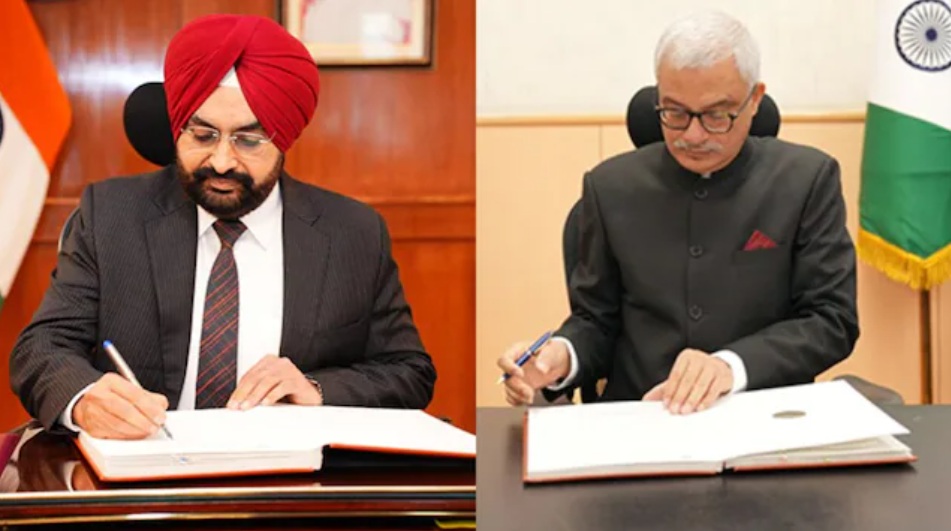
An investigation that The Indian Express published on 23 September 2026 moved that quarrel into Nirvachan Sadan’s own files. Election Commissioners Sukhbir Singh Sandhu and Vivek Joshi recorded at least fourteen objections in ten months to decisions and orders on the Special Intensive Revision of electoral rolls — decisions which, they wrote, others took or circulated without their knowledge. The Commission has answered that internal notes form part of deliberation and that the CEC and both Election Commissioners approved the final decisions, including those on the SIR. The replies reported so far do not deny the existence, the dates or the wording of those notes. The country is entitled to read the dissent and the disclaimer together.
A constitutional body does not escape scrutiny because it is constitutional. The public scrutinises it because it is.
The file that will not stay internal
The SIR began in Bihar in June 2025 and then travelled across States and Union Territories. Figures placed in the public domain have spoken of deletions from draft rolls running into several crore names. The Commissioners’ recorded objections gathered around four questions of administration: how a new voter was to apply; who held the keys to the roll’s software; who authorised appeals in the Commission’s name; and whether the statutory officer in the field still possessed the access the law assumes. These questions test legality and chain of command. Calling a recorded note a “suggestion” does not retire them.
West Bengal is where those questions left the abstract.
Bengal: from discrepancy to the tribunal door
Published accounts of the Bengal SIR describe software that marked about 60 lakh electors for “logical discrepancies.” Judicial officers then found about 32.68 lakh fit to remain and ordered about 27.16 lakh names off the roll. What followed is the passage that matters.
The Election Commission told the Supreme Court that some 38 lakh appeals lay before tribunals of retired High Court judges: a little more than 22 lakh by deleted electors seeking restoration, and about 16.10 lakh against electors whom judicial officers had already chosen to retain. The first is the citizen at the gate after a deletion. The second is the Commission — or someone wearing the Commission’s name — returning to the gate to take the citizen off again. These are not kindred acts. They do not carry the same duty of explanation.
Reporting on decided restoration appeals has spoken of a very high rate of success. If that holds, the method is unmistakable: names came off first and came back later. One may call it correction. One may also call it a procedure that compelled citizens to prove, in a queue, that they existed. Either phrase still obliges the Commission to disclose the warrant for the software flags, the standard the officers applied, and the authority that signed what came after.
Who signed the second brief?
The 16.10 lakh appeals against retained voters are the point the Commission’s own papers refuse to bury.
Election Commissioner Sandhu recorded a demand to know who had authorised those appeals for the Election Commission of India, and who had in fact filed them. He recorded that nobody had informed him, Election Commissioner Joshi, or the Chief Electoral Officer of West Bengal. An appeal in the Commission’s name is the Commission appearing as a litigant. It sends the referee into the tribunal against a citizen a judicial officer had already kept on the list. If two members of a three-member body and the State CEO cannot identify the hand that signed that walk, the public is asked to trust a referee whose colleagues cannot find the brief.
The later official line — that the Commission took decisions unanimously and that notes are the ordinary weather of a secretariat — does not meet Sandhu’s questions. Unanimity claims a conclusion. Authorisation claims a signature. Until the Commission shows that order — who directed the appeals, on which date, under which item of business, with which officers copied — Bengal will remain the lens through which the rest of the Union reads the SIR. Not because any court has unsettled a declared result, but because a multi-member constitutional authority cannot leave sixteen lakh pleadings in its own name as an unsigned riddle.
Form 6: the gate that guards
Form 6 is the statutory application by which a citizen enters the roll. The Registration of Electors Rules, 1960, prescribe it. To alter it in the ordinary course, the government must amend the Rules. According to the investigation, Mr Joshi wrote in May that the Commission could not recast Form 6 without that amendment; Mr Sandhu agreed. Reporting then found, on the Commission’s own portal, a fresh declaration that asked whether the applicant — or a parent or grandparent — had figured on the roll of the last SIR. The portal, it was said, would not accept the form until the applicant answered it. Sandhu later called the change, on file, “unauthorised and illegal,” and asked the Commission to take it down at once. Former Chief Election Commissioner O.P. Rawat has called the manner of the change “absolutely wrong and illegal.” The Commission continues to say that it acted lawfully and unanimously. Both sentences are now public. They cannot share the same silence.
The statute creates the franchise; a genealogical riddle on a website does not. If the government did not amend the Rules, two sitting Commissioners have said the alteration lacked cover. If the government did amend them, the Commission should produce the instrument.
ERONet: a machine that began to author
Before ERONet, States ran some 36 separate systems to process Forms 6, 7 and 8. From 2017–18 the Commission rolled out a national platform. The Electoral Registration Officer remained the legal custodian of the roll. The software was to assist. The officer was to decide.
On 22 January 2026 the Commission launched ECINet, folding earlier applications — ERONet among them — into one portal. What the two Commissioners recorded is that practice tested that design. Mr Joshi wrote of a “gradual centralisation of the electoral roll database.” Mr Sandhu recorded that State officials were telling him they lacked “proper and complete access” to the portal the law requires them to use. He asked for an audit to certify that none but the concerned statutory authorities held credentials to change the database. In Goa, reporting said, EROs had heard and cleared 97 electors for inclusion; the software offered no way to write that decision before the deadline, and all 97 stayed off the final roll.
Bengal’s flags make the abstraction concrete. If a central module can mark 60 lakh names for hearing, the public may ask who could inscribe those marks, who could lift them, and whether the officer in the district decided or merely watched a queue the machine had already formed. A decision-support system that the field cannot fully command has ceased, in practice, to be support. It has become the author. That file deserves an independent audit of write-access and of whether the trail still ends with a statutory officer.
The damage that needs no indictment
The injury that one can name without a criminal verdict is already ample.
It injures legitimacy. The roll is the list of the sovereign. If the process strikes citizens off first and invites them to appeal later, if the young meet a form two Commissioners called unauthorised, and if two of three members say the house spoke without them, belief fails. Belief is how a defeated side goes home.
It injures collegiality. The Commission is a college. The Chief Election Commissioner is first among equals, not a substitute for the other two. Fourteen notes in ten months are not weather. Unanimity claimed and exclusion recorded cannot stand as two monologues.
It injures the law inside the referee. Form 6 is not stationery. Credentials to ERONet are not housekeeping. Appeals in the Commission’s name against voters already retained go to the elementary question of who may speak as the Commission.
The 2023 statute on appointment and immunity exacts its own price. Even if every official act was honest, a bar on process for official conduct purchases suspicion. Suspicion is not proof. It is the cost of placing the referee beyond the forum in which other constitutional officers must still defend what they did in office.
This is not a finding that a named person committed an offence, or that a declared result is void. It is a finding that the method, as published reporting and the Commissioners’ own recorded language now show it, has been permitted to look arbitrary — and that West Bengal, through the SIR appeals, and ERONet, through write-access, are where that appearance became impossible to ignore.
Show the working
A referee whose files are in the newspapers still has a remedy that does not resemble a sentence. It can publish the notes so far described; the dates of full-Commission meetings during the SIR; the instrument, if any, by which Form 6 was altered; and, for West Bengal, the order that authorised the appeals against electors whom judicial officers had retained, with the name of the officer who signed them. Form 6 on the portal should match the Rules as notified. An independent technical audit should certify who may write to the roll and who may override an ERO.
Institutions of the Republic endure when the public makes them show their working. The files are already public. To treat them as mere secretariat weather is not to defend the Commission. It is to defend opacity at the single gate through which Indian democracy must pass.
A country that cannot explain its electoral roll — or the software that now writes it — cannot ask its citizens to receive the next result as beyond question. That is not an accusation of a crime. It is a caution about a system. The caution is on the record. It deserves an answer on the record.
