


By Suresh Unnithan & Nanditha Subhadra
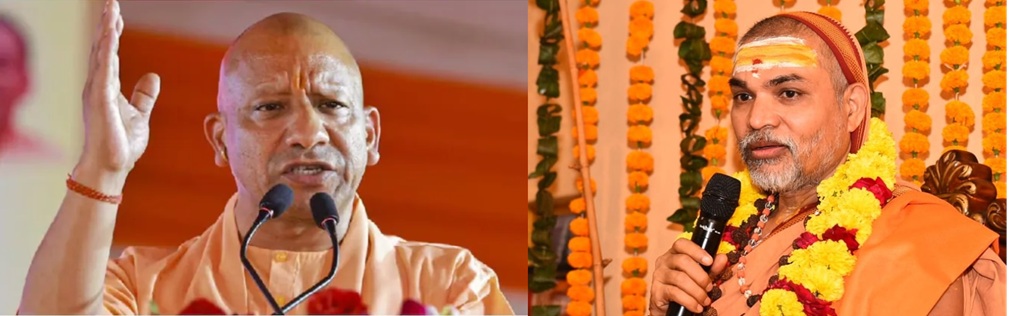
The confrontation between Swami Avimukteshwaranand Saraswati, the contested Shankaracharya of Jyotirmath, and the Yogi Adityanath-led Uttar Pradesh administration has escalated far beyond a routine dispute at the Magh Mela in Prayagraj. What began as an alleged obstruction of a traditional holy dip on Mauni Amavasya (January 19, 2026) has morphed into a profound crisis of legitimacy for the Bharatiya Janata Party (BJP). The party now faces an unprecedented internal fracture, mounting criticism from traditional Hindu religious authorities and the very real threat of alienating segments of its core Hindu vote bank across multiple regions of the country. With Uttar Pradesh Assembly elections due in early 2027 and national polls on the horizon, the BJP cannot afford to let this controversy fester.
The Spark at the Triveni Sangam
The incident unfolded during the ongoing Magh Mela, one of Hinduism’s major pilgrimage events held at the sacred confluence of the Ganga, Yamuna, and mythical Saraswati rivers. On Mauni Amavasya—a day of profound silence and spiritual observance—Swami Avimukteshwaranand Saraswati attempted to lead his traditional palanquin procession for a holy dip. According to the seer and his supporters, police personnel intervened, blocking the procession on grounds of route violation and security concerns. The Shankaracharya described the action as a deliberate humiliation of the ancient Shankaracharya tradition and immediately launched an indefinite dharna outside his camp, demanding a public apology from the administration for what he termed an “insult to Sanatan Dharma.”
The Prayagraj Mela Authority responded aggressively. It issued multiple notices to the seer, first questioning his right to use the title “Shankaracharya” and citing a 2022 Supreme Court order that prohibits any new consecration or formal recognition for the Jyotish Peeth until a long-pending legal dispute is resolved. A second notice accused him of rule violations, unauthorized use of facilities, and threatened revocation of his allocated land allotment along with potential bans from future melas. The seer countered by accusing the authorities of playing a “notice-issuing game” and vowed legal action through his lawyers.
Yogi’s Hardline Stance vs. Internal Dissent
Chief Minister Yogi Adityanath, a monk-turned-politician whose aggressive Hindutva image has been central to his popularity, has adopted an uncompromising position. In public remarks, he warned of “Kalnemi-like conspiracies”—a mythological reference to a demon who disguised himself as a sage to deceive and weaken dharma—implicitly targeting those allegedly sowing discord under the guise of religion. Yogi emphasized that true saints prioritize dharma above all and suggested the controversy was part of a broader attempt to undermine Sanatan Dharma.
This stance, however, has not gone unchallenged within the BJP itself. Deputy Chief Minister Keshav Prasad Maurya, a key OBC leader and often seen as a counterweight to Yogi within the state party, publicly broke ranks. Maurya addressed the seer respectfully as “Bhagwan Shankaracharya,” urged him to withdraw the protest after performing the dip, and subtly acknowledged possible administrative lapses. The Shankaracharya himself responded positively, praising Maurya as “sensible” and “respectful” while sharply criticizing the Chief Minister’s approach. Reports indicate that several BJP MLAs, local leaders, and even sections of the state unit are privately or quietly sympathetic to the seer, creating visible unease and division.
The All India Akhara Parishad, a body of ascetic orders closely aligned with the government, has backed CM Yogi and called for disciplinary action against erring officials rather than questioning the administration’s handling. Yet the emergence of open differences between two of the state’s top leaders has sent alarm signals to the BJP high command in Delhi.
The Unique Authority of the Shankaracharyas
To understand why this controversy carries such explosive potential, one must appreciate the revered status of the four Shankaracharyas—of Jyotirmath (Badrinath), Sringeri, Dwarka, and Puri. Established by Adi Shankaracharya in the 8th century to preserve and propagate Advaita Vedanta and Sanatana Dharma, these peeths represent the highest traditional authority in orthodox Hinduism. Unlike many local gurus, self-proclaimed sanyasis, or politically aligned religious figures who enjoy regional influence, the Shankaracharyas command respect across caste lines and geographical boundaries.
In northern India, particularly among Brahmin communities and traditional Hindus who form a significant portion of the BJP’s vote base, the Shankaracharyas are viewed as authentic custodians of dharma—far above locally influential figures. Even BJP supporters in the Hindi heartland often hold the four peeths in higher esteem than politically convenient saints.
The implications extend well beyond Uttar Pradesh. In southern states—Kerala, Karnataka, Andhra Pradesh, Telangana, and Tamil Nadu—the Shankaracharyas, especially of Sringeri and Jyotirmath, enjoy deep reverence. These are precisely the regions where the BJP has invested heavily to break historical resistance and expand its footprint. Any perception that the party is disrespecting or humiliating Shankaracharyas risks severe backlash in these electorally crucial states, where even small shifts in Hindu sentiment can prove decisive.
In Assam and parts of the Northeast, where the BJP has made significant inroads, the Jyotirmath Shankaracharya also commands considerable followers among Assamese Hindus. A prolonged controversy could undermine the party’s carefully cultivated image as the protector of Hindu interests in these areas.
Political Repercussions: A Fracturing Hindu Vote Bank
The BJP’s dominance since 2014 has rested on unprecedented Hindu consolidation across castes, regions, and classes. This unity, forged under the banner of Hindutva, delivered massive majorities in Uttar Pradesh, the Hindi heartland, and emerging gains in the east and south. However, this controversy threatens to introduce dangerous fissures.
Even a modest 6–10% erosion among orthodox and traditional Hindu voters—those who prioritize spiritual legitimacy over political expediency—could prove catastrophic in closely contested constituencies. In Uttar Pradesh, with 403 Assembly seats and 80 Lok Sabha seats, such fragmentation might hand opposition parties like the Samajwadi Party and Congress unexpected openings. Opposition leaders have already seized the narrative: Akhilesh Yadav called the incident “the biggest adharm,” while Congress framed it as governmental overreach against revered seers.
If the controversy drags on, a rumored grand assembly of all four Shankaracharyas in Delhi—potentially coinciding with a major Gau Raksha event—could become a symbolic flashpoint. Such a gathering would carry immense moral weight and could rally nationwide discontent, portraying the BJP as arrogant and willing to sacrifice spiritual tradition for political control.
The party now confronts a painful dilemma. Backing Yogi’s inflexible position risks long-term damage to its Hindu credibility. Yet sidelining or reducing his role—even through a quiet cabinet reshuffle or diminished public profile—would come at the cost of alienating his dedicated base. Historical precedents show the BJP high command has occasionally prioritized electoral pragmatism over ideological rigidity, but the decision carries high risks in a polarized environment.
Broader Critique: Hindutva’s Credibility Gap
The controversy also revives uncomfortable questions about the BJP’s record on core Hindutva issues. Swami Avimukteshwaranand has repeatedly highlighted India’s position as one of the world’s top beef exporters despite state-level cow protection laws—a glaring contradiction that undermines the party’s “gau raksha” promises. Such critiques resonate deeply among purist Hindus, fostering the perception that Hindutva is being weaponized for electoral gain rather than practiced sincerely.
A Self-Inflicted Wound That Could Bleed for Years
The BJP stands at a crossroads. This is no longer merely a local mela dispute or a clash between a chief minister and a seer. It has become a litmus test of whether the party genuinely respects the traditional religious hierarchy it claims to champion or is prepared to subordinate spiritual authority to political convenience.
If the controversy is not urgently contained—through dialogue, apology, substantive action on cow protection, or mediation by neutral figures—the damage could prove enduring. A fractured Hindu vote, alienated southern prospects, weakened eastern gains, and internal fissures in Uttar Pradesh could combine to erode the very foundation of the BJP’s national dominance. The Sangam may symbolically wash away sins, but political hubris demands a far heavier penance. For a party that rose by uniting Hindu sentiment, allowing this rebellion to continue unchecked risks becoming the architect of its own division—and perhaps its eventual electoral undoing.
