


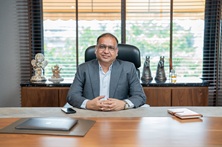
By Mr. Rajesh Agarwal, Director, Oriom Realty
For over two decades, India’s top eight metropolitan markets have anchored real estate growth, which continue to remain important engines of investment, employment and urban development. However, as urbanisation deepens and businesses and homebuyers explore newer growth corridors, Tier-2 and Tier-3 cities are increasingly gaining prominence, signalling a broader geographically diversified real estate landscape.
At the heart of this transformation is Eastern India. Historically recognised for its heavy industries, minerals and manufacturing base, the region is now witnessing a significant urban and economic transition. The latest CII-Knight Frank Report reinforces this emerging trend, identifying 11 Indian cities, including Bhubaneswar, as the country’s next real estate growth destinations. These cities recorded 63% growth between 2021 and 2026, compared with 42% across the top eight metros.
The Macro Catalysts Behind the Shift
Eastern India’s emergence as a compelling real estate destination, with cities such as Bhubaneswar leading the transformation, is being driven by three converging forces: infrastructure-led urban expansion, with investments in highways, airports, railways and smart urban planning opening new growth corridors; economic diversification and talent retention, as IT, financial services, healthcare, education and GCCs deepen their presence, complemented by reverse migration and returning professionals, creating sustained end-user housing demand; and competitive property values with stronger appreciation potential. Underscoring this shift, the CII-Knight Frank Report highlights that emerging Tier-2 markets recorded an average residential price CAGR of approximately 8% between 2016 and 2026, nearly double the 4% recorded across India’s top eight metropolitan cities. Together, these factors are positioning Eastern India’s cities like Bhubaneswar as attractive destinations for sustainable urban growth and long-term real estate investment.
Bhubaneswar: A Blueprint for Eastern Urbanism
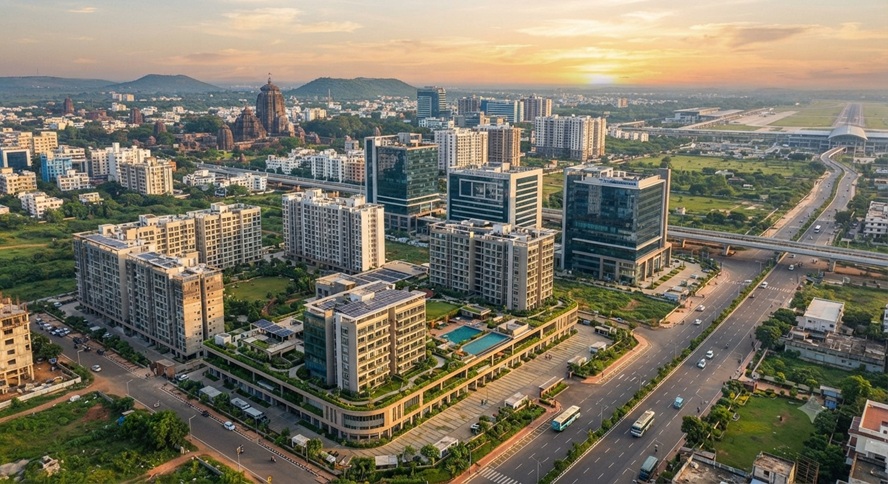
Nowhere is Eastern India’s real estate renaissance more evident than in Bhubaneswar, which is emerging as a compelling destination for residential and commercial investment. Having evolved from an administrative centre into a well-planned, liveable urban hub, the city is witnessing a convergence of infrastructure development, economic diversification, rising incomes and employment-led housing demand. As the CII-Knight Frank Report stated, Bhubaneswar, besides being one of 11 emerging real estate markets of India, is one of six Tier-2 cities driving nearly half of the country’s Tier-2 warehousing activity.
Bhubaneswar’s strength lies in the synergy between progressive civic governance, robust social infrastructure and expanding economic opportunities. Recognised under the Smart Cities Mission, it offers premier educational institutions, tertiary healthcare, extensive road networks and growing IT, tourism and industrial logistics sectors. Its connectivity across the Cuttack – Bhubaneswar – Puri – Khordha region, complemented by links to industrial centers such as Jharsuguda and Rourkela, further reinforces its position as a regional commercial and residential hub.
This growth is translating into tangible real estate demand across emerging corridors such as Raghunathpur, Pahal, Patrapara and Sundarpada, where homebuyers are increasingly moving from standalone plots towards integrated, gated communities. A young and aspirational population, professionals, entrepreneurs, corporate employees and increasingly affluent households are seeking lifestyles that combine convenience, wellness, recreation and community living. Adding to this momentum is the growing trend of reverse migration, with Odias returning from other Indian cities and overseas markets choosing Bhubaneswar as their preferred destination to live, work and invest. Together, these factors provide a strong blueprint for the city’s next phase of real estate growth.
The Evolving Aspirations of a Tier-2 Buyer
Today’s homebuyer in cities like Bhubaneswar is globally exposed, discerning, and value-conscious. Square footage alone is no longer the primary metric; buyers prioritise RERA-backed transparency, architectural integrity, green open spaces, smart amenities, social infrastructure and long-term asset durability. It also creates a market for sophisticated commercial districts, experiential retail, hospitality, serviced residences and mixed-use developments where people can live, work and socialise within an integrated urban ecosystem.
For developers, this shift represents both an opportunity and a responsibility. Building in emerging cities requires moving beyond transactional construction toward holistic community creation, delivering spaces engineered for multi-generational longevity while respecting local environmental and cultural fabric.
****
