


From Our Foreign Desk
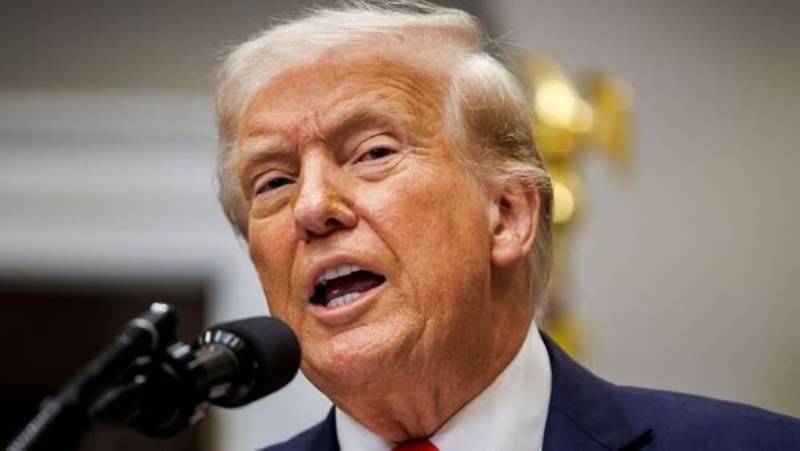
US President Donald Trump declared he would make a “final determination” on a potential agreement with Iran to pause the three-month-old conflict, even as Iranian officials poured cold water on expectations of an imminent breakthrough. The episode encapsulates Trump’s signature foreign policy approach: aggressive leverage through military and economic pressure, paired with opportunistic diplomacy aimed at securing what he calls a “good and proper” deal.
In a Truth Social post on Friday, Trump outlined key demands before heading into a high-level meeting in the White House Situation Room. He emphasized that Iran must permanently forgo nuclear weapons ambitions, cooperate on removing mines and reopening the Strait of Hormuz to unrestricted shipping, and address its stockpiles of enriched uranium. Trump announced the lifting of the US naval blockade on Iranian ports, signaling a partial de-escalation while keeping the pressure on.
The Strait of Hormuz has emerged as the central economic battleground in the conflict. This narrow 21-mile-wide waterway between Iran and Oman serves as the world’s most critical energy chokepoint. In normal times, it carries an average of 20.9 million barrels per day of petroleum liquids — roughly 20% of global petroleum consumption and 25% of all seaborne oil trade. About 80-89% of this crude flows to Asian markets, particularly China, India, Japan, and South Korea. The strait also handles a significant share of global LNG exports from Qatar and the UAE, representing around 19–20% of worldwide LNG trade.
The recent conflict dramatically exposed these economic vulnerabilities. Following Israeli and US strikes on Iranian targets earlier this year, daily vessel transits through the strait plummeted from around 70 oil- and gas-related ships per day to fewer than 6–7 in May. Crude export volumes from the Middle East dropped by roughly half, driving up global oil prices and injecting volatility into energy markets. A full or prolonged closure could push prices to $100–$200 per barrel, triggering widespread inflation, higher transportation and manufacturing costs, and potential recessionary pressures — especially in oil-import-dependent Asian economies.
Gulf producers have limited bypass options. Saudi Arabia’s East-West Pipeline can handle up to 7 million barrels per day to the Red Sea, while the UAE’s Habshan–Fujairah pipeline offers about 1.8–2 million b/d to the Gulf of Oman. Combined alternative capacity remains far below the 20+ million b/d that normally flows through Hormuz, making sustained disruption extremely costly for the global economy.
The backdrop to Trump’s current push is a conflict that erupted following strikes on Iranian nuclear and military sites. The fighting severely disrupted oil flows through the strait, rattled markets, and drove energy prices higher. A fragile ceasefire took hold in April, but negotiations have dragged on amid deep mutual distrust.
Trump’s strategy appears rooted in “maximum pressure” 2.0 — an evolution of his first-term policy. By maintaining a naval blockade and supporting Israeli actions, the administration sought to degrade Iran’s military capabilities and force Tehran back to the table on US terms. At the same time, Trump has engaged regional mediators including Qatar, Pakistan, and Gulf states, while floating broader visions like expanding the Abraham Accords.
“I will be meeting now, in the Situation Room, to make a final determination,” Trump posted, listing conditions that include verifiable limits on Iran’s nuclear program and secure maritime passage. Oil prices dipped following the announcement, reflecting market hopes for stabilization and restored Hormuz traffic.
Yet Iranian responses highlight the gaps. Foreign Ministry spokesman Esmaeil Baghaei stated that while message exchanges continue, “an understanding has not been finalised.” Parliament Speaker and top negotiator Mohammad Bagher Ghalibaf struck a harder line, insisting any agreement would be judged solely on “actions” rather than words. “No action will be taken before the other side acts,” he said, reflecting Tehran’s insistence on reciprocal steps and resistance to unilateral concessions.
Analysts see Trump’s approach as a calculated blend of coercion and flexibility. He has repeatedly said he is “not in a rush,” leveraging time as an advantage while Iran’s economy strains under sanctions and war damage. Reports suggest a proposed 60-day extension of the ceasefire tied to a memorandum of understanding that would reopen Hormuz, launch nuclear talks, and potentially involve a reconstruction fund backed by Gulf states — though no money would flow without compliance.
The economic stakes are enormous. Restoring safe passage through the strait would immediately ease global energy prices and reduce risk premiums. However, critics argue the strategy risks rewarding Iranian intransigence or repeating past patterns of sanctions relief without ironclad guarantees. Supporters counter that Trump’s willingness to use force — demonstrated by the earlier strikes — has given the US stronger negotiating leverage than during the 2015 JCPOA era, from which Trump withdrew in 2018.
The president has also linked the Iran file to wider regional ambitions, pushing for normalized relations between Israel and more Arab states as part of any lasting settlement. This “big picture” framing allows Trump to present even a limited ceasefire as a stepping stone toward historic realignments, with the economic prize being stable energy flows through the world’s most vital maritime chokepoint.
As of Friday evening, no final announcement had emerged from the Situation Room meeting. Trump’s team continues to stress that any deal must prevent Iran from acquiring nuclear weapons “ever” and ensure freedom of navigation in the Strait of Hormuz.
The coming days will test whether Trump’s mix of military posture, economic leverage, and personal deal-making can deliver a breakthrough. For now, the exchanges continue — words flowing freely, but actions still awaited on both sides. With global energy markets watching closely and the shadow of renewed conflict looming over one of the world’s most economically sensitive waterways, the stakes could hardly be higher.
