


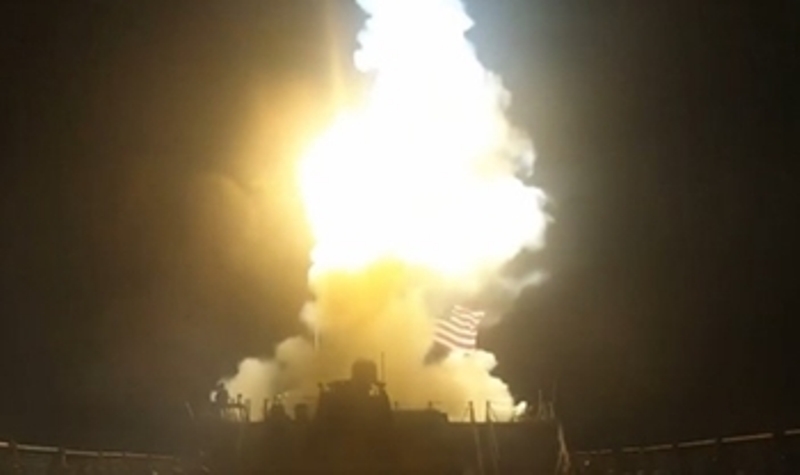
Dubai: The US military has launched fresh airstrikes against Iranian targets, escalating its campaign to punish the Islamic Revolutionary Guard Corps (IRGC) following a deadly drone and missile attack on a US base in Jordan that killed two American service members, left one missing, and hospitalized four others.
US Central Command (CENTCOM) stated that the latest operation, part of the eighth consecutive night of strikes, targeted Iranian military coastal surveillance networks, air defense facilities, maritime assets, missile and drone storage sites, and IRGC personnel linked to the Jordan attack. The strikes aim to further degrade Iran’s capacity to threaten commercial shipping and restrict oil tanker traffic through the Strait of Hormuz, a critical chokepoint that handled roughly 20 percent of global oil supplies before the current conflict intensified.
The assault on Muwaffaq Salti Air Base (also known as Al-Azraq or MSAB) in Jordan on Friday marked the first US troop deaths from direct Iranian fire since the early stages of the broader conflict. Iranian ballistic missiles and drones struck the facility, which serves as a key hub for US air operations against Iran. Four wounded service members were evacuated to Jordanian hospitals and later discharged, while other personnel sustained minor injuries.
CENTCOM emphasized that the response was designed not only to retaliate but to swiftly punish IRGC forces responsible for the Jordan strike and to protect freedom of navigation in the vital waterway. Footage released by the US military showed strikes conducted by fighter jets and Tomahawk cruise missiles. Secretary of Defense Pete Hegseth noted that the deadly attack “only stiffens our resolve.”
Escalating Tensions and Regional Impact
This latest round of strikes comes amid a fragile and repeatedly tested interim ceasefire aimed at ending hostilities. Iran has accused the US of targeting civilian and nuclear-related infrastructure, while the US maintains its actions are proportionate responses to Iranian aggression against commercial shipping and coalition forces. The Strait of Hormuz remains a flashpoint, with Iran attempting to assert control and disrupt tanker movements, prompting repeated US interventions to reopen safe transit routes.
Oil markets have reacted with volatility to the ongoing exchanges. Disruptions in the strait threaten global energy supplies, raising concerns about higher fuel prices and broader economic ripple effects, particularly for energy-importing nations like India. Regional allies, including Jordan, have been drawn into the fray, with Jordanian air defenses intercepting incoming projectiles on multiple occasions.
Since the conflict resumed at heightened levels, the US has reported 16 service members killed and over 420 wounded in operations linked to Iran. Iranian authorities claim dozens of deaths and hundreds wounded from US strikes, including impacts near sensitive sites.
The IRGC, a powerful force controlling significant military and economic assets in Iran, has vowed continued retaliation. Analysts warn that sustained tit-for-tat actions risk derailing diplomatic efforts for a longer-term peace agreement. The US has signaled determination to neutralize threats to its forces and international shipping, while Iran portrays the strikes as unprovoked aggression against its sovereignty.
As the situation develops, international observers monitor the potential for wider involvement from Gulf states and the impact on global oil flows. US officials have stressed that operations will continue as necessary to restore stability in the region.
