


By Geetha V P
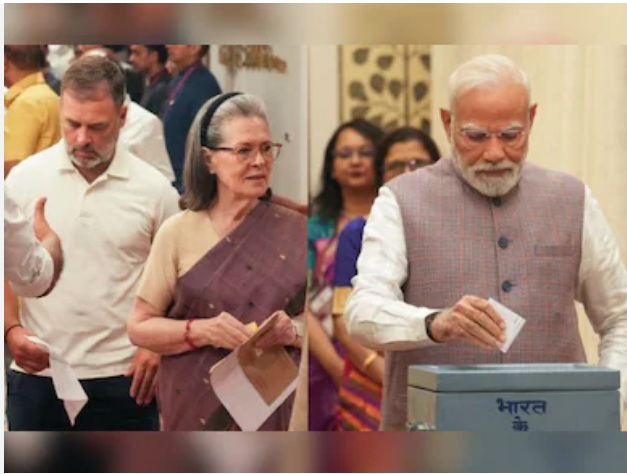
The convincing victory of the National Democratic Alliance (NDA) candidate C.P. Radhakrishnan in the just concluded Vice Presidential election has once again exposed the crater in the much trumpeted Opposition Unity – the Indian National Developmental Inclusive Alliance (INDIA). In the secret ballot held on September 9, 2025 in Room No. F-101, at Vasudha, Parliament House (NDA) candidate C P Radhakrishnan was elected as 15th Vice-President of India, with 452 votes against the INDIA bloc’s candidate, Justice B Sudershan Reddy, who secured 300 votes. The victory has not only secured the NDA’s grip on the constitutional post but also laid bare the fissures within the opposition’s ranks. The defeat of the INDIA candidate has once again brought to the forefront the fragile nature of the opposition’s so-called unity.
In fact, the Vice Presidential election was a foregone conclusion in terms of numbers, with the NDA holding a clear advantage with 429 MPs, including support from the YSR Congress Party (YSRCP), against the INDIA bloc’s 324 MPs. The majority mark stood at 391 votes, and Radhakrishnan’s tally of 452 votes comfortably surpassed this threshold. However, the opposition’s failure to secure even its estimated strength of 324 votes—falling short by 24 votes—has raised serious questions about its unity. Congress General Secretary Jairam Ramesh claimed a “100% turnout” of the opposition’s 315 MPs, yet the 300 votes for Reddy indicate a discrepancy of 15 votes, suggesting either cross-voting or deliberate invalidation of ballots by opposition MPs.
This shortfall is particularly striking when compared to the 2022 Vice Presidential election, where the NDA’s Jagdeep Dhankhar won by a margin of 346 votes against the opposition’s Margaret Alva, who secured only 26% of the vote. While the INDIA bloc improved its share to 40% in 2025, the failure to consolidate its full strength underscores a lack of discipline and coordination among its constituents. The opposition’s narrative of a “moral and political defeat” for the NDA rings hollow when its own MPs appear to have defected or abstained, exposing internal fissures.
It’s true, the abstention of key parties like the Biju Janata Dal (BJD) with seven MPs, Bharat Rashtra Samithi (BRS) with four MPs, and Shiromani Akali Dal (SAD) with one MP further weakened the opposition’s position. While these abstentions did not alter the NDA’s numerical advantage, they highlighted the opposition’s inability to rally all non-NDA parties under its banner. The BJD’s decision to abstain, for instance, was seen as a strategic move to block Congress’s revival in Odisha, indicating that regional priorities often supersede the alliance’s broader objectives.
Moreover, the Congress’s claim of a united front was challenged by the actions of its own allies. The TMC, a key INDIA constituent, has a history of inconsistent participation, having skipped the 2022 Vice Presidential election. In 2025, despite its MPs voting, the TMC’s ongoing rivalry with Congress in West Bengal and its opposition to the Special Investigation Register (SIR) initiative suggest a lack of full commitment to the alliance’s goals. Similarly, the AAP’s decision to skip a mock poll session due to flood-related concerns in Punjab raised doubts about its alignment with the bloc. These instances point to a coalition where individual parties prioritize local political calculations over collective action.
The most damning evidence of the INDIA bloc’s disunity lies in the suspected cross-voting during the election. The NDA’s claim that at least 15 opposition MPs voted for Radhakrishnan, with some suggesting up to 40 MPs supported him “in some manner,” indicates that personal or political incentives may have swayed opposition lawmakers. The secret ballot system, coupled with the absence of a party whip in Vice Presidential elections, allows MPs to vote according to their conscience—or, as critics argue, their ambitions. The 15 invalid votes, which opposition leaders admitted may have included deliberate errors, further fuel speculation of internal sabotage.
This cross-voting reflects a deeper issue within the INDIA bloc: the pursuit of power and influence over ideological commitment. The NDA’s ability to attract opposition votes, possibly through promises of political favour or pressure, underscores the fragility of a coalition that lacks a unified vision. The Congress, as the bloc’s leader, faces the dual challenge of preventing cross-voting and maintaining alliances with parties that are often at odds with each other. For instance, the TMC and Left parties in West Bengal, or the Congress and AAP in Punjab, are direct competitors, making trust and coordination difficult.
In contrast, the NDA, led by the Bharatiya Janata Party (BJP), demonstrated its strategic acumen in securing Radhakrishnan’s victory. The choice of Radhakrishnan, a soft-spoken leader from Tamil Nadu with a strong RSS background and a non-controversial image, was a calculated move to appeal to southern states and consolidate the alliance’s support base. The NDA’s ability to secure the backing of the YSRCP and potentially other non-aligned MPs further highlights its political maneuvering. The coalition’s unity, bolstered by key allies like the Telugu Desam Party (TDP) and Janata Dal (United), stood in stark contrast to the opposition’s disarray.
The NDA’s campaign narrative, centered on “Indian nationalism” and “Viksit Bharat” (Developed India), resonated with MPs, as evidenced by Union Minister Kiren Rijiju’s claim that many opposition MPs supported Radhakrishnan for his nationalist ideology. The NDA’s breakfast meetings, state-wise coordination by senior ministers, and appointment of polling agents ensured maximum participation and valid voting, minimizing the risk of errors or defections.
In short, the Vice Presidential election has exposed the hollowness of the INDIA bloc’s claims of unity. Of course, the opposition can find solace in its improved vote share compared to 2022, 182 against BJP’s 528. However INDIA block’s failure to secure its full strength and the suspected cross-voting revealed the coalition was more driven by opportunism and hardly shared any vision.
Many may argue that the INDIA alliance’s formation in 2023 was a pragmatic response to the NDA’s dominance,” but its internal contradictions—regional rivalries, ideological differences, and competing ambitions—have repeatedly undermined its effectiveness. The Congress’s leadership, under Mallikarjun Kharge and Rahul Gandhi, has struggled to bridge these divides, as seen in the defections of key allies like Nitish Kumar’s Janata Dal (United) and the Rashtriya Lok Dal to the NDA in 2024.”
Political observers feel that the Vice Presidential election’s outcome has “significant implications for the INDIA bloc as it prepares for upcoming state assembly elections and the 2026 polls. The inability to maintain unity in a high-stakes constitutional election bodes poorly for its prospects in more contentious electoral battles.”
In conclusion, the 2025 Vice Presidential election exposed the delicateness of the INDIA alliance. The opposition’s claims of unity have been undermined by cross-voting, abstentions, and regional rivalries, proving that its cohesion is more aspirational than authentic.
