


Animal husbandry is a vital supplementary income source for millions of small and marginal farmers across India. Unlike agricultural income, which fluctuates due to weather, market conditions, and crop disease livestock rearing offers a more stable financial stream. Beyond income, livestock provide essential nutrition through milk and act as important household assets.
However, the sector faces persistent challenges: high mortality rates due to inadequate feed and shed management, inconsistent fodder availability, and limited access to last-mile veterinary services. Livestock losses not only reduce income but also weaken a family’s nutritional security and ability to manage risks.
Pashu Sakhis: Catalysts of Change in Livestock Management
“Earlier, my world was limited to my home. When I learned about the Pashu Sakhi model, I saw a new path for myself. The training gave me knowledge and confidence, this journey has shown me that with the right support, rural women can turn ambition into livelihood.”- Manjita, Village Azamnagar, Mahendragarh, Haryana.
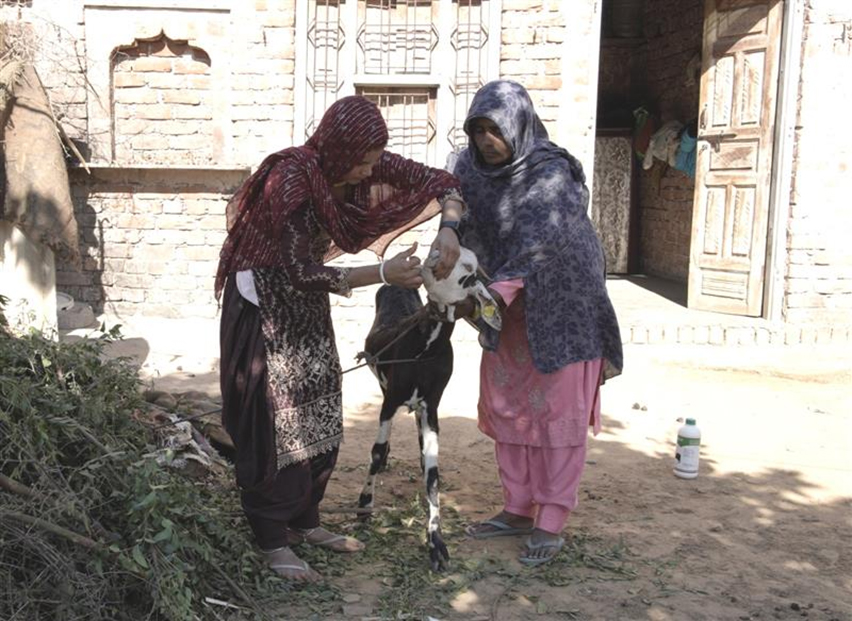
Addressing gaps in last mile veterinary care, the Pashu Sakhis (animal friend) model has emerged as a transformative approach to livestock management in rural India. Pashu Sakhis are trained, community based animal healthcare workers who work closely with the block veterinary teams and play a critical role in extending essential services to underserved villages. Since 2022, under the HDFC Parivartan supported project implemented by S M Sehgal Foundation, a rural development NGO, the Pashu Sakhi model was introduced across project locations. Since the introduction, a large cohort of women have stepped into this role, embracing self-reliance and leadership within their communities.
The women have received structured training in identifying common animal diseases, administering health supplements and vaccinations, and advising farmers on preventive and remedial animal care practices.
Today, these trained women earn between Rs 3,000 and Rs 4,000 per month, contributing to their financial independence and household income. Many Pashu Sakhis have further strengthened their livelihoods by establishing Pashu Aahar Kendras, which supply nutritious animal feed and essential medicines. Two others have diversified into goat rearing enterprises, expanding their income sources further.
One inspiring example is Manjita from village Azamnagar in Mahendragarh district. Once confined largely to household responsibilities, Manjita always carried a quiet ambition to do more. When the Village Development Committee formed to oversee the project activities in her village introduced the Pashu Sakhi model in 2023, she promptly enrolled in the intensive 18-day training program conducted by experts from the Animal Husbandry Department. After this, Manjita had no looking back. From extending Pashu Sakhi services, to running the Pashu Aahar (animal feed) enterprise, she now earns around Rs 20,000 per month. To top it, she also has a goat farm, marking a significant milestone in women-led rural entrepreneurship. –
Naveen Pratap Singh, Sr. Program Lead, Agriculture Development, S M Sehgal Foundation, shares, “Pashu Sakhis support farm households by guiding them on good animal care, and providing basic veterinary first aid, they also help connect rural communities with veterinary experts. Their training is done step by step by experienced resource persons. The initiative has grown into several women-led micro-enterprises.”
Developing such trained grassroots service providers assists many households in the village. The Pashu Sakhi model initiative has built a cadre of rural women to provide veterinary first-aid at the local level, a strong start with more miles to go.
Strengthening Livelihoods Through Goat Rearing
Goats are often called “poor people’s cows” for their low investment needs, resilience in harsh climates, and quick returns. In Narnaul, Mahendragarh, where landlessness and climate stress make agriculture uncertain, goat rearing has become a dependable livelihood. To support this shift, S M Sehgal Foundation, strengthened goat-based livelihoods across project villages by providing beneficiary households with units of two female (Does) goats and one male (Buck) goat, along with practical guidance.
One such beneficiary is Geeta from Jakhni village, Narnaul, Mahendergarh. She received her goat unit in 2023 and with careful rearing, she expanded her herd by two more goats. With a production of 2.25 liters of milk daily, she sells 1.25 liters and keeps the rest for her family. Her current herd has four goats, as she sold one buck valued at about Rs 60,000, giving her an additional income. Her monthly milk sales give her a sustained source of earning, improving their quality of life. Geeta now hopes to scale her micro unit into a small goat farm, showing how well-supported livestock assets can grow into reliable, long-term income sources.
Together, these initiatives in Mahendragarh reflect the steady impact of well planned, community based efforts in rural areas. By integrating women-led livestock services with livelihood development, the project is supporting farming households in strengthening resilience, improving economic security, and moving towards a more self-reliant future.
