

196 Raids, Two Convictions: Kharge Brands ED a Caged Parrot

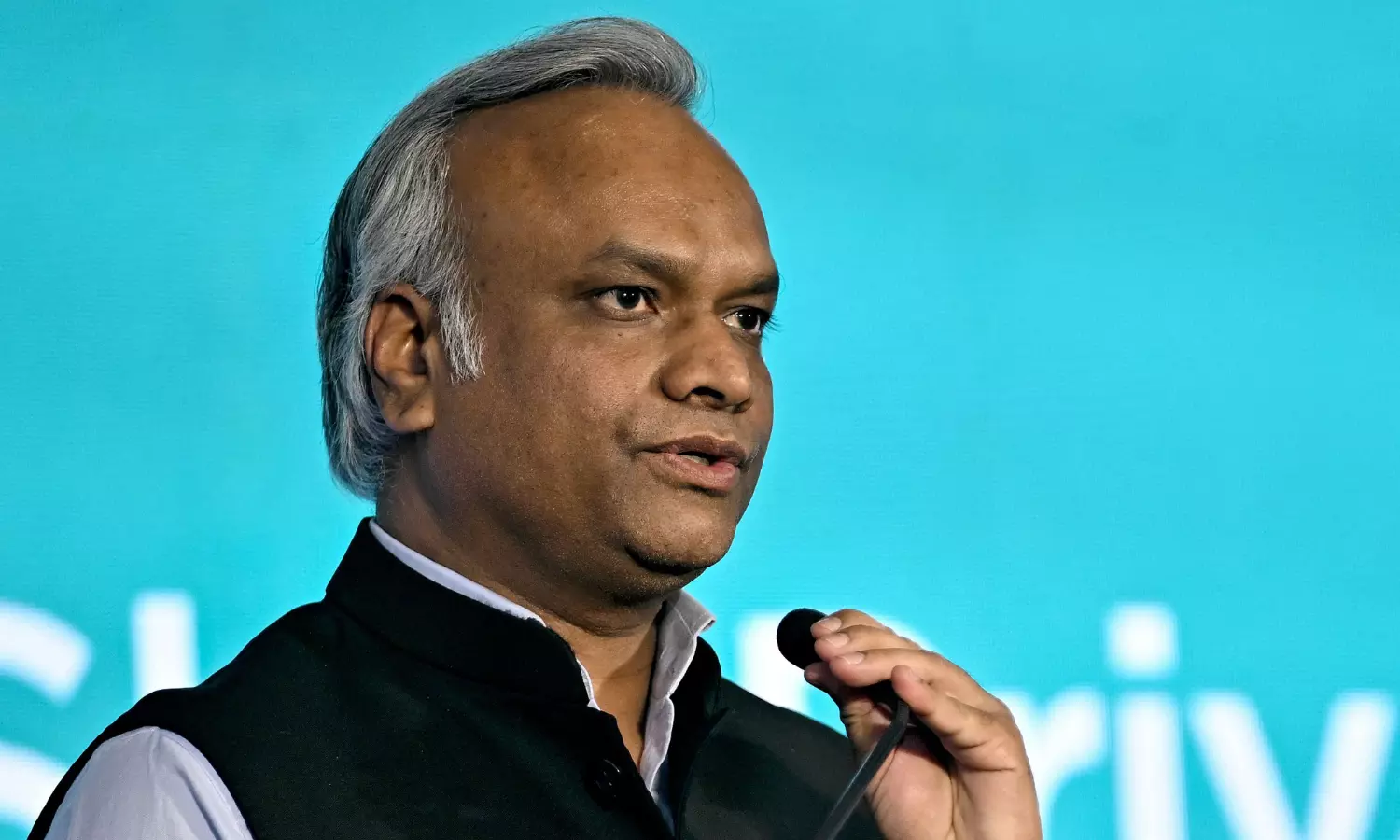
Bengaluru: Karnataka Home Minister Priyank Kharge on Saturday accused the Centre of using central investigative agencies to target Opposition leaders, citing what he described as a sharp mismatch between raids and convictions. Speaking to reporters here, he termed the recent Enforcement Directorate (ED) searches linked to Public Works Minister Satish Jarkiholi and his family as “politically motivated.”
The ED on Wednesday, September 9, conducted searches at the residences of Jarkiholi, his daughter and Chikkodi Lok Sabha MP Priyanka Jarkiholi, and his brother-in-law Y. Manjunath, among 18 locations. The agency has said the probe relates to an alleged money-laundering case concerning Jarkiholi and is not connected to an earlier excise-related matter involving Manjunath.
Kharge grouped the ED with the Central Bureau of Investigation and the Income Tax Department, calling them “caged parrots” and “puppets of the central government.” He alleged that the agencies act on directions from New Delhi to “torture opposition leaders.” “It’s very clear: 196 raids in the last few years, two convictions, and 98 per cent of all the raids are on opposition leaders. It’s extremely evident that this is nothing but politically motivated,” he said. “They are unable to prove… just releasing a press note doesn’t make things factually correct.”
He returned to the same numbers when questioning the agency’s public communications. “How many press notes have been issued? 196 press notes have been issued. How many convictions have there been? Two. So what?” Challenging the idea that a press note established guilt, he added: “So, are you declaring my colleague guilty based on a press note? In that case, I will issue a press note today. Will you accept that he is innocent?” He asked the ED to place evidence in the public domain rather than rely on official notes.
The minister’s remarks come against a longer parliamentary record on cases involving political figures. In March 2025, the Union government told Parliament that the ED had registered 193 cases against political leaders over the previous ten years, of which two had ended in conviction. Those convictions were of former Jharkhand ministers Hari Narayan Rai (2017) and Enos Ekka (2020). No case in that set, the government said, had ended in acquittal on merits. Opposition parties have since used the two-conviction figure to argue that searches and attachments far outpace completed trials against politicians.
The Centre and the ED have separately cited a high conviction rate—around 94 per cent—among the relatively small number of PMLA cases decided on merits. Parliamentary replies through 2025–26 also show thousands of Enforcement Case Information Reports, hundreds of searches a year, and large asset attachments, while noting that trials have not begun in a majority of pending matters. Critics argue that the “on merits” rate does not capture the gap between raids, arrests and final outcomes, especially in politically sensitive files. The agency maintains that investigations are evidence-based and that delays reflect the complexity of money-laundering trials.
Kharge also suggested that central agencies would be used more intensively as elections approach, saying the BJP appeared unwilling to rely on its own leaders in Karnataka and warning that further action against other Congress figures could follow. Congress colleagues have described the Jarkiholi searches as political vendetta. The ED has not issued a point-by-point rebuttal of Kharge’s Saturday comments; its earlier clarification was limited to the scope of the Jarkiholi searches.
The exchange adds another chapter to the running dispute over whether central agencies operate independently or as instruments of political pressure—an argument that now sits at the centre of Karnataka’s confrontation with New Delhi.
