
57,000+ Schools Join Nationwide E-Waste Campaign Under Eco Clubs for Mission LiFEInitiative led by Ministry of Education and Ministry of Environment

National : Schools across India collected 4.27 lakh e-waste items during the nationwide E-Waste Awareness and Reduction Campaign under the Ministry of Education’s Eco Clubs for Mission LiFE initiative. Conducted by Bajaj Foundation in collaboration with the Department of School Education & Literacy, Ministry of Education, and with support from UNICEF YuWaah, the campaign concluded with school communities participating in awareness sessions, collection drives and activities promoting responsible electronic waste management.
A total of 57,271 schools reported campaign activities, engaging 33 lakh participants, including 30.22 lakh students and 2.78 lakh teachers. The initiative connected environmental education with practical action, encouraging students and educators to adopt responsible habits around the use, repair, reuse and disposal of electronics.
The collection of 4.27 lakh e-waste items was reported by 25,731 schools, while 39,494 e-waste collection corners were established nationwide. These designated spaces supported the segregation and collection of discarded electronics, giving school communities a practical way to apply their learning.
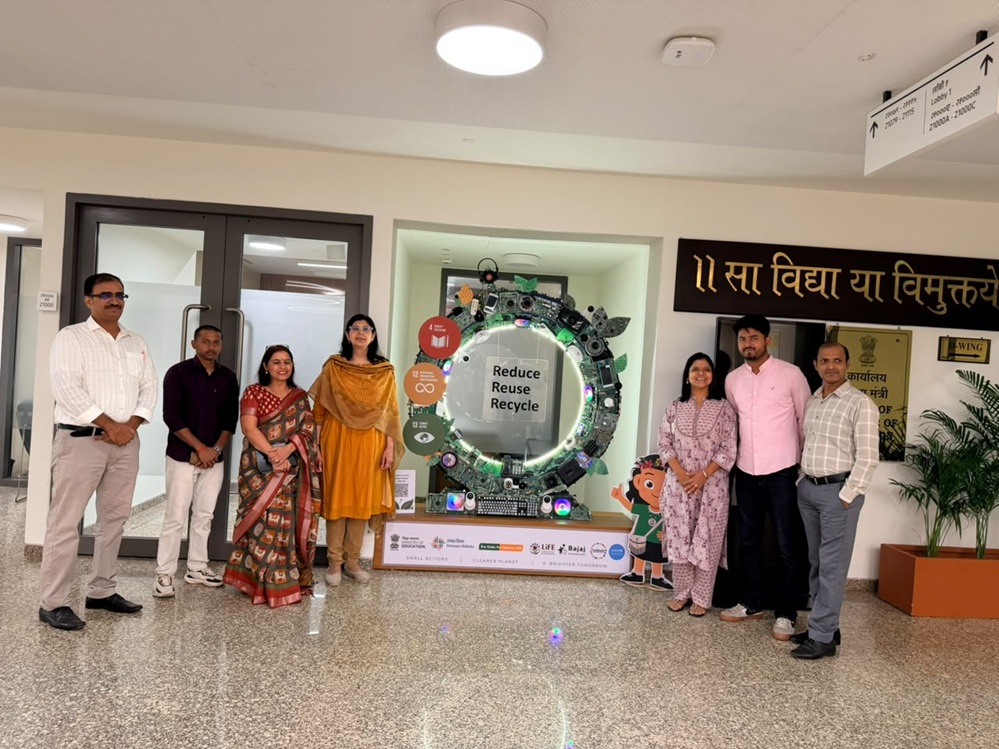
“Through Special Campaign 6 under Eco-Clubs for Mission LiFE, we are educating schoolchildren on reducing e-waste and disposing of it responsibly. This mural, created from 50 kg of e-waste collected from schools nationwide, reflects their efforts. With over four lakh items collected so far, the campaign continues until 31 October.” said Amarpreet Duggal, Joint Secretary, Ministry of Education
Through 36 State and Union Territory webinars, the campaign provided guidance on identifying e-waste, safe collection and segregation, storage, handling, transportation, repair, reuse and responsible recycling. Outreach included CBSE schools, Kendriya Vidyalayas and Jawahar Navodaya Vidyalayas, with regional-language sessions helping make the information accessible to school communities across different regions.
The sessions addressed practical questions raised by teachers and Eco Club coordinators, including how to identify authorised recyclers, protect data stored on discarded electronic devices and maintain records of collected material and its handover. This guidance helped schools understand the steps involved in responsible e-waste management beyond collection.
Standard Operating Procedures, frequently asked questions, an e-book, awareness materials and authorised recycler information were also developed and disseminated. These resources provided educators with reference material for continued Eco Club activities and encouraged students to share responsible practices with their families and communities.
Giorgia Varisco, Chief of UNICEF YuWaah, said, “Our partnership with the Ministry of Environment, Forest and Climate Change, aligned with India’s Mission LiFE (Lifestyle for the Environment) initiative, reflects our shared commitment to advancing youth-led environmental action. We are pleased to support the Department of School Education’s Special Campaign on E-waste Awareness and Reduction, recognising young people as key agents of environmental change. Through Green Rising, we remain committed to promoting a just green transition by equipping vulnerable young people with the knowledge, skills, and opportunities to contribute to a greener and more sustainable India.”
To mark International E-Waste Day, an e-waste mural was installed at the Ministry of Education as part of the campaign, using over 60 kg of discarded electronic material collected by students. The installation brought students’ participation into focus, transforming collected e-waste into a visual reminder of the importance of responsible consumption, repair, reuse and recycling. It also demonstrated how creative expression can carry environmental learning beyond the classroom.
The campaign highlighted the contribution schools can make to responsible waste management when awareness is supported by practical guidance and opportunities to participate. From collection corners to interactive learning sessions, the activities encouraged students and teachers to make informed choices and extend those practices to their wider communities.
Developing an SOP is only the first step; ensuring that it is understood and implemented on the ground is what truly drives impact. Communicating these guidelines in regional languages is critical to bridging the last-mile gap, making the information accessible, practical and relevant for those responsible for implementation. At Bajaj Foundation, we believe that knowledge must go beyond documentation to enable meaningful action, and language plays a vital role in translating awareness into effective, responsible e-waste management practices.” said Shohini Dutta, Chief Philanthropy Officer, Bajaj Foundation
Building on the campaign, continued engagement will focus on school-led sustainability activities, collaboration with authorised recyclers and stronger documentation of e-waste collection and handover. These efforts aim to help Eco Clubs sustain the practices introduced through the initiative and make responsible electronic waste management part of everyday life.
****
