


By Nanditha Subhadra
Kochi: In the run-up to Kerala’s assembly elections, Prime Minister Narendra Modi’s visit to Thiruvananthapuram on January 23, 2026, was promoted by the local BJP leadership and the city’s mayor as a game-changer. Assurances were in abundance: Modi would unveil a comprehensive “blueprint” for the development of the city and the state, transforming Kerala into a hub of innovation and progress. The hype was palpable, with party workers and supporters anticipating announcements that would address long-standing issues like urban infrastructure, employment, and economic growth. Yet, when the dust settled after Modi’s speech and the obligatory flag-offs, the reality was starkly different. No grand blueprint materialized; instead, the visit felt like a perfunctory pit stop, reinforcing the perception that Kerala remains low on the BJP’s priority list unless electoral gains are imminent.
Modi’s itinerary included laying foundation stones for a few projects, such as rail enhancements and a new healthcare facility, and flagging off trains like the Amrit Bharat Express services. These are welcome, no doubt, but they hardly constitute the transformative vision promised. Critics from the opposition, including the Congress and CPI(M), seized on this shortfall, labeling it a “missed opportunity” that hands them ammunition to portray the BJP as indifferent to Kerala’s unique needs. The absence of bold, state-specific initiatives—such as targeted investments in coastal resilience, IT corridors beyond the existing ones, or minority welfare programs—speaks volumes. It’s as if the PM’s team recycled a generic development script, ignoring the local BJP’s pleas for something more substantive. This isn’t just oversight; it’s a calculated snub, signaling that Kerala, with its historically low BJP vote share, isn’t worth the political capital until the party can muscle its way to power.
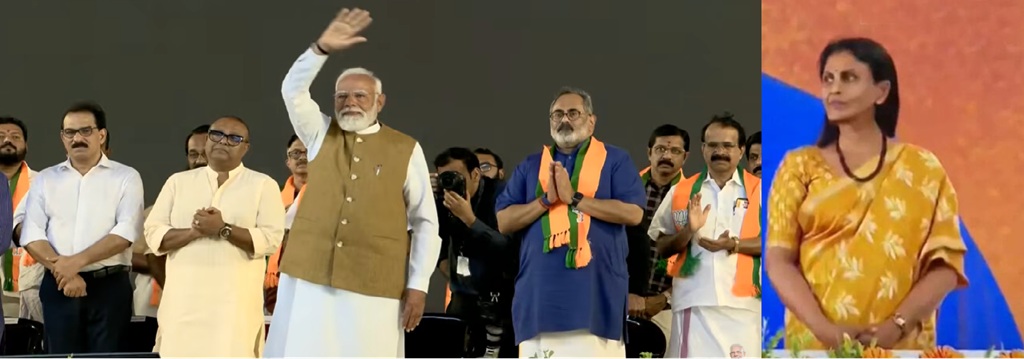
Compounding this neglect was the treatment of R. Sreelekha, the former Director General of Police and a high-profile BJP recruit. Sreelekha, who joined the party with much fanfare as Kerala’s first woman IPS officer from the state, was eyed for the Thiruvananthapuram mayor’s post during the local body elections. She campaigned vigorously, only to be sidelined at the last minute in favor of V.V. Rajesh, leaving her visibly disgruntled. During Modi’s visit, the insult deepened: Sreelekha was reportedly kept at a distance on stage, her presence reduced to a mere footnote in the event’s optics. This wasn’t an accident; it was a message. By neglecting a loyalist like Sreelekha—who brought credibility and a touch of star power to the BJP’s Kerala unit—the leadership underscored its patriarchal and hierarchical tendencies. Why reward a woman who has served the state with distinction when party insiders can be appeased instead? Sreelekha’s subsequent house visits by the mayor and deputy mayor hint at damage control, but the damage is done: it exposes the BJP’s internal fractures and its reluctance to empower fresh faces, especially women, in a state where gender equality is a rallying cry.
The visit’s broader implications reveal the BJP’s desperation for minority outreach in Kerala, where Christians and Muslims form a significant voting bloc. Enter Sabu M. Jacob, the Christian businessman and Kitex Garments MD, whose Twenty20 party formally joined the NDA just a day before Modi’s arrival. Jacob, once a vocal critic of entrenched political fronts, positioned Twenty20 as an apolitical alternative focused on grassroots development in areas like Kizhakkambalam. Yet, his sudden pivot to the BJP-led alliance reeks of opportunism. Until recently, Jacob lambasted the “misgovernance and corruption” of both LDF and UDF, and while he didn’t directly target the BJP as harshly, his outfit’s ethos clashed with the NDA’s communal undertones. Now, he claims the move is for “Viksit Kerala,” aligning with Modi’s vision to create jobs and drive progress.
But let’s call it what it is: a businessman’s calculated bet. As head of Kitex, a major exporter facing labour disputes and regulatory hurdles in Kerala, Jacob has much to gain from cozying up to the central government. Favourable policies, easier access to subsidies, or even relocation incentives (remember Kitex’s threats to shift operations to Telangana?) could boost his empire. This mirrors Rajeev Chandrasekhar, the tech mogul-turned-BJP leader, who leveraged his party ties for influence in business and politics. Congress leaders have outright accused Jacob of prioritizing “corporate interests” over ideology, eroding the trust of Twenty20’s base. The CPI(M) goes further, branding him a “BJP agent all along.” And the fallout? Twenty20 is fracturing: senior leaders have quit in droves, protesting the alliance and joining the Congress, signalling the party’s existential crisis. Jacob’s “20-20” vision—once a fresh promise of people-centric politics—now looks blurred and reduced to a vehicle for personal gain. Internal consultations allegedly favoured the NDA tie-up, but the resignations tell a different story: this was a top-down decision, alienating the very minorities Jacob was meant to woo.
Ultimately, Modi’s visit encapsulates the BJP’s Kerala conundrum: a party hungry for relevance but unwilling to invest meaningfully without guaranteed returns. By ignoring the promised blueprint, sidelining figures like Sreelekha, and embracing opportunistic alliances like Jacob’s, the BJP risks alienating even its core supporters. As a senior journalist points out “Kerala, with its vibrant secular fabric, demands more than photo-ops and half-measures. If this is the NDA’s strategy, it might just ensure the state remains a saffron mirage for years to come.”
