

IRF writes to the Government to adopt the Quality-cum-Cost-Based Selection (QCBS) method in various government departments for quality in infrastructure

New Delhi : The International Road Federation (IRF) welcoming the recent circular issued by the Ministry of Road Transport and Highways (MoRTH), which introduced a structured framework for rating contractors and concessionaires engaged in National Highway projects has urged the government to adopt similar Quality-Cum Cost Bed Selection (QCBS) method in other government departments including railways, power, ports and airports.
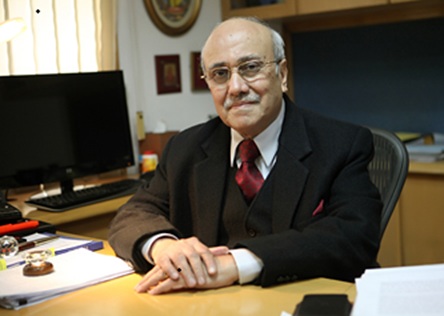
Mr. K. K. Kapila, President Emeritus, International Road Federation Highlighting broader concerns regarding the quality of public works especially in the infrastructure projects in a letter the Prime Minister Mr Narendra Modi pointed out that quality issues are not confined to the highway sector but are prevalent across projects undertaken by various Government of India departments.
“It is the urgent need for all ministries to adopt the Quality-cum-Cost-Based Selection (QCBS) method as outlined in the General Financial Rules issued by the Ministry of Finance. By various government departments would ensure better quality outcomes edwhile maintaining cost efficiency.” Said Mr Kapila.
“It is an inescapable necessity that all government departments adopt QCBS in construction and infrastructure projects. This should be implemented on an urgent basis to address systemic quality challenges,” Mr. Kapila stated.
The IRF has urged the government to issue necessary directions to all ministries to adopt these provisions, ensuring improved quality, accountability, and value in public infrastructure projects across the country.
“As per the circular issued by MoRTH adopting QCBS, it provides a comprehensive evaluation mechanism, assigning scores across multiple parameters to assess the performance of contractors and concessionaires engaged in National Highway projects. Such a system will significantly improve scrutiny and performance monitoring of agencies responsible for critical infrastructure development,” Mr. Kapila said.
