


By Nanditha Subhadra
The 2026 FIFA World Cup has arrived like a storm. Across the vast stadiums of the United States, Canada and Mexico, the expanded 48-team tournament has already torn up the script. What was meant to be a grand celebration of global football has quickly turned into something far more raw, unpredictable and thrilling.
Deep into the knockout rounds, the traditional powers are reeling. Germany and the Netherlands — two of Europe’s most decorated sides — have already been knocked out. In their place, teams that were barely given a second glance before the tournament have seized the moment. This is no longer just an expanded World Cup. It is a tournament that is rewriting the old order in real time.
The Shocks That Shook the Tournament
The early knockout stages have been brutal for the big names and glorious for the rest.
Germany, four-time world champions, were eliminated by Paraguay in a penalty shootout that felt like a changing of the guard. The South Americans were disciplined, organised and ruthless on the counter. They exposed weaknesses that many suspected but few expected to see punished so decisively.
The Netherlands, with their trademark fluid attacking football, were sent crashing out by Morocco in a 3-2 penalty shootout thriller in the Round of 16. Morocco’s defensive organisation and sharp transitions proved too much for the Dutch. Another European heavyweight was on its way home.
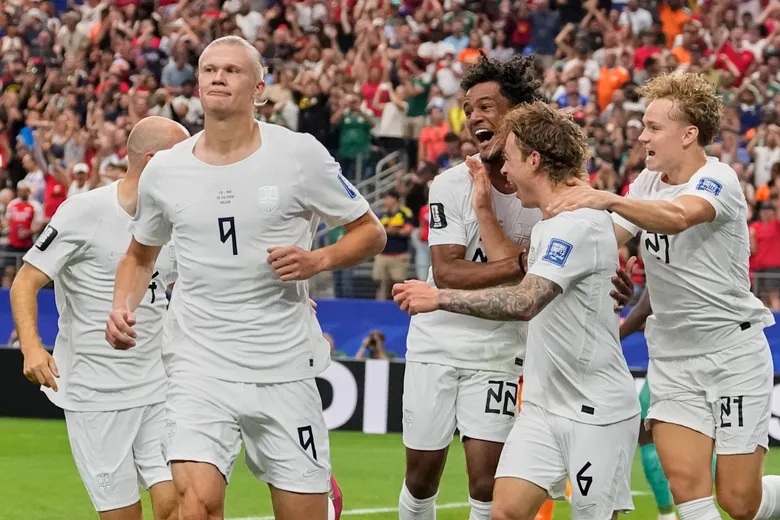
Then came Norway. In a night of pure drama, Erling Haaland produced a moment of magic with a late winner against Ivory Coast to book his country’s place in the last 16. It was more than just a goal — it was a statement that this tournament belongs to those willing to fight for every inch.
These are not random results. They are the direct consequence of the 48-team format. More teams have had proper preparation time. More nations have studied their opponents in detail. And the physical and mental toll of the longer schedule has punished sides that arrived thinking reputation would carry them through. In 2026, nothing is guaranteed.
Tactical Trends: The New Rules of Engagement
FIFA’s analysts have been watching closely, and the patterns are clear.
Teams are living and dying by the counter-press — snapping into high-intensity regains the moment they lose the ball. The best sides are not just pressing; they are coordinated and clinical about it. Goalkeepers have become vital playmakers, dictating tempo with their distribution and launching attacks from the back. The old image of the goalkeeper as a shot-stopper and nothing more is dead.
Defensively, the smartest teams are constantly shifting shape — dropping into a low block one moment, stepping into a mid-block the next. They invite pressure, then explode forward in transition. Matches have become tactical chess matches played at breakneck speed. The sides that can switch between these states without losing shape or energy are the ones still standing.
The Heat: A Battle Against the Elements
While the tactics have evolved, the conditions have tested everyone. The North American summer has turned many stadiums into furnaces. In response, FIFA introduced mandatory three-minute hydration breaks in each half of every match, with added stoppage time.
Players have been seen pouring water over their heads, sucking on ice, and using every second of those breaks to recover. What began as a player welfare measure has become a vital part of the tournament’s rhythm. The heat has not just been a talking point — it has shaped how teams manage energy, substitutions and game plans. In an expanded tournament, endurance has become as important as talent.
The Numbers Behind the Spectacle
Off the pitch, the tournament is breaking records. Total revenues are projected to exceed $10.9 billion, making this the most commercially successful World Cup ever. Hospitality and premium experiences are driving the majority of visitor spending, while broadcasting rights have smashed previous benchmarks.
The expanded format has delivered more matches, more content and more global eyeballs. For the hosts, it has also meant packed stadiums, surging domestic travel and a significant economic boost. This World Cup is not just sporting theatre — it is a global entertainment and business phenomenon operating at unprecedented scale.
What This World Cup Is Really Saying
The 2026 tournament is showing us a game in transition. The gap between the traditional powers and ambitious emerging nations is closing fast — not because the big teams have suddenly become weak, but because the format now rewards preparation, organisation and tactical intelligence as much as star quality.
The emphasis on counter-pressing and goalkeeper involvement reveals a sport that values controlled chaos and quick transitions. The hydration breaks show a game finally taking player welfare seriously in extreme conditions. And the record revenues prove that football’s global appeal has never been stronger.
As the tournament moves into the quarterfinals and beyond, these themes will only grow louder. The eventual champion will not be the side that looked best on paper in May. It will be the team that survived the shocks, handled the heat, stayed tactically sharp when legs were heavy, and thrived when everything was on the line.
This is no longer just a World Cup. It is a statement. The beautiful game has never been this big, this open, or this fiercely contested. And the best is still to come.
