

Rahul’s Pune Meet with Gen-Z Girls Shows Gap with Modi Narrowing

From Our Political Correspondent
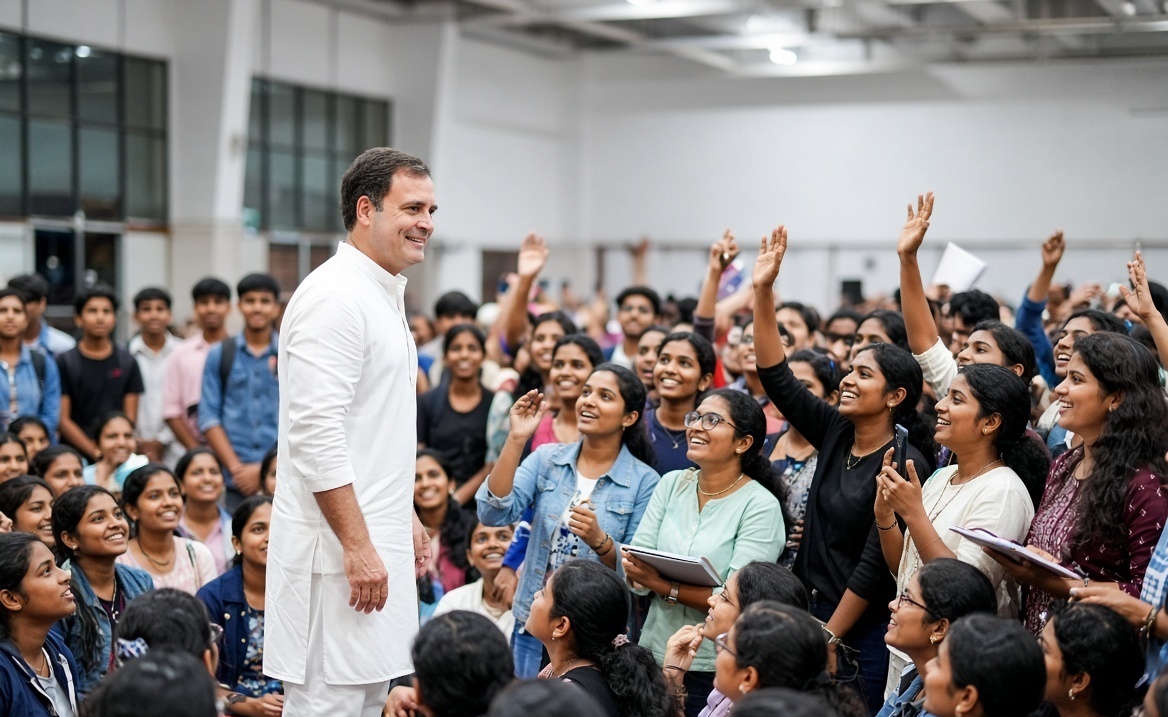
The strongest signal yet that the popularity gap between Narendra Modi and Rahul Gandhi is closing came not from a national survey but from a hall full of young women in Pune. On 22 August, Gandhi’s “Chhatron Ki Goonj” town hall, deliberately designed for Gen-Z girls and student leaders, drew an enthusiastic, interactive response that underlined a clear shift in youth mood. The event focused on safety, education, paper leaks, employment and the right of young women to claim public space. The energy in the room and the questions that followed suggested that Gandhi is successfully repositioning himself as a conversational voice for a generation that feels unheard.
That response fits a larger numerical picture. Independent tracking shows Modi’s preference rating falling from around 70 per cent to roughly 36 per cent, while Gandhi has risen from 14 per cent to 29.5 per cent. Among the youth, a survey conducted after the national paper-leak protests placed Modi at 39.8 per cent and Gandhi at 27.9 per cent, with student activists themselves drawing 12.6 per cent. The youth vote, more than 70 crore strong, is no longer a solid bloc. It is fragmenting around concrete grievances, and the Pune meeting showed Gandhi connecting directly with one of its most important segments—young women.
Paper leaks remain the central grievance that made such an outreach possible. Repeated examination scandals cancelled tests, delayed careers and destroyed trust in the system. Students who had prepared for years saw their efforts nullified. When protests followed, the response at places like Jantar Mantar included pellet-gun fire and injuries, one of them potentially costing a student his vision. Gandhi’s decision to sit in dharna for hours until an FIR was registered turned that failure into a public demonstration of accountability. The same anger later surfaced in the “School Thik Karo” campaign, where students in Madhya Pradesh and Rajasthan highlighted broken infrastructure and faced physical pushback. These experiences prepared the ground for the receptive audience Gandhi found in Pune.
Modi still holds a structural lead built on organisation, welfare delivery and regional strength. Yet the character of that support has changed since the 2024 election and the loss of Faizabad. Among younger voters, especially urban and semi-urban women, the advantage is under pressure. Gandhi’s gains are concentrated precisely in this demographic. The Pune format—short, interactive, focused on lived concerns rather than long monologues—matched how this generation engages with politics. The BJP’s quick claim that crowds were manufactured only highlighted its defensive posture.
Deeper problems compound the challenge. The personalisation of the Ram Mandir and online abuse from hardline supporters have alienated fence-sitters. Manufactured ratings no longer convince a generation that cross-checks claims in real time. If the BJP wants to stop the gap narrowing further, it must address paper leaks, school conditions and youth employment with visible action rather than force or narrative control. The encouraging response Gandhi received from Gen-Z girls in Pune is not an isolated event. It is the latest evidence that youth discontent is rewriting the contest. The numbers are moving. The question is whether the ruling party recognises it in time.
