

Supreme Court: Police officers who arrest without written grounds of arrest must face departmental enquiry; re-arrest requires Magistrate’s nod

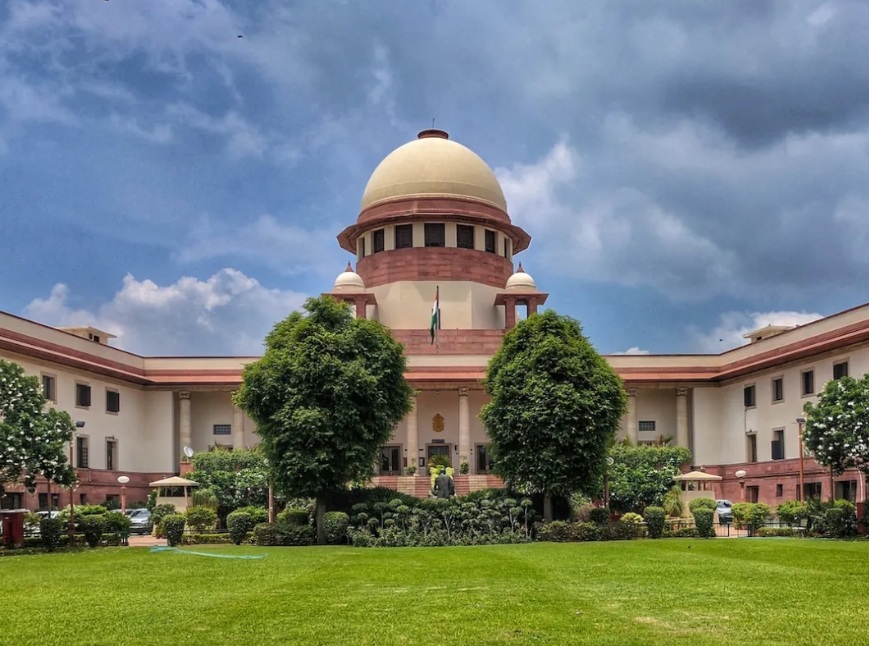
New Delhi: In a strong affirmation of constitutional protections against arbitrary arrest, the Supreme Court on Monday ruled that a police officer who arrests a person without furnishing the grounds of arrest in writing must face departmental enquiry. Such an arrest is illegal and unconstitutional under Article 22(1) of the Constitution.
A Bench of Justice Ujjal Bhuyan and Justice Atul S. Chandurkar held that the grounds of arrest must be communicated in writing, in a language understood by the accused, and a copy handed over as a matter of course without exception and at the earliest opportunity. Any breach of this mandatory requirement vitiates the arrest and entitles the person to immediate release. The Court clarified that subsequent filing of a chargesheet or an order taking cognisance cannot cure or validate an arrest that was unconstitutional at its inception. The safeguard applies uniformly to offences under the Indian Penal Code as well as special laws and is not dependent on the nature or gravity of the alleged offence.
“Such a fundamental right being sacrosanct can’t be breached under any situation. Any breach or non-compliance would entail immediate release of the arrested person because such arrest is unconstitutional. We can’t tinker with the most important safeguard provided under Article 22,” the Bench observed.
The Court went further and laid down a clear procedure that investigating agencies must follow if they seek to re-arrest a person whose earlier arrest was declared illegal for non-furnishing of written grounds. First, the agency must furnish the written grounds of arrest to the accused. Only thereafter can it file an application before the jurisdictional Magistrate seeking custody. The application must explain both the necessity for re-arrest and the reason why grounds were not supplied at the first instance. Crucially, the application requires the endorsement of the officer’s immediate superior.
The Magistrate is required to decide the application expeditiously, preferably within a week, while adhering to the principles of natural justice. Permission for re-arrest may be granted only if the Magistrate is satisfied that the initial non-furnishing was for bona fide reasons and that further custody is genuinely necessary.
On the administrative side, the superior authority receiving the request for endorsement must transfer the investigation to another officer and simultaneously direct a departmental inquiry against the erring officer. If the inquiry results in adverse findings, departmental action must follow and an entry recorded in the officer’s service book. The Court directed that a copy of the judgment be circulated to the Directors General of Police of all States and Union Territories to ensure compliance.
The ruling came in the case of Jaskaranjit Singh (also referred to as Jaskaran Jeet Singh Deol), a Shiromani Akali Dal-affiliated in-charge of the Mullanpur Dakha constituency in Punjab. He had been arrested in connection with allegations involving sexual assault of a minor. After a local court declared the arrest illegal for non-supply of written grounds and ordered his release, the Punjab and Haryana High Court stayed that order. Singh then approached the Supreme Court.
Justice Bhuyan, speaking for the Bench, emphasised that once Article 22(1) is breached, the power of re-arrest cannot be left to the discretion of the same authority that violated the constitutional provision. It must be subjected to judicial oversight. The judgment reinforces the principle that personal liberty can be curtailed only in strict accordance with the procedure established by the Constitution and the law, and that constitutional safeguards are not mere formalities but binding fundamental principles.
