

CEC’s Shield Cracks: Kerala Home Minister Orders Vigilance Probe into Gyanesh Kumar’s 2006 Corruption

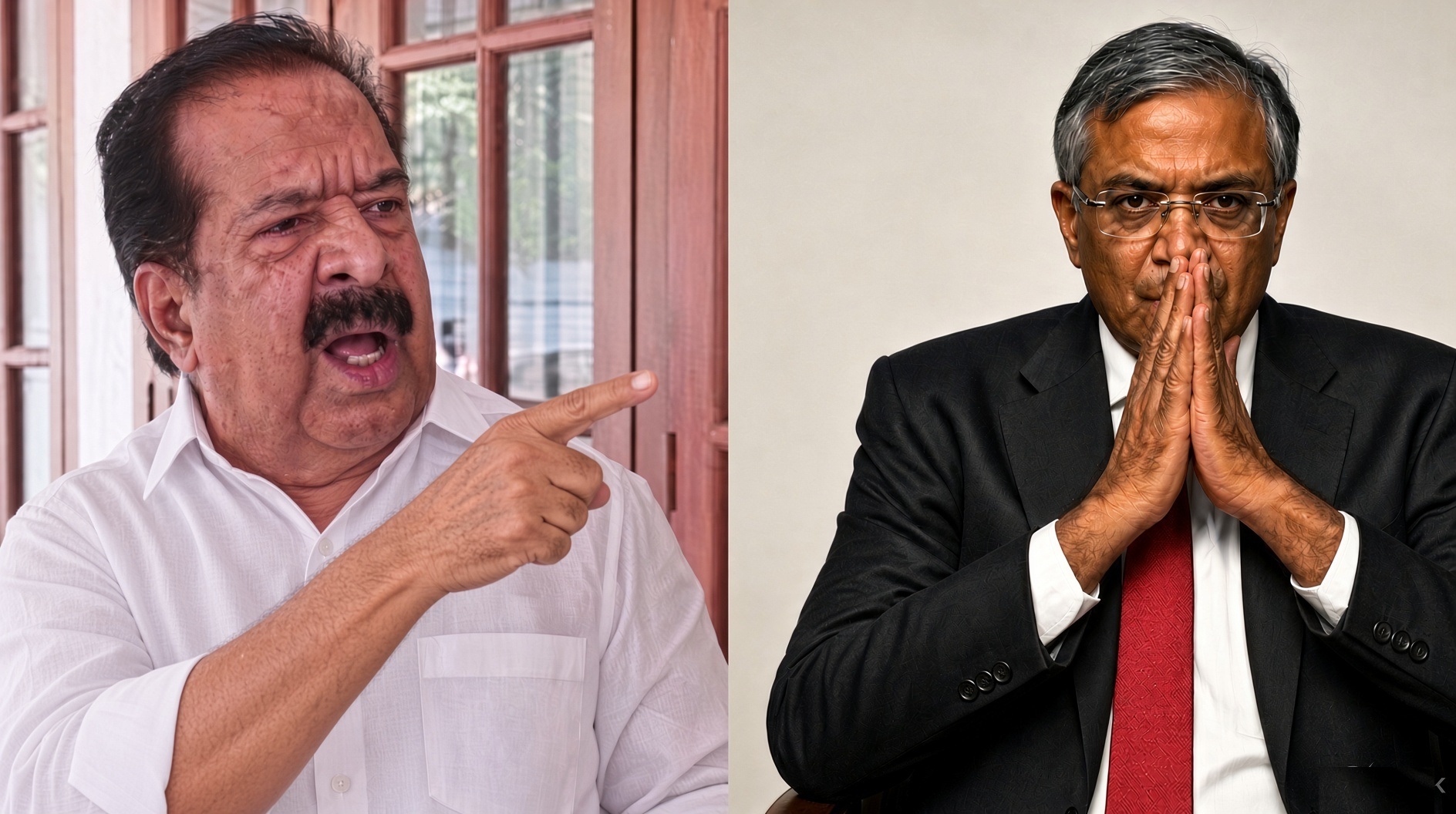
By Suresh Unnithan
Thiruvananthapuram: The legal shield around Chief Election Commissioner Gyanesh Kumar stops at the door of the Election Commission. It does not follow him back to 2006. A legal opinion from Kerala’s Director General of Prosecution holds that neither Article 324 of the Constitution nor the immunity clause in the 2023 Election Commissioners Act bars investigation, or prosecution, for alleged corruption and harassment during his tenure as Public Works Department Secretary. Acting on that opinion, Home Minister Ramesh Chennithala has ordered the Vigilance and Anti-Corruption Bureau to reopen the file.
The order, issued on October 4 after Chennithala discussed a formal complaint with Chief Minister V.D. Satheesan, is the first time a state Home Minister has publicly directed a vigilance probe at a sitting Chief Election Commissioner for acts alleged from his years in the IAS. Chennithala has been blunt. The constitutional post does not preclude reinvestigation. Kumar was head of the department in which the alleged wrongdoing occurred. He is not entitled to legal immunity for what is said to have been done as PWD Secretary. The earlier inquiry, he said, was abandoned midway and hushed up. He would not remain a mute spectator.
The opinion that cleared the order is the sharpest part of the case. Director General of Prosecution Asaf Ali T. is reported to have found serious misconduct in the award and handling of works, enrichment at public cost, and grounds to examine abetment of suicide. On immunity, the advice is categorical. The protection attached to the office of Chief Election Commissioner is a protection of that office. It is not a pardon for an earlier service. Crime, the opinion holds, does not die with a change of post. Delay does not wipe out a charge of corruption. The public interest in prosecuting a corrupt public servant outweighs the passage of twenty years. On the death that anchors the file, the opinion is reported to have concluded that the proximate cause was the harassment alleged against Kumar.
The law supports that reading on three grounds.
First, removal is not immunity. Article 324(5) says the Chief Election Commissioner shall not be removed except in the manner of a Supreme Court judge. The provision exists so that a government unhappy with an electoral decision cannot dismiss the person who took it. It says nothing about a criminal investigation into acts committed years before he entered the Commission. Insulation of the institution is not a personal amnesty.
Second, the statutory bar is confined to Commission work. Section 16 of the Chief Election Commissioner and Other Election Commissioners Act, 2023, provides that no court shall entertain or continue any civil or criminal proceeding against a person who is or was Chief Election Commissioner for any act done in the discharge, or purported discharge, of his official duty. The bar attaches to duty as CEC. It does not travel backwards into a Kerala cadre posting. An allegation that bills were withheld, that illegal gratification was demanded, or that a contractor’s engineer was harassed while Kumar headed the PWD is an allegation about the PWD. On the construction adopted by the Home Department, Section 16 does not apply.
Third, the sanction that shields a serving civil servant is no longer available. Section 19 of the Prevention of Corruption Act requires previous sanction before a court takes cognisance of certain offences by a public servant. The Supreme Court has held that this protection lasts only while the person remains a public servant. Once the officer has retired or demitted office, sanction is not required. Kumar left the IAS before he assumed the constitutional office. For acts alleged from 2006, the sanction bar does not stand in the way.
Limitation has not run out. Abetment of suicide carries imprisonment that can extend to ten years. The bar of limitation does not apply to an offence of that gravity. Corruption offences under the Prevention of Corruption Act stand outside the ordinary limitation that governs lesser crimes. What closed the file in 2006, on the Home Minister’s account, was not a finding of innocence. It was an investigation that stopped.
The facts the Bureau has been told to test are these. In 2006 the Kerala State Transport Project was executing a World Bank-funded upgrade of the MC Road from Angamaly to Thiruvananthapuram, valued at about ₹215 crore. The contractor was PATI-BEL, an Indo-Malaysian consortium. Its chief project manager, Malaysian engineer Lee See Been, returned to Kuala Lumpur and died by suicide in November 2006. He left notes addressed to his wife and to a director of the company. Those notes, according to the complaint by Kerala Pradesh Congress Committee member Malayinkeezhu Venugopal and to the Home Minister, named Kumar and spoke of bills withheld, hostility after a refusal to pay, and pressure from officials. Kumar, a 1988-batch Kerala-cadre officer, was moved out of the PWD soon after. A vigilance inquiry was ordered and did not proceed to a conclusion.
None of this is a finding of guilt. A preliminary inquiry examines records, the old file, the notes and payment trails. Only if it discloses a prima facie case would the Bureau seek an FIR and place a report before a court. A note that names an officer is a starting point for investigation, not a conviction.
The chance of prosecution turns on what the reopened file still contains. If bills were withheld without cause, if a demand for illegal gratification can be shown, and if the notes support the inference already drawn, the legal route is open. The office of Chief Election Commissioner does not shut it. On the opinion now with the Home Department, the immunity of the CEC is not a defence to the years in the PWD.
