

Arvind Kejriwal’s Accusations Against Justice Swarana Kanta Sharma: Allegations of Bias in the Delhi Liquor Policy Case and Their Legal Validity

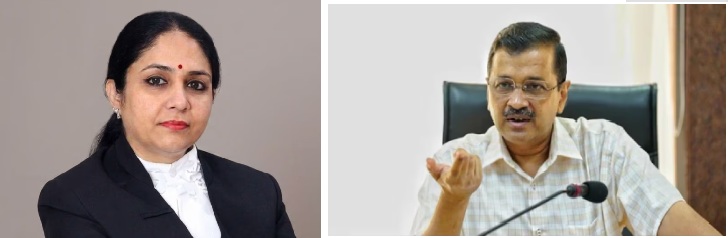
By Our Legal Desk
In a dramatic courtroom exchange on April 13-14, 2026, former Delhi Chief Minister and Aam Aadmi Party (AAP) national convener Arvind Kejriwal appeared in person before the Delhi High Court. He argued his own application seeking the recusal of Justice Swarana Kanta Sharma from hearing the Central Bureau of Investigation’s (CBI) revision petition in the high-profile Delhi Excise (Liquor) Policy case.
The petition challenges a February 27, 2026, trial court order that discharged Kejriwal, former Deputy Chief Minister Manish Sisodia, Bharat Rashtra Samithi (BRS) leader K. Kavitha, and 21 others. The trial court had sharply criticised the CBI’s case as “wholly discredited” and unable to survive judicial scrutiny.
Kejriwal’s recusal plea centres on what he described as a “real, grave, and reasonable apprehension” of bias. He listed around 10 specific grounds, combining procedural concerns from the judge’s earlier orders with an ideological angle.
Kejriwal’s Key Accusations
Kejriwal’s arguments, presented directly to Justice Sharma, included the following core claims:
Ideological proximity and RSS-linked events: The judge allegedly attended four events organised by the Akhil Bharatiya Adhivakta Parishad (ABAP), a lawyers’ body he described as affiliated with the Rashtriya Swayamsevak Sangh (RSS) and ideologically aligned with the BJP. Kejriwal, who openly opposes the BJP-RSS ideology, argued this created a perception of sympathy toward that worldview in a case he called “political.” He stated: “Your Honour has attended its events four times. The ideology they follow is something we strongly oppose… If I am from the opposite ideology, will I get justice?”
Premature and ex-parte observations of guilt: In a March 9, 2026, order, Justice Sharma issued notice on the CBI’s plea and stayed aspects of the trial court’s discharge order. She described certain findings as “prima facie erroneous.” Kejriwal claimed this was done without a full hearing or replies from the accused, effectively “almost declaring” him and others guilty and corrupt before arguments were heard. He said the language and speed of the proceedings left him with “serious apprehensions.”
Pattern of favouring investigating agencies: Kejriwal alleged a consistent “trend” where the court endorsed every CBI/ED prayer, converted oral or informal requests into relief, and proceeded at unusual speed—unlike other cases on the roster. He cited instances where relief was granted to the Enforcement Directorate (ED) even before a formal application was filed.
Selective urgency in politically sensitive matters: Only cases involving prominent political opponents of the Centre were allegedly fast-tracked, reinforcing his view of bias.
Kejriwal emphasised that he was not questioning the judge’s personal integrity but invoking the legal principle that even a reasonable apprehension of bias in the litigant’s mind is sufficient for recusal. He cited Supreme Court precedents and argued: “The question is not of a judge’s integrity or uprightness, but of reasonable bias in the mind of the litigant.”
Legal Framework for Judicial Recusal in India
India has no codified statute governing judicial recusal. The doctrine flows from the principle of natural justice — nemo judex in causa sua (no one should be a judge in their own cause) — and is guided entirely by Supreme Court judgments.
The landmark test was laid down in Ranjit Thakur v. Union of India (1987): Recusal is warranted if there exists a reasonable apprehension of bias in the mind of a reasonable person, not mere suspicion or a remote possibility. The focus is on perception rather than proven actual bias. A “fair-minded and informed observer” must conclude there is a real possibility of bias.
Pecuniary interest triggers automatic disqualification, but other grounds (ideological, procedural, or extra-judicial activities) require a higher threshold. Courts have repeatedly warned against frivolous recusal applications that amount to forum-shopping or attempts to delay justice.
Judges themselves decide recusal requests based on judicial conscience and the facts presented. The decision is discretionary, and higher courts rarely interfere unless the refusal is perverse.
Legality of Kejriwal’s Accusations and the Question of “Guilt”
Are the accusations legally sustainable?
According to legal brains Kejriwal’s plea is framed correctly under the “reasonable apprehension” test. Perception does matter in a functional democracy, and litigants have the right to raise bona fide concerns. However, Indian courts have consistently held that:
Mere attendance at legal seminars or events by professional bodies (even those with ideological leanings) does not automatically prove bias. Judges routinely participate in such forums to engage with the legal fraternity; disqualification would require a direct, demonstrable link to the case outcome.
Procedural orders (stays, notices, or observations at the prima-facie stage) are part of normal judicial functioning. Strong language in interim orders does not equate to pre-judging guilt; appeals and revisions exist precisely to correct errors.
Speed of proceedings or endorsement of one side’s arguments, without more, rarely meets the threshold unless it shows a pattern of impropriety rather than routine case management.
The CBI and Solicitor General Tushar Mehta opposed the plea, terming the allegations “baseless,” “frivolous,” and “vexatious.” The Solicitor General reportedly described parts of the application as “contemptuous.”
