

Assam’s High-Tech Leap: Tata Electronics’ Semiconductor Ecosystem Positions the State as Northeast’s Premier Investment Destination

From Our Business Bureau
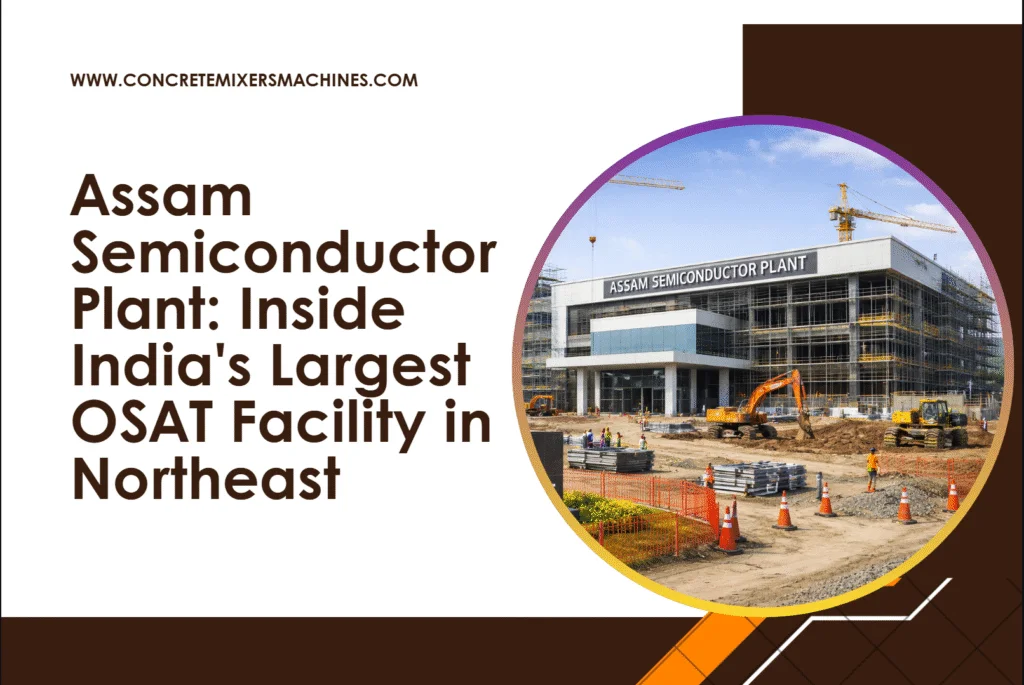
Guwahati: Assam is rapidly emerging as one of India’s most compelling investment destinations, combining transformative infrastructure development with a landmark push into high-technology manufacturing. The state’s improving business climate, strategic location as the gateway to Southeast Asia, and proactive policies have been dramatically underscored by Tata Electronics’ decision to establish a massive greenfield semiconductor assembly and test facility in Jagiroad, Morigaon district.
This ₹27,000-crore (approximately US$3.2–3.6 billion) Outsourced Semiconductor Assembly and Test (OSAT) project represents not just a single investment but the anchor of an entire semiconductor ecosystem that could redefine Assam’s economic trajectory.
Robust Economic and Infrastructure Foundations
Assam’s economy has more than doubled in six years — from roughly ₹2.75 lakh crore around the time of the first Advantage Assam Summit in 2018 to approximately ₹6 lakh crore by early 2025. Projections place nominal GSDP at ₹7.41 lakh crore for FY 2025-26, reflecting sustained strong growth. The state recorded a 19.5% year-on-year surge in one recent fiscal and continues to post double-digit momentum.
Infrastructure has kept pace. Surfaced road length expanded from 27,782 km in 2015 to 51,841 km in 2024. Over 2,327 km of National Highways have been added since 2016. Multiple new bridges across the Brahmaputra — once a major barrier — are operational or under advanced construction, including recent contract awards for additional road-cum-rail crossings. Railway capital expenditure rose more than fourfold, with over 60 stations being modernized and the region’s first semi high-speed service now running. Air connectivity has expanded from just seven routes pre-2014 to nearly 30 today.
These connectivity gains are directly lowering logistics costs and improving reliability for manufacturers — a critical factor for semiconductor and electronics investments that demand just-in-time supply chains and precision logistics.
The Game-Changer: Tata Electronics’ Jagiroad OSAT Facility
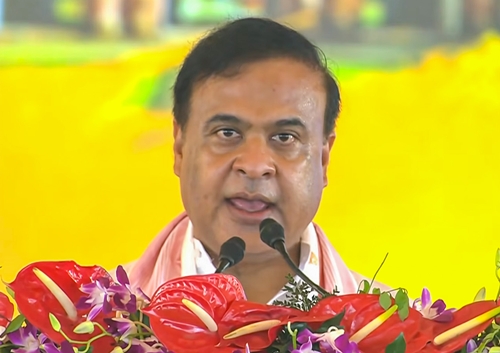
The most powerful signal of Assam’s new industrial direction came with the Tata Electronics project. Approved by the Union Cabinet in February 2024 under the India Semiconductor Mission, construction began in August 2024 following the Bhumi Pujan attended by Chief Minister Himanta Biswa Sarma and Tata Sons Chairman N. Chandrasekaran.
The facility, being built on a substantial campus in Jagiroad, will have the capacity to assemble and test up to 48 million semiconductor chips per day. It will deploy advanced packaging technologies — Wire Bond, Flip Chip, and I-SIP (Integrated System-in-Package) — serving high-growth segments including automotive (especially electric vehicles), mobile and consumer electronics, artificial intelligence, communications, and network infrastructure.
The project is expected to generate approximately 15,000 direct jobs and 11,000–13,000 indirect jobs, with a co-located skill development centre to build local talent. First-phase operations are targeted for 2025–26, with construction progressing rapidly. This is India’s first major indigenous greenfield OSAT facility of this scale and marks a significant step toward reducing the country’s heavy dependence on imported chips and packaging services.
Building a Complete Semiconductor Ecosystem
Tata Electronics is not stopping at one plant. It already operates a commercial OSAT facility in Vemgal, Karnataka (operational since late 2023). More importantly, it is developing a major front-end semiconductor fabrication plant in Dholera, Gujarat, with an investment of around ₹91,000 crore in partnership with Taiwan’s Powerchip Semiconductor Manufacturing Corp. This combination of front-end fabrication and back-end assembly/test creates a more complete domestic value chain.
A series of high-profile partnerships is further strengthening the ecosystem:
- A landmark May 2026 MoU with ASML (the world leader in lithography equipment) to support manufacturing excellence and ecosystem development.
- Collaboration with Intel (December 2025) to explore manufacturing and advanced packaging of Intel products at Tata facilities.
- Partnership with C-DAC (September 2025) to advance indigenous semiconductor design and IP, benefiting startups and MSMEs.
- Tie-ups with Qualcomm for automotive modules and with Tokyo Electron for equipment and workforce training.
- Exploration with Bharat Electronics Ltd (BEL) for defence and strategic electronics applications.
These partnerships span equipment, materials, design IP, advanced packaging, and end-application modules — the building blocks of a resilient semiconductor ecosystem.
Policy Backbone and Investor-Friendly Climate
Both central and state policies have been instrumental. The India Semiconductor Mission provides up to 50% fiscal support for eligible projects. Assam’s Electronics (Semiconductor etc.) Policy 2023 — one of the earliest and most competitive state policies — offers additional incentives on top of central support, including enhanced capex subsidies, power tariff benefits, stamp duty relief, land facilitation, and employment-linked incentives. Single-window clearance and dedicated high-tech project facilitation have further improved the ease of doing business.
The Advantage Assam 2.0 Investment & Infrastructure Summit in February 2025 generated investment proposals worth up to ₹4.91 lakh crore and 297 MoUs worth approximately ₹2.77 lakh crore, with significant implementation already underway. Chief Minister Sarma has indicated that two more semiconductor units are in the pipeline for Assam, reinforcing the state’s emergence as a high-tech destination.
Multiplier Effects and Ancillary Opportunities
The Tata project is expected to catalyse a cluster of ancillary industries in Assam — suppliers of advanced packaging materials, substrates, chemicals, precision components, cleanroom services, and specialized logistics. The demand for reliable power, high-quality water, and skilled manpower will drive further infrastructure and skilling investments.
For investors, this creates multiple entry points: direct participation in the semiconductor value chain, ancillary manufacturing, skilling and training ventures, logistics infrastructure, and downstream electronics manufacturing services (EMS) clusters that can leverage the OSAT’s output.
Future Outlook: From Connectivity to High-Tech Hub
Looking ahead, Assam is targeting a GSDP of around $145 billion by 2030, supported by planned capital outlays of approximately $25 billion for infrastructure and industry. The state’s improving multi-modal connectivity (roads, rail, air, and Brahmaputra inland waterways), growing renewable energy capacity, and strategic location under the Act East Policy position it as a potential logistics and manufacturing hub serving both domestic and ASEAN markets.
The semiconductor ecosystem adds a high-value, knowledge-intensive dimension that complements traditional strengths in tea, oil and gas, agriculture, and tourism. Reduced logistics costs, reliable power, competitive incentives, and an improving talent pipeline are making Assam increasingly attractive for global and domestic investors seeking the next wave of growth beyond saturated industrial clusters.
As construction advances at Jagiroad and ecosystem partnerships mature, Assam is moving from an infrastructure story to a high-technology transformation narrative. For investors looking at India’s semiconductor ambitions, the Northeast’s emerging capabilities, or opportunities in ancillary industries and skilling, the state now offers a compelling combination of policy support, anchor investments, improving fundamentals, and long-term growth visibility.
Tata Electronics’ bold bet in Jagiroad is more than a single project — it is a powerful catalyst that is helping put Assam firmly on the global high-tech map.
