

Brain Stroke Prevention And Awareness Drive ISA and Rotary Bengaluru HSR Join Hands to Promote Stroke Prevention Through Launch of Advanced Health Screening Kiosk

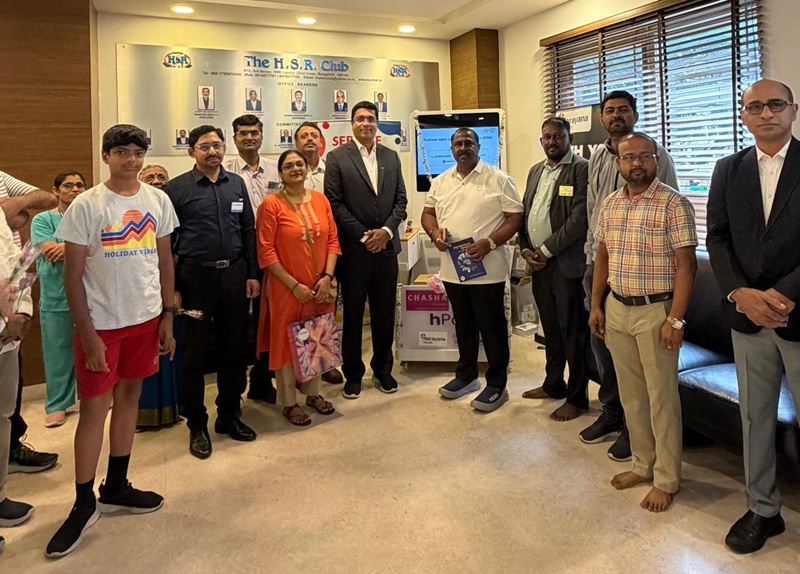
Bengaluru: With brain stroke cases steadily increasing across India, the Indian Stroke Association (ISA), under its “Save the Brain” initiative, joined hands with Rotary Bengaluru HSR to promote stroke prevention, early risk detection, and improved emergency stroke awareness through the launch of an advanced health screening kiosk. The initiative aimed to educate people about stroke warning signs, major lifestyle-related risk factors, and the importance of timely medical intervention to reduce disability and save lives.
The initiative marked the installation and launch of the hPod by IHL, an advanced, award-winning, clinically validated “Made in India” health screening kiosk capable of delivering 50+ health parameters within minutes. The kiosk enables rapid assessment of key stroke-related risk factors, including blood pressure, BMI, blood sugar, lipid profile, and other vascular health indicators, strengthening ISA’s mission of promoting preventive healthcare through early detection and awareness.
The event was held in the presence of Shri Satish Reddy, Member of the Legislative Assembly, as the Chief Guest, along with distinguished guests, including Rtn. Sridhar B R, District Governor 2025-26 RID 3191, Dr. Girish Baburao Kulkarni, Head, Department of Clinical Neuroscience, NIMHANS, Rtn. Dr. Vikram Huded, President, Indian Stroke Association, Rtn. Vanraj Thambi, President, Rotary Bengaluru HSR, Rtn. Sankar Reddy, President, The HSR Club, and Rtn. Jaya Chakravarthy, Secretary, Rotary Bengaluru HSR and Founder, Chasha Services.
The awareness drive strongly focused on educating the public about the BEFAST warning signs of stroke, including sudden loss of balance, blurred or double vision, facial drooping, arm weakness, slurred speech, and the urgent need to immediately reach a stroke-ready hospital. Experts highlighted that brain stroke is both preventable and treatable if patients receive timely medical attention within the critical treatment window.
Dr. Vikram Huded, President, Indian Stroke Association (ISA), said, “Nearly 1 in 4 individuals may suffer a stroke in their lifetime, while 1 in 7 stroke patients in India are below the age of 45 years, making stroke prevention and awareness more important than ever before. Hypertension remains one of the biggest risk factors for brain stroke and is often called a silent killer because many people may not experience symptoms until serious damage has already occurred. Along with hypertension, diabetes, tobacco use, obesity, stress, unhealthy eating habits, and physical inactivity are contributing to the rising burden of stroke cases in India. Many young adults are now developing high blood pressure much earlier due to poor lifestyle choices, lack of exercise, long working hours, and chronic stress. Unfortunately, several individuals remain unaware of their BP levels until they experience a medical emergency like a stroke.”
Dr. Vikram Huded further added, “Brain stroke is preventable and treatable with timely screening, early risk identification, and immediate medical care. Regular screening for blood pressure, diabetes, cholesterol, obesity, and lifestyle-related risk factors can help identify high-risk individuals early and reduce the chances of severe stroke-related complications. High-risk individuals with hypertension, diabetes, smoking habits, tobacco use, or family history should also go for annual health check-ups (CREST-2 study). People with a family history of brain aneurysm or brain haemorrhage will be advised MRI brain scan after discussion with a neurologist or neurosurgeon. Importantly, MRI brain screening can be done without radiation and contrast in selected cases. Through initiatives like ‘Save the Brain,’ we aim to increase awareness, encourage preventive screening, improve timely stroke recognition, and strengthen access to stroke-ready care across the country.”
Dr. Arvind Sharma, Secretary, Indian Stroke Association (ISA), said stressed the importance of remembering the BEFAST warning signs to identify stroke symptoms early and save lives. “B stands for sudden loss of balance or coordination, E refers to sudden blurred or double vision, F means facial drooping or an uneven smile, A indicates sudden arm weakness or numbness, S stands for slurred or garbled speech, and T reminds everyone that it is time to immediately reach a stroke-ready hospital. Recognising these symptoms early and seeking urgent treatment within the golden treatment window can help prevent paralysis, speech loss, brain damage, and long-term disability,” he said.
Dr. Arvind Sharma, added, “India urgently needs stronger public awareness around stroke prevention and emergency response because stroke can affect anyone, anytime, anywhere. Awareness campaigns like ‘Save the Brain’ are extremely important because many people still fail to identify early stroke symptoms and delay seeking emergency care. Through community outreach programs, physician education, and public engagement initiatives, ISA continues to work towards building a healthier, stroke-aware, and stroke-ready India.”
The initiative was conducted by the Indian Stroke Association in association with Rotary Bengaluru HSR, supported by The HSR Club, and donated by CHASHA under the larger mission of building a healthier and stroke-preventable community through awareness, early detection, and timely treatment.
