

Dr Pawan Goenka Responds to Industry Priorities, Announces Next Steps for India’s Space Ecosystem at India Space Congress 2026

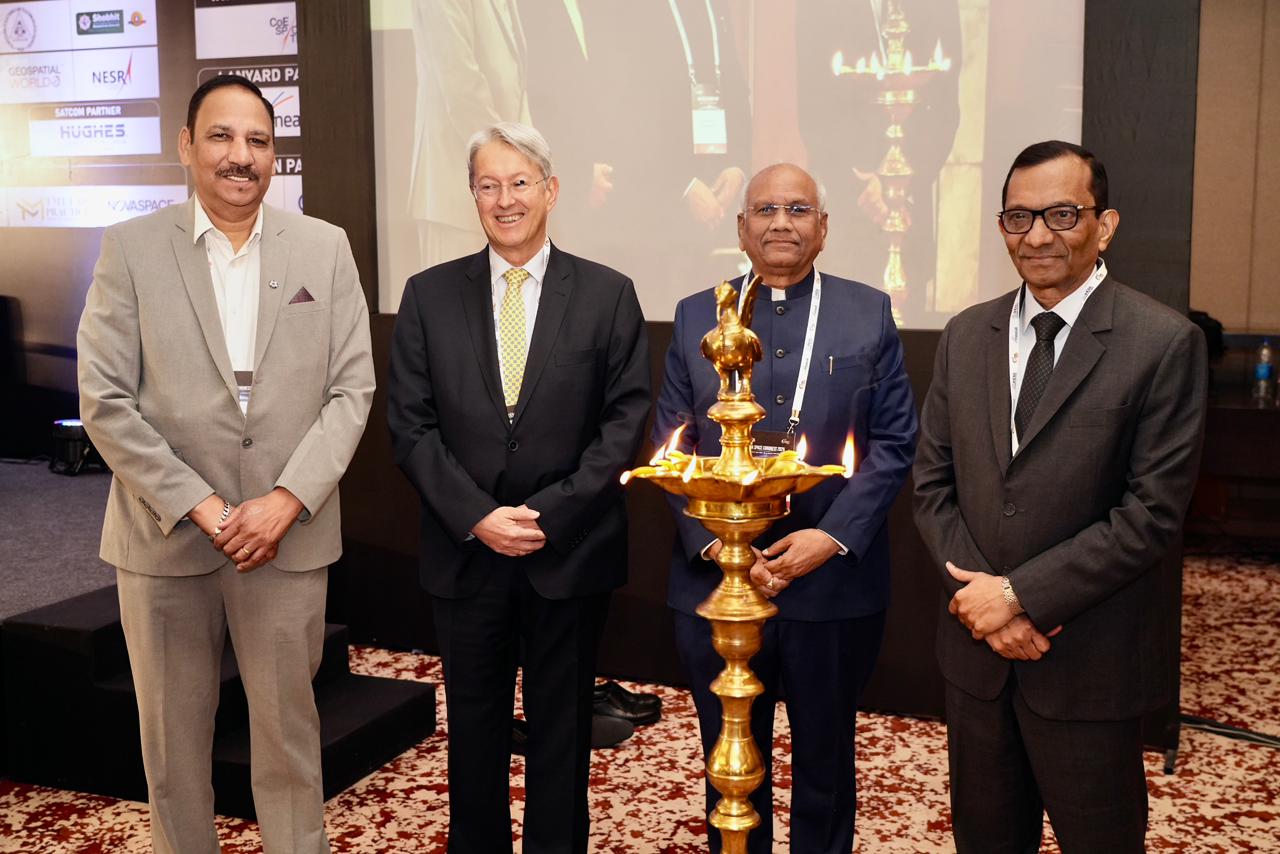
New Delhi : Following a high-energy opening day, Day 2 of India Space Congress 2026 witnessed equally strong participation from industry leaders, policymakers, investors, international delegations, startups and academia, reinforcing the central theme of the day — “Reinventing Collaboration in Space.” Discussions throughout the day focused on strengthening global partnerships, advancing sustainable space activities, expanding commercial opportunities and creating the policy and institutional frameworks required to support India’s next phase of space sector growth.
Dr. Subba Rao Pavuluri, President, SIA-India, highlighted the remarkable momentum being witnessed across India’s space ecosystem.
“The response we have witnessed over the last two days demonstrates the growing confidence in India’s space economy and the willingness of stakeholders across the ecosystem to collaborate in shaping its future. From policy reforms and international partnerships to new industry platforms and emerging technology opportunities, India Space Congress is helping bring together the conversations and collaborations that will define the next decade of growth for the sector.”
A key highlight of the day was the special address by Dr. Pawan Goenka, Chairman, IN-SPACe, who outlined the next phase of India’s commercial space journey and announced a series of initiatives aimed at accelerating private sector participation.
A key highlight of the day was the special address by Dr. Pawan Goenka, Chairman, IN-SPACe, who reflected on the outcomes of the recently concluded 10th IN-SPACe Industry Connect Conference (IIC-10), where industry leaders, startups, investors and policymakers came together to identify the key challenges facing the sector’s next phase of growth. Responding directly to the issues raised by industry, Dr. Goenka outlined ongoing efforts to strengthen government demand creation, accelerate regulatory reforms, simplify authorization processes, improve access to capital and expand industry participation in national space infrastructure. He highlighted measures including plans for private management of the Small Satellite Launch Complex at Kulasekarapattinam, launch incentive support for companies operating from Indian spaceports, a dedicated ₹900 crore R&D fund for academic institutions, and continued efforts to establish a more predictable and enabling environment for commercial space activities.
“We have created the building blocks for talent, innovation and industry growth. I ask the industry to generously offer internships, hire from these programmes, co-design curricula, use the resident experts in the space labs and leverage the IN-SPACe Tech Centre fully. Invest in each other. Collaborate deliberately. SIA India exists precisely to make possible these connections.” — Dr. Pawan K. Goenka, Chairman, IN-SPACe
The importance of sustainability, trusted international partnerships and responsible growth emerged as a recurring theme throughout the day. In a special video address, Ms. Aarti Holla-Maini, Director, United Nations Office for Outer Space Affairs (UNOOSA), emphasized the need for sustainable and responsible space activities to ensure long-term access to the space environment for future generations. Her message resonated strongly with discussions across multiple sessions focusing on resilience, global cooperation and emerging space governance frameworks.
Highlighting the growing importance of international collaboration, His Excellency Christian Biever, Ambassador of Luxembourg to India, underscored the value of partnerships in shaping the future global space economy and reaffirmed Luxembourg’s commitment to deepening cooperation with India.
“Our partnership with India is of particular importance. Luxembourg and India established a strong framework for cooperation through a Memorandum of Understanding that we signed in 2022, and since then, collaboration between our space agencies and IN-SPACe has continued to grow. This cooperation is already delivering tangible results. We see strong potential in areas such as telecommunications, lunar exploration, and space resource utilization. We welcome further exchanges, not only between our institutions, but also across our private sectors and research community.”
Day 2 also witnessed the launch of the Indian Space Industry E-Catalogue, India’s first comprehensive digital repository of space-sector capabilities. Developed by SIA-India and powered by Hughes Systique, the platform brings together more than 200 verified space and defence companies across nearly 20 domains and over 120 sub-domains, creating a single trusted platform for capability discovery, collaboration and business development across the Indian space ecosystem.
Further strengthening industry thought leadership, SIA-India released two strategic reports focused on emerging opportunities in the global space economy. Developed in partnership with OrbitAID, “Building India’s On-Orbit Servicing and Refuelling Ecosystem: Policy, Partnerships and Pathways Forward” explores the roadmap for advancing India’s capabilities in on-orbit servicing, assembly and manufacturing. SIA-India also partnered with TakeMe2Space to release “India’s Strategic Opportunity in Space-Based Compute Infrastructure,” a report examining the potential of orbital data centres and in-space computing as a future pillar of digital infrastructure, artificial intelligence and sovereign computing capabilities.
Commenting on the continued momentum generated by the Congress, Anil Prakash, Director General, SIA-India, said:
“The house was full yesterday, and on the second day, the house is full again. I think it is a promise that space is the space. Everybody here should feel proud to be a part of the space sector. In just four or five years, we have seen unprecedented growth, with nearly 400 space startups – the largest ecosystem in Asia. The seed has been sown, the appetite is growing, and now we must accelerate. Industry, policymakers, and promoters must work hand in hand to take innovation to the market and bring business opportunities to our entrepreneurs.”
As India Space Congress 2026 moves into its final day, discussions will shift towards the critical themes of space security, strategic autonomy and resilient space infrastructure. Bringing together leaders from the defence, cybersecurity and space sectors, Day 3 will explore how India can strengthen sovereign capabilities, secure critical space assets and build trusted ecosystems to support national security and economic growth.
