

Exit Polls and Opinion Polls: The Self-Styled Poll Scientists Turning Elections into a Fine Art of Profitable Prophecy

By Suresh Unnithan
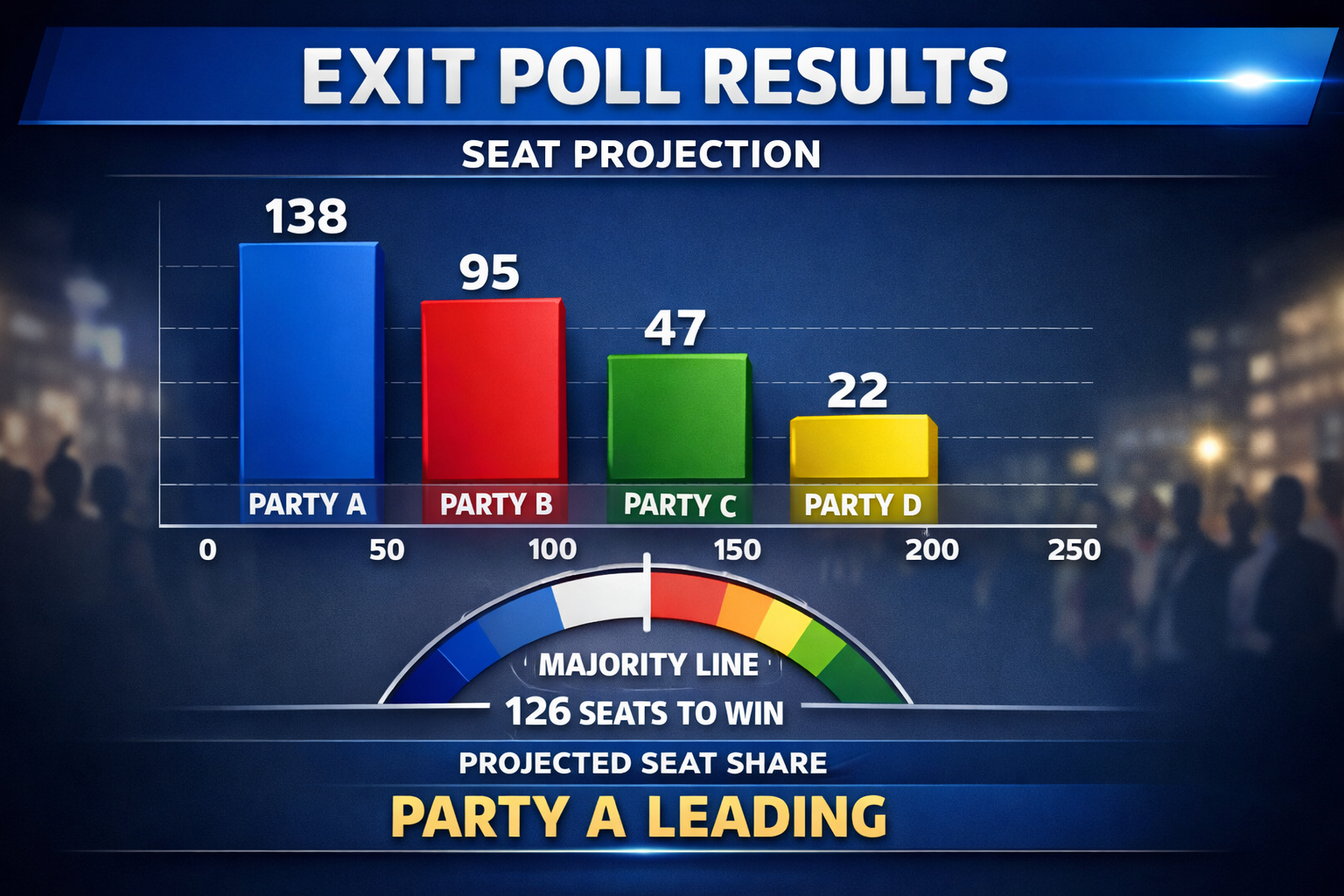
As the 2026 state assembly elections unfold across Assam, Kerala, Puducherry, Tamil Nadu, and West Bengal, one thing remains delightfully consistent: the arrival of the self-styled poll scientists, armed with their sophisticated arsenal of “swing factors,” “stride percentages,” “wave intensities,” and other elegant terms that sound profoundly scientific yet leave most voters politely nodding in mild confusion. These experts grace our television screens daily, delivering confident forecasts from the serene comfort of air-conditioned studios, where the messy realities of ground-level politics rarely dare to intrude.
Far from dusty village paths or bustling local markets, they craft their predictions based on selectively gathered data, creatively weighted models, and a gentle, almost affectionate predisposition toward projecting strength for the incumbent or the most prominently featured side. Sponsored by media houses eager for gripping content, business circles with a natural preference for stability, and occasionally those with deeper political alignments, this enterprise has blossomed into a remarkably sustainable business. The pollsters earn generous fees, enjoy repeated expert panel invitations, and build impressive personal brands — all while offering foresight that the actual counting of votes has a charming habit of gently correcting.
Why consider banning or strictly regulating exit and opinion polls? Because, in their current form, they often serve less as humble servants of democracy and more as elegant instruments for manufacturing anticipation, heightening tensions during multi-phase voting, and ensuring a steady flow of revenue for those who practise the craft with such consistent optimism.
The Delicate Craft of Prediction: Science, Art, or Optimistic Storytelling?
On air, the process appears impeccably rigorous: random sampling, advanced statistical techniques, and nuanced demographic insights. In quieter moments, one notices the subtle artistry involved — a touch of selective emphasis here, a creative adjustment to the numbers there, all wrapped in terminology that impresses without always illuminating. Field reports tend to arrive second-hand and occasionally half-formed, filtered through comfortable studio interpretations that sometimes struggle to fully capture the intricate caste equations, local sentiments, or quiet discontent simmering in places like rural Assam or Kerala’s interiors.
This comfortable distance allows for a recurring pattern: generous projections for continuity of power, paired with more cautious estimates for challengers. When the final verdict diverges — as it has a delightful tendency to do — the explanations arrive with graceful humility: “We appear to have missed certain undercurrents,” or “Social dynamics proved more layered than anticipated.” The beauty of the system lies in its resilience; the forecasts may waver, but the professional opportunities and financial rewards show impressive stability.
Classic Performances Where Optimism Met Its Match
The archives offer several memorable episodes that highlight this endearing disconnect between studio models and electoral reality.
During the 2024 Lok Sabha elections, leading agencies painted a vivid picture of the BJP-led NDA securing well over 350 seats, with some enthusiastically embracing the “Abki Baar 400 Paar” vision. Markets responded with appropriate enthusiasm, and television coverage radiated quiet confidence. When the results were tallied, the BJP stood at 240 seats, and the NDA found itself short of a comfortable majority. One prominent figure, Pradeep Gupta of Axis My India, was visibly moved on live television, a poignant moment that underscored the emotional investment these experts place in their carefully constructed projections. Subsequent analysis attributed the gap to an under-appreciation of sentiments among lower-caste and economically concerned voters in key states — sentiments that, it was noted, voters had been somewhat reluctant to share openly during surveys.
The 2004 Lok Sabha contest provided an earlier masterclass. Exit polls widely anticipated a smooth return for the incumbent NDA amid the “India Shining” campaign. Instead, the Congress-led UPA emerged to form the government, gently reminding everyone that ruling-side momentum can sometimes appear stronger from the studio than it does on the ground.
Comparable surprises have graced state elections, including Bihar 2015 and Delhi 2015, where the scale of outcomes deviated noticeably from pre-count expectations. In each case, the post-result reflections arrived with admirable poise, while the pollsters’ calendars for future engagements remained pleasingly full.
The Enduring Appeal of the Prediction Business
What makes this profession particularly admirable is its commercial elegance. Even when projections miss their mark, fresh opportunities arise naturally: thoughtful on-air reviews of “what we may have overlooked,” renewed contracts for upcoming cycles, and continued invitations to share wisdom. Media channels relish the early drama and sustained viewer engagement, while sponsors appreciate the spotlight placed on political narratives. Thus, each election season allows the self-styled scientists to convert uncertainty into another rewarding chapter in their growing repertoire of expertise.
As voters in the current 2026 contests prepare to deliver their verdict — scheduled for counting on May 4 — the cycle continues with admirable consistency.
Letting the Ballot Box Have the Final, Unscripted Word
Rather than simplifying democratic choice, these exercises can sometimes add layers of suspense and subtly shape perceptions across polling phases. They transform a profound civic exercise into a polished form of pre-verdict entertainment, complete with terminology that dazzles even as it occasionally obscures the deeper realities experienced by ordinary citizens.
A thoughtful approach would involve stricter regulation — or a measured restriction — on the release of exit and opinion polls during sensitive polling periods. This would preserve the dignity of the process by allowing the only truly authentic expression of public will to remain the one recorded inside polling stations and confirmed on counting day.
Indian democracy has shown, time and again, that its voters possess a quiet wisdom and layered understanding that no studio-based model has yet fully replicated. The self-styled poll scientists offer their services with evident dedication and have built a respectable industry around the noble attempt to glimpse the future. Yet their track record suggests that such glimpses often carry the soft haze of distance, sponsor-friendly optimism, and the natural human tendency toward hopeful assumptions.
As these state elections progress, it may be worth pausing to consider whether the democratic exercise gains more from patient respect for the certified results than from the attractively packaged, revenue-generating projections that precede them. The ballot box, after all, remains the most reliable authority — one that requires no air-conditioned comfort, no elaborate jargon, and no graceful post-verdict explanations. It simply counts, and in doing so, speaks with a clarity that continues to surprise and humble even the most seasoned studio prophets.
Perhaps the time has come to let that unfiltered voice stand alone, without the elegant but occasionally misleading accompaniment of paid foresight.
