


By Suresh Unnithan
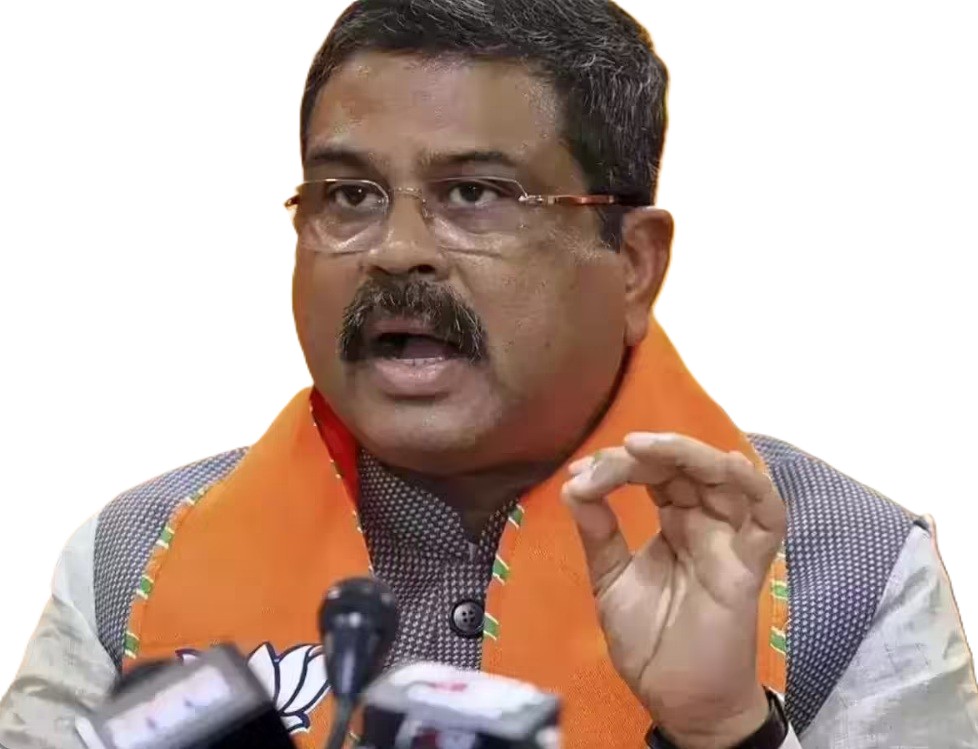
Dharmendra Pradhan’s resignation as Union Education Minister on 25 July 2026 is no ordinary political exit. It is the first time in twelve years of Narendra Modi’s prime ministership that a senior cabinet colleague has been forced out by sustained public pressure. What began as outrage over the NEET-UG 2026 paper leak and the broader rot in competitive examinations has become something larger: a visible puncture in the carefully cultivated image of an all-powerful administrator who could never be compelled to yield.
For more than a decade the Modi government projected an aura of invincibility. Ministers did not resign under street pressure. Investigative agencies moved with coordinated precision. Alliance partners stayed largely silent. The media learned the limits of criticism. That carefully constructed fortress has now shown its first major breach.
Pradhan’s letter, posted on X, spoke of preventing “anti-national forces” from exploiting the situation at Jantar Mantar and of protecting students from legal complications. The language was familiar—deflective, nationalistic, and carefully framed to avoid any admission of systemic failure. Yet the reality on the ground was unambiguous. A youth-led movement, organised under the banner of the Cockroach Janta Party and amplified by students, parents and civil society across the country, refused to accept the usual combination of inquiries, reassurances and eventual quiet burial. After weeks of protest, police action, hunger strikes and parliamentary disruption, the government blinked.
This is not merely the victory of one generation. It is the exposure of accumulated institutional decay. Paper leaks have become a recurring feature of the examination system. The National Testing Agency and CBSE have faced repeated credibility crises. Students have paid with their futures and, in tragic cases, their lives. When the public finally refused to accept another round of “the system is being fixed,” the political cost landed on the minister’s desk. That the government eventually accepted the demand after initially signalling that resignation was not on the table reveals something deeper than tactical calculation: an erosion of the old certainty that pressure could always be managed.
The implications ripple outward. Within the National Democratic Alliance, partners have long operated under the shadow of a dominant BJP. Chandrababu Naidu’s TDP and other allies have, at various points, expressed quiet or public unease over policy and power-sharing. A government forced to sacrifice one of its own under street pressure is no longer the same government that once dictated terms with ease. The calculation for regional parties changes when the centre looks vulnerable. Autocratic reflexes that once produced quick compliance from coalition partners begin to lose their force.
The same applies to the institutional ecosystem that sustained the image of unchallengeable authority. The Enforcement Directorate, CBI and Income Tax Department have, for years, been accused of selective zeal. When the political apex itself is compelled to retreat on a high-visibility issue, the psychological contract that kept officials and investigators tightly aligned begins to fray. Ministers, MPs, MLAs and chief ministers who once operated with the confidence that the centre’s protection was absolute may now calculate differently. The fear of becoming the next sacrificial figure is a powerful solvent of loyalty.
Pradhan himself was no peripheral figure. A long-serving minister who had handled petroleum, steel, skill development and education, he was frequently mentioned among the more durable faces of the regime. His forced exit therefore carries symbolic weight. It demonstrates that even senior loyalists can be expended when the street refuses to disperse. That precedent is now public.
Opposition parties, long dismissed as fragmented and ineffective, have seized the moment with predictable ferocity. Congress, AAP and others have framed the resignation as a victory for students and a defeat for stubbornness at the top. The language is opportunistic, yet the underlying point is difficult to dismiss: sustained public mobilisation forced an outcome that parliamentary disruption and media criticism alone had failed to achieve. The opposition will continue to press the advantage, turning every remaining grievance into evidence of deeper failure.
Attention is already shifting to other high-profile ministers. Nitin Gadkari, Nirmala Sitharaman and Ashwini Vaishnaw have faced their own controversies—policy, economic performance, or administrative lapses. In a climate where one resignation has proven possible, the pressure for further accountability intensifies. Whether or not further exits follow, the political atmosphere has changed. The assumption of permanent insulation has been broken.
The media’s role will be tested next. For years large sections of the press and television operated within carefully understood boundaries. A government forced onto the defensive by its own students creates space for sharper scrutiny. Some outlets will continue to defend; others will rediscover the language of accountability. The net effect is an erosion of the earlier information dominance.
None of this means the immediate collapse of the government or the party. Political power is rarely surrendered overnight. But the psychological architecture that sustained the image of omnipotence has been damaged. An administrator once presented as unflappable has been compelled to accept the resignation of a key colleague under public duress. Alliance partners have been given reason to reassess their leverage. Institutions that once moved in lockstep may begin to calculate their own institutional interests more carefully.
The resignation of Dharmendra Pradhan is therefore more than the resolution of one examination scandal. It is the first clear signal that the long period of unchallenged dominance is entering a more contested phase. The fortress still stands, but the walls have been shown to be penetrable. Once that knowledge becomes widespread among the young, among coalition partners, among bureaucrats and among the political class itself, the cascading effects are difficult to contain.
What we are witnessing is not the sudden end of an era, but the beginning of its visible decline—the moment when the myth of invulnerability first cracked under the weight of its own accumulated contradictions. The students at Jantar Mantar did not merely force a minister out. They forced a reckoning with the limits of power that had for too long claimed to have none.
