

India’s Widening Trade Deficit: A Looming Crisis Fueled by China’s Import Surge and Soaring Crude Bills

By Suresh Unnithan
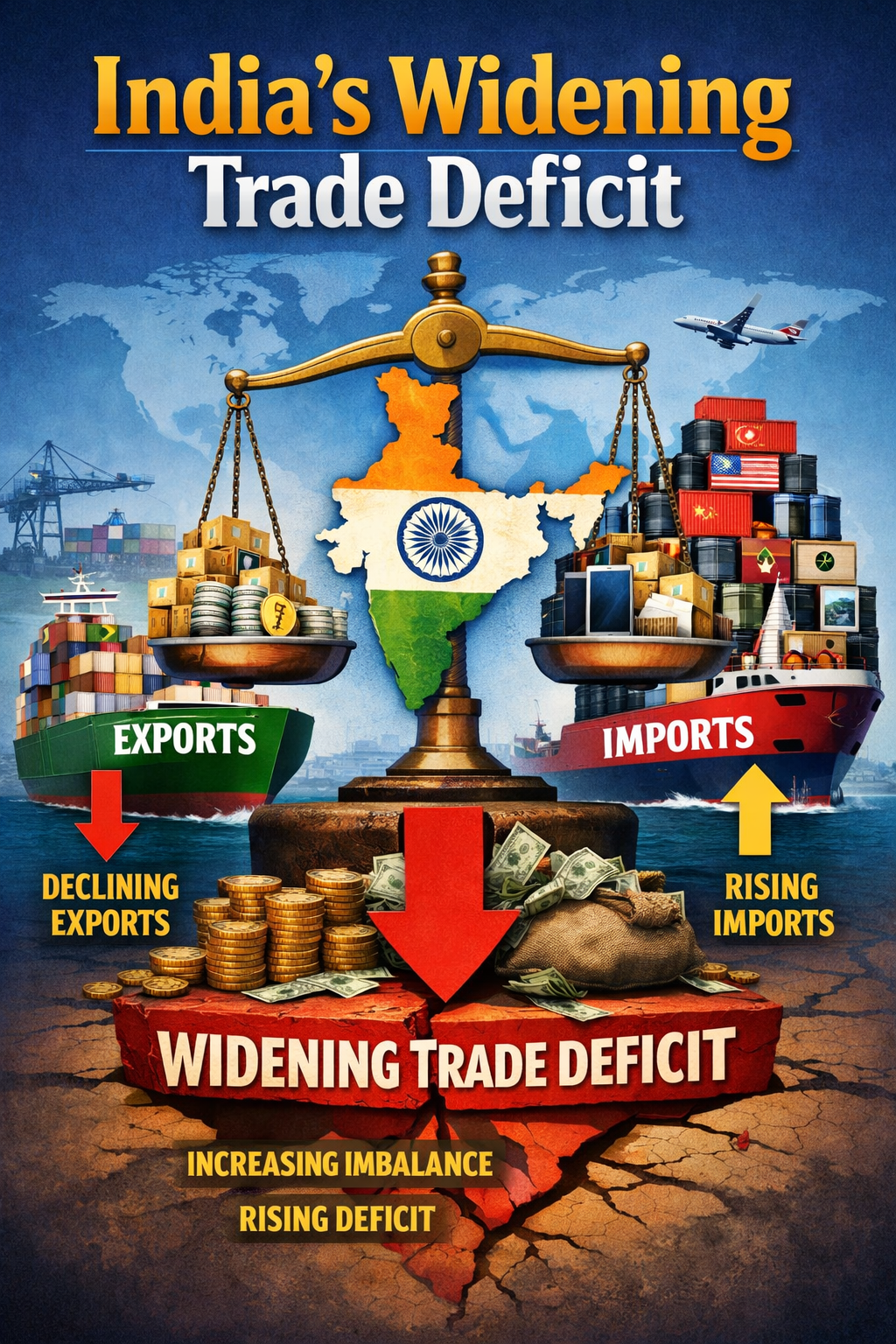
India’s trade deficit is not just widening—it’s exploding into a full-blown economic emergency that exposes the hollowness of self-reliance rhetoric. In Q1 FY27 (April-June 2026), the merchandise trade gap ballooned to $86.86 billion, with June alone recording a shocking $30.43 billion deficit—the worst for the month on record. Imports skyrocketed 31% to $70.84 billion, vastly outpacing export growth. This is no temporary blip; it is the predictable outcome of chronic policy failures, reckless import dependence, and geopolitical naivety.
The prime culprit is China, India’s largest single-country import source and a glaring symbol of manufacturing defeat. Indian imports from China surged nearly 28% in Q1 FY27, building on $131.7 billion in the previous fiscal. June saw a staggering 40% year-on-year jump to $13.34 billion. Electronics, machinery, components, chemicals, and solar cells continue pouring in, while India’s exports to China remain a pitiful trickle. The bilateral deficit has hit record levels exceeding $112-116 billion, sucking billions out of the Indian economy to fund a rival that shows open hostility at the border.
This is not trade—it is economic vassalage. Despite years of “Atmanirbhar” slogans, tariffs, and production-linked incentives, Indian industries remain hooked on cheap Chinese goods, often dumped at predatory prices. Domestic manufacturers are being crushed, jobs destroyed, and strategic sectors compromised. For every rupee earned from China, India hemorrhages several more. The government’s timid response—occasional probes and half-hearted diversification—has failed spectacularly. Border tensions, supply chain weaponization risks, and technology transfer concerns are ignored in favor of short-term cost savings. This dependency is a national security disaster masquerading as commerce.
Crude Oil Betrayal: Fueling the Fire with No Escape
Compounding this self-harm is the relentless crude oil import bill. India, importing over 85% of its petroleum needs, is at the mercy of volatile global prices exacerbated by Middle East conflicts and Hormuz disruptions. Recent months have seen petroleum imports surge dramatically, directly inflating the trade deficit. Every $10 per barrel spike can add $13-14 billion to the annual burden. Even temporary softening offers no real relief—the structural vulnerability remains.
Foreign exchange reserves, painstakingly built as a shield, are now under siege. The yawning merchandise deficit erodes the current account, with services surpluses providing only partial cover. Rupee pressure mounts, inviting RBI intervention, imported inflation, and higher borrowing costs. There is zero scope for meaningful forex improvement. With China’s import machine in overdrive and crude prices prone to escalation, the deficit is locked on an upward spiral. This will constrain monetary policy, scare away investors, and weaken India’s global economic standing at a critical juncture.
Impending Economic Catastrophe: The Gathering Storm
The dangers are immediate and severe:
· Currency Collapse and Inflation Torment: Unchecked deficits will batter the rupee, spiking costs of fuel, electronics, and essentials. Ordinary citizens will bear the brunt through higher prices and eroded savings, while the poor suffer most from energy inflation.
· Industrial Decimation and Job Massacre: Flooded with Chinese imports, Indian MSMEs and factories face extinction. The much-touted manufacturing renaissance is a mirage, replaced by import addiction that kills local innovation and employment on a massive scale.
· Fiscal Black Hole: Ballooning import bills drain resources needed for infrastructure, defense, and welfare. Fuel subsidies will explode, worsening fiscal deficits and crowding out productive spending.
· Strategic Surrender: Over-reliance on an adversarial China exposes critical supply chains to blackmail. In a crisis, electronics, renewables, and defense production could grind to a halt— an unacceptable risk for a aspiring superpower.
· Growth Derailment: Persistent imbalances will deter FDI, inflate debt, and trigger a slowdown. Dreams of becoming a $5 trillion economy or hitting $1 trillion exports look delusional amid this import deluge. Global investors will see India not as a vibrant market but as a dumping ground with structural weaknesses.
This crisis is entirely man-made. Successive regimes have prioritized optics over hard reforms: aggressive localization, ruthless anti-dumping enforcement, quality standards, and genuine export promotion. Negotiations with China remain toothless. Energy security—through diversification, renewables acceleration, and strategic reserves—receives lip service at best. The result is a economy bleeding foreign exchange, losing competitiveness, and risking a balance-of-payments crisis.
The Q1 FY27 data should serve as a brutal wake-up call. India’s trade deficit is not a statistical inconvenience; it is a dagger at the heart of economic sovereignty. Without radical shifts—decoupling from Chinese dependency, securing energy alternatives, and unleashing domestic manufacturing—the impending danger will materialize into stagflation, rupee turmoil, and lost decades. Facts demand accountability: the current path leads to decline, not development. Policymakers must confront this reality before it’s too late.
