


By Nanditha Subhadra
Israel has developed one of the most systematic and long-standing doctrines of targeted killings among modern states. This policy involves intelligence-driven precision operations—using drones, missiles, Special Forces, or covert methods—to eliminate specific individuals viewed as direct threats, primarily leaders and operatives of militant groups or those advancing adversarial military capabilities like Iran’s nuclear program.
Historical Development of Israel’s Targeted Killing Policy
The policy traces back to the 1970s. After the 1972 Munich Olympics massacre by Black September (a PLO-linked group that killed 11 Israeli athletes), Israel launched Mossad operations, including “Wrath of God,” to track and eliminate perpetrators and planners abroad. This set a precedent for extraterritorial actions against those responsible for attacks on civilians.
During the 1980s–1990s, operations expanded against Palestinian factions. A notable case was the 1996 killing of Hamas bomb-maker Yahya Ayyash (“the Engineer”) in Gaza via a booby-trapped phone. The approach intensified dramatically during the Second Intifada (2000–2005), triggered by a surge in suicide bombings that killed over 1,000 Israelis. Israel shifted to frequent use of helicopter-launched missiles and drones in Gaza and the West Bank.
B’Tselem data from that period records hundreds of targeted operations, with collateral civilian deaths. High-profile eliminations included:
Hamas founder Sheikh Ahmed Yassin (2004, missile strike on his wheelchair in Gaza).
His successor Abdel Aziz al-Rantisi (killed weeks later in a similar strike).
Military commander Salah Shehade (2002, airstrike that also killed 14 civilians, including children).
In 2006, Israel’s Supreme Court reviewed the policy in the landmark Public Committee Against Torture v. Government case. The court ruled that targeted killings are not categorically illegal under international humanitarian law (IHL) in an armed conflict. However, each operation must meet strict conditions: the target must be actively participating in hostilities (direct part), arrest must be infeasible, and the strike must satisfy proportionality (expected civilian harm not excessive relative to the military advantage). The ruling emphasized case-by-case legality and post-strike reviews, rejecting both blanket prohibition and unlimited permission.
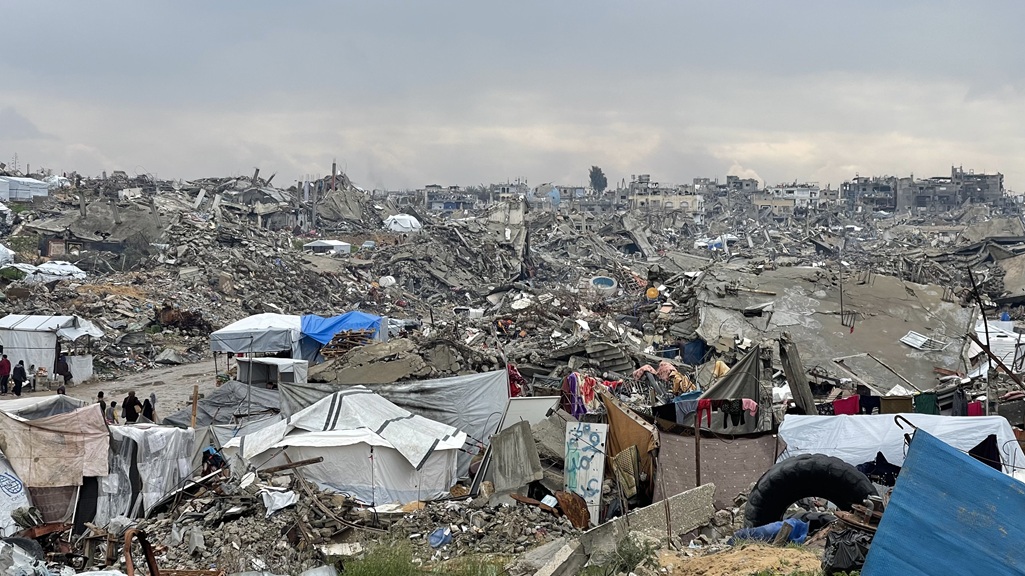
This framework has guided operations against Hamas, Palestinian Islamic Jihad, and other groups in subsequent Gaza conflicts (2008–09, 2012, 2014, 2021, and post-October 7, 2023). Israel justifies the policy as necessary self-defense when militants operate from dense urban areas, often embedding command structures, rocket launchers, and tunnels near or within civilian infrastructure. Critics, including UN bodies, HRW, and Amnesty, argue that many strikes cause disproportionate harm and blur lines between combatants and civilians.
Extension to Iran and Nuclear Targets
Israel extended the doctrine to Iran’s nuclear program, viewing it as an existential threat due to enrichment activities, ballistic missile development, and support for proxy groups. Between 2010 and 2012, at least five Iranian nuclear scientists were assassinated (via magnetic car bombs or shootings), widely attributed to Mossad. Mohsen Fakhrizadeh (“father” of Iran’s nuclear weapons effort) was killed in 2020 by a remote-operated machine gun system. Further scientists and experts were targeted in 2025 operations.
In the 2026 Iran war, the policy scaled up dramatically. On February 28, U.S.-Israeli strikes eliminated Supreme Leader Ayatollah Ali Khamenei, security officials like Ali Larijani and Esmail Khatib, multiple IRGC commanders, and additional nuclear scientists. These “decapitation” strikes aimed to degrade command, nuclear expertise, and missile capabilities amid stalled diplomacy and escalating proxy threats.
The Minab School Strike (February 28, 2026)
The opening day of the campaign included a strike that hit Shajareh Tayyebeh Elementary School in Minab, southern Iran (Hormozgan province). The school was adjacent to an IRGC naval base near the Strait of Hormuz. A precision munition—evidence points to a U.S. Tomahawk or similar—caused the roof to collapse during morning classes, killing at least 165–168 people, including over 100 children (mostly young girls) and teachers. Dozens more were injured. Satellite imagery, videos, and timing align the strike with attacks on the neighboring naval facility.
U.S. and Israeli officials have described it as unintended collateral from targeting a legitimate military objective, citing intelligence challenges or proximity errors in a high-tempo campaign. Human rights groups (Amnesty, HRW) and UN voices labeled it a potential war crime, citing failures in distinction and feasible precautions under IHL. No evidence has publicly confirmed the school itself was militarized. This incident highlights the persistent risk in targeted operations: even precision weapons can produce mass civilian tragedy when legitimate targets are embedded near populated sites.
Comparison with U.S. Drone Strike Policy
The U.S. developed a parallel targeted killing program after 9/11, primarily via armed drones (Predator/Reaper with Hellfire missiles) against al-Qaeda, Taliban, ISIS, and affiliates in Pakistan, Yemen, Somalia, and elsewhere.
U.S. Evolution: Early strikes (2002 onward) were CIA-led and covert. Under Obama, a 2013 Presidential Policy Guidance introduced stricter reviews for strikes “outside areas of active hostilities,” requiring “near certainty” of no civilian deaths and a “continuing and imminent threat.” Trump decentralized authority, expanding flexibility. Biden reinstated more oversight. “Signature strikes” (based on patterns of life rather than positive identification) were controversial.
Legal Framing: Like Israel, the U.S. invokes self-defense (UN Charter Article 51) and IHL in armed conflict, treating certain non-state actors as targetable. Civilian casualty counts remain disputed: official U.S. figures (Obama era) reported low double-digit civilians across hundreds of strikes; independent estimates (Bureau of Investigative Journalism, New America) were higher, sometimes 10–40% civilians depending on the theater.
Similarities: Both prioritize remote precision to reduce own-force risk, rely on intelligence for high-value targets, and face criticism over proportionality, transparency, and “blowback” (radicalization). Both have caused tragic civilian deaths, including children.
Differences: Israel’s operations often occur in closer proximity (Gaza/West Bank) or against state-linked programs (Iran), blending airstrikes with ground elements and facing denser urban settings. The U.S. program emphasized counterterrorism in remote areas, with varying administrative rules by president. Israel has a domestic Supreme Court precedent providing judicial guidelines; U.S. oversight has been more executive-branch driven, with limited public transparency.
In both cases, civilian tolls—especially among non-combatants, women, children, and the elderly—have prompted international scrutiny and calls for accountability. Operations in Gaza have produced higher absolute numbers of Palestinian deaths (tens of thousands since 2000 per Palestinian/UN data, with debates over combatant vs. civilian ratios). U.S. drone campaigns tallied lower per-strike figures but spanned multiple countries over two decades.
Targeted killings can disrupt leadership and capabilities in the short term (e.g., slowing suicide bombings during the Intifada or delaying Iran’s nuclear timeline). However, they rarely resolve underlying conflicts and can fuel cycles of retaliation, as seen in ongoing regional escalations.
The 2026 Iran campaign combined U.S. strike platforms with Israel’s targeted doctrine against leadership and technical experts, resulting in significant military degradation alongside civilian losses like Minab. Independent investigations into specific incidents remain essential for assessing compliance with IHL principles of distinction, proportionality, and precaution.
(This overview draws from documented history, court rulings, and public reporting. Civilian suffering in all these conflicts underscores the human cost of prolonged asymmetric warfare.)
