

Makhana Dialogue Calls for a Stronger Market Ecosystem to Position India’s Superfood on the Global Stage

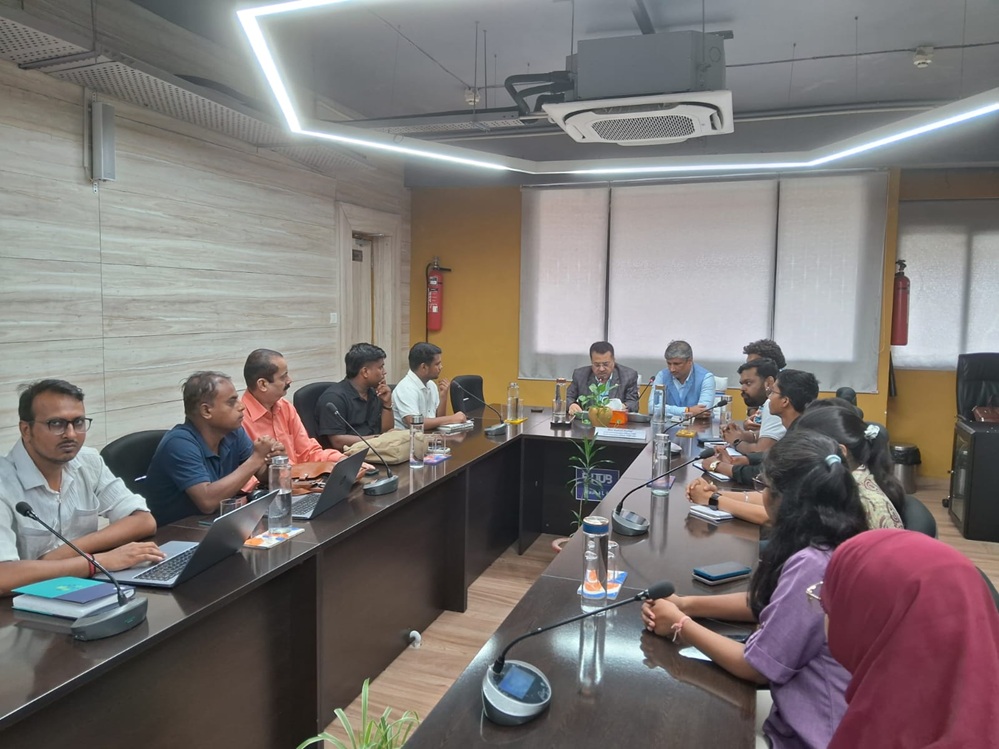
Patna: Pragya Sansthan, in collaboration with the Chandragupt Institute of Management Patna (CIMP), organized the “Makhana Dialogue: Strengthening the Market Ecosystem”, with the Advanced Study Institute of Asia (ASIA) as the Knowledge Partner. The dialogue brought together Makhana producers, traders, entrepreneurs, industry leaders, researchers, policymakers, and experts to deliberate on strengthening the Makhana value chain and enhancing its competitiveness in domestic and international markets.
The programme commenced with a welcome address by Mr. Kumod Kumar, CEO, CIMP Business Incubation and Innovation Foundation (CIMP BIIF) and President, TiE Patna, who welcomed the distinguished guests and delegates and underlined the importance of collaborative efforts to unlock the full potential of the Makhana sector.
Mr. Kamlakant Pathak, Associate Director, Pragya Sansthan, set the context for the dialogue by outlining its objectives and key challenges facing the Makhana sector. He also moderated the technical sessions.
Ms. Shivani Singh from the Advanced Study Institute of Asia (ASIA) presented a comprehensive overview of the current status of the Makhana sector in India and the global market. Her presentation highlighted India’s dominant position in Makhana production, emerging global demand, export opportunities, evolving market trends, and the strategic interventions required to strengthen India’s competitiveness in international markets.
The dialogue featured in-depth deliberations on key issues affecting the Makhana sector, including price volatility, the absence of standardized grading and pricing mechanisms, quality standards for buying and selling, transportation and logistics from the Mithila region to national and international markets, value addition, branding, exports, innovation, and the need for accredited testing laboratories and robust quality certification systems. The delegates also emphasized the importance of creating a distinct global identity for Indian Makhana to enhance its positioning in international markets.
Delivering the keynote address as the Chief Guest, Prof. (Dr.) Unnat Pandit, Controller General of Patents, Designs & Trade Marks (CGPDTM), Government of India, highlighted the immense potential of Makhana as a globally recognized Indian superfood. He highlighted the need for stronger market linkages, standardized quality and pricing mechanisms, improved logistics, branding, value addition, and policy support to build a globally competitive Makhana ecosystem. He emphasized the importance of intellectual property protection, branding, innovation, quality assurance, and value addition in enhancing India’s global competitiveness. He also stressed the need for scientific research, standardized quality benchmarks, and stronger institutional support to establish Indian Makhana as a premium global brand.
The delegates observed that although India is the world’s largest producer of Makhana, realizing its full market potential will require greater market transparency, improved infrastructure, scientific processing, stronger quality assurance systems, better logistics, and closer collaboration among producers, processors, traders, exporters, researchers, financial institutions, and policymakers. The discussions also highlighted the need for policy support to improve farmers’ incomes, encourage entrepreneurship, promote product diversification, and expand India’s footprint in the global Makhana market.
The dialogue witnessed active participation from leading stakeholders across the Makhana ecosystem, including Ms. Lily Jha (Organic Sattva), Mr. Abhinav Jha (Tirhutwala.com), Mr. Keshav Kumar (Mithila Bhoj), Mr. Ajay Kumar (Bodhika), along with Makhana producers, processors, exporters, entrepreneurs, researchers, industry experts, and representatives from academic and policy institutions. Their insights reflected the ground realities of production, processing, branding, logistics, and market access, contributing significantly to the discussions.
The programme concluded with a collective resolve to strengthen collaboration among government institutions, research organizations, industry stakeholders, entrepreneurs, and farmer groups to build a resilient, competitive, and sustainable Makhana ecosystem. The recommendations emerging from the dialogue will contribute to future policy discussions and strategic initiatives aimed at strengthening the entire Makhana value chain—from production and processing to branding, exports, and global market integration—thereby positioning Indian Makhana as a premium agri-food product with a strong global identity.
