


By Suresh Unnithan
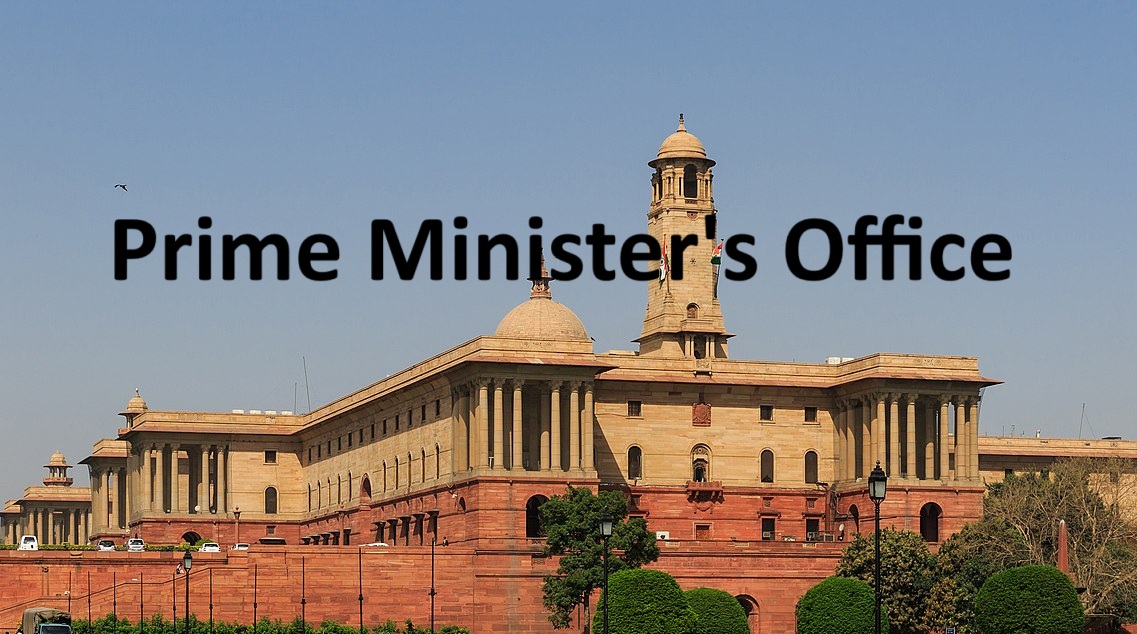
For over a decade, Prime Minister Narendra Modi’s Prime Minister’s Office (PMO)- recently rechristened Seva Teerth (“Pilgrimage of Service”)- has been the envy of political operatives worldwide—a monolithic bastion of efficiency, loyalty, and airtight secrecy. Dubbed an “iron fortress” by admirers, it orchestrated India’s ascent on the global stage, from economic reforms to digital diplomacy, all while stifling leaks and internal dissent with surgical precision. But in the waning months of 2025, that fortress is showing fissures. A cascade of abrupt resignations, whispered power struggles, and unprecedented data breaches have pierced the veil of invincibility. Leaked electronic files—e-files—from the PMO and allied institutions paint a picture of vulnerability, while outspoken BJP veteran Subramanian Swamy’s incendiary barbs have turned a simmer into a boil. As speculation swirls of more heads rolling, the question looms: Is this the beginning of the end for Modi’s inner sanctum?
A Torrent of Resignations: From Whispers to Earthquakes
The first tremors hit in July 2025, when Vice President Jagdeep Dhankhar, a staunch Modi loyalist and the Rajya Sabha’s presiding officer, tendered his resignation mid-term—citing “health concerns” on the very first day of the Monsoon Session. Dhankhar, 74, had been sworn in just three years earlier, with his tenure slated to run until 2027. His abrupt exit, submitted directly to President Droupadi Murmu, was unprecedented in independent India’s history. No vice president had ever stepped down before completing their term, barring rare cases like V.V. Giri’s 1969 resignation to contest the presidency. Opposition voices, including Congress leaders, hinted at deeper malaise—strained relations with the PMO over parliamentary disruptions and a perceived sidelining in decision-making. Dhankhar’s departure triggered a swift election in September, where BJP’s C.P. Radhakrishnan edged out the opposition’s candidate by a razor-thin 152 votes, underscoring the NDA’s fragility.
The shocks continued into autumn. In October, Hitesh Jain, a full-time member of the 23rd Law Commission of India, resigned effective October 29, his exit accepted by the President the same day. Appointed just six months earlier under the chairmanship of retired Supreme Court Justice Dinesh Maheshwari, Jain—a prominent litigation lawyer and managing partner at a top firm—was seen as a PMO favorite, credited with streamlining legal reforms aligned with the government’s agenda. His unceremonious departure, including orders to vacate his official residence, fueled rumors of internal audits and conflicts over sensitive dossiers on electoral bonds and data privacy laws.
November brought the Law Commission’s fallout into sharper focus, but December escalated the drama. Navneet Kumar Sehgal, the Chairman of Prasar Bharati—India’s public broadcaster—resigned on December 2, 2025, barely 20 months into a three-year term he began in March 2024. A retired 1988-batch IAS officer from Uttar Pradesh, Sehgal had overseen key initiatives like digitizing Doordarshan archives and amplifying government narratives on platforms like DD News. His plea for an extension to wrap up pending projects was reportedly ignored; the Information and Broadcasting Ministry accepted the resignation with “immediate effect” the next day. Sources in Delhi’s corridors whisper of clashes over content control, with Sehgal resisting PMO directives to “tone down” critical coverage of economic slowdowns.
Lurking in the shadows of these exits is the saga of Hiren Joshi, Modi’s shadowy media czar and Officer on Special Duty (OSD) for Communications in the PMO since 2014. Joshi, often called the “third most important person” in the Modi ecosystem, has been the invisible hand behind the PM’s social media blitz—crafting tweets that doubled as policy announcements and quelling scandals before they erupted. But in late November 2025, Joshi vanished from key WhatsApp groups used for rapid-response coordination, sparking a firestorm of speculation about his “silent ouster.” Congress spokesperson Pawan Khera dubbed it the “H-bomb,” demanding probes into Joshi’s alleged foreign business ties and role in “strangling Indian democracy” via media manipulation. Joshi resurfaced in early December, rejoining the groups, but the damage was done—journalists and insiders now question if he’s been demoted or replaced by a rising star.
These resignations aren’t isolated HR mishaps; leaked PMO messages, circulating anonymously on encrypted channels, suggest a purge in the offing. One purported internal memo, dated November 15, 2025, warns of “imminent realignments” to “safeguard core operations,” hinting at more departures tied to “performance reviews.” The mystery deepens: Why the haste in acceptances? Why the silence from the PMO? Analysts point to a fortress under siege, where loyalty oaths once sufficed, but now even the inner circle is cracking.
The E-Files Exposé: When Digital Walls Crumble
No narrative of the PMO’s unraveling is complete without the “E-files”—a shorthand for the electronic dossiers and data troves that have spilled into the open, exposing the fortress’s cyber vulnerabilities. India’s cybersecurity landscape in 2025 has been a horror show: Seqrite’s annual report tallied 265 million attacks on Indian websites alone, with Trojans and file infectors claiming 70% of incidents. But the PMO’s brush with infamy came in June, when a colossal breach dumped 16 billion login credentials—emails, passwords, and tokens—onto the dark web, compiled from 30 exposed datasets. Cybersecurity firm Cybernews labeled it the “largest data breach in history,” with government domains like nic.in (used by ministries) heavily implicated.
The fallout was swift and humiliating. In September, the government mandated a full migration from @nic.in to the more secure @mail.gov.in, managed by Zoho, after hackers exploited weak server segmentation to siphon PMO-linked files on policy drafts and personnel evaluations. Echoes of earlier scares lingered: A February 2024 GitHub leak allegedly exposed EPFO and PMO datasets, prompting CERT-In probes that yielded little closure. By October, even the Income Tax e-Filing portal—a PMO-backed digital pillar—suffered a bug allowing users to swap PAN numbers and access others’ financials, verified by TechCrunch as a backend authentication failure.
These E-files aren’t just tech glitches; they’re ammunition. Leaked PMO communiqués, including one purportedly from Joshi’s desk, detail “red-flagged” officials for “misaligned priorities,” linking directly to the resignations. Once a bulwark against leaks, the PMO now grapples with a paradox: Its hyper-digitized operations, from Aadhaar integrations to UPI rollouts, have become its Achilles’ heel. As Union Minister Ashwini Vaishnaw boasted at the NDTV World Summit in October about India’s “data as new oil,” the irony stung—Modi’s digital India is leaking like a sieve.
Power Plays and Fading Stars: The Cabinet’s Silent Schisms
Beneath the resignations and bytes lies a more existential threat: a power struggle that’s reshaping Modi’s inner court. For years, the troika of Modi, Home Minister Amit Shah, and a cadre of trusted lieutenants like Dharmendra Pradhan, Anurag Thakur, and Piyush Goyal held sway. But 2025 has seen their orbits wane, eclipsed by Ashwini Vaishnaw—the former IAS officer turned “man Friday” for Modi.
Vaishnaw, 55, has ascended meteorically despite a checkered railways tenure marred by derailments, track failures, and service cuts. Critics lambast his “shambolic” oversight, yet his bureaucratic polish and corporate Rolodex—ties to Reliance and global tech giants—have made him indispensable. Insiders whisper of Vaishnaw’s “new power group,” handling everything from 6G spectrum auctions to PMO media overhauls, allegedly supplanting Joshi. This shift irks Shah, whose organizational iron-fist in the BJP is reportedly chafing against Vaishnaw’s “corporate whisperer” style. Recent BJP huddles, including a December 4 powwow with Shah, Nadda, and Vaishnaw, hint at looming reshuffles—perhaps a new UP chief or even national president—to realign loyalties.
The ripple effects are seismic. Pradhan’s influence on energy policy has dimmed amid Vaishnaw’s telecom encroachments; Thakur’s media brief feels redundant post-Joshi; Goyal’s commerce portfolio is adrift in trade negotiations. These “old guards” now rumble in BJP state units, where whispers of “Delhi’s disconnect” fuel discontent ahead of 2026 polls. A retired Odisha bureaucrat, who once worked with Vaishnaw, confided: “Power went to his head—efficient, yes, but now he’s the ecosystem’s new motherboard.” The equation? Modi’s fortress was built on unity; fractures here could topple it.
The Reckoning: Rumblings That Could Rumble Louder
The Modi cabinet, once a symphony of sycophancy, now hums with discord. These aren’t petty squabbles; they’re symptoms of a fortress fatigued by a decade in power—economic headwinds, opposition resurgence, and cyber sieges eroding the aura of infallibility. The E-files saga underscores a brutal truth: In the digital age, no wall is ironclad. As more leaks promise to “unfold soon,” per anonymous PMO sources, the BJP’s rumblings could erupt into open revolt.
Modi, the master strategist, faces his sternest test: Rebuild the fortress or watch it crumble from within. For now, the cracks are visible—and widening. In Delhi’s winter chill, the air is thick with speculation: How many more heads before the crown slips? The fortress endures, but its invincibility is a relic of yesterday.
