


By Suresh Unnithan
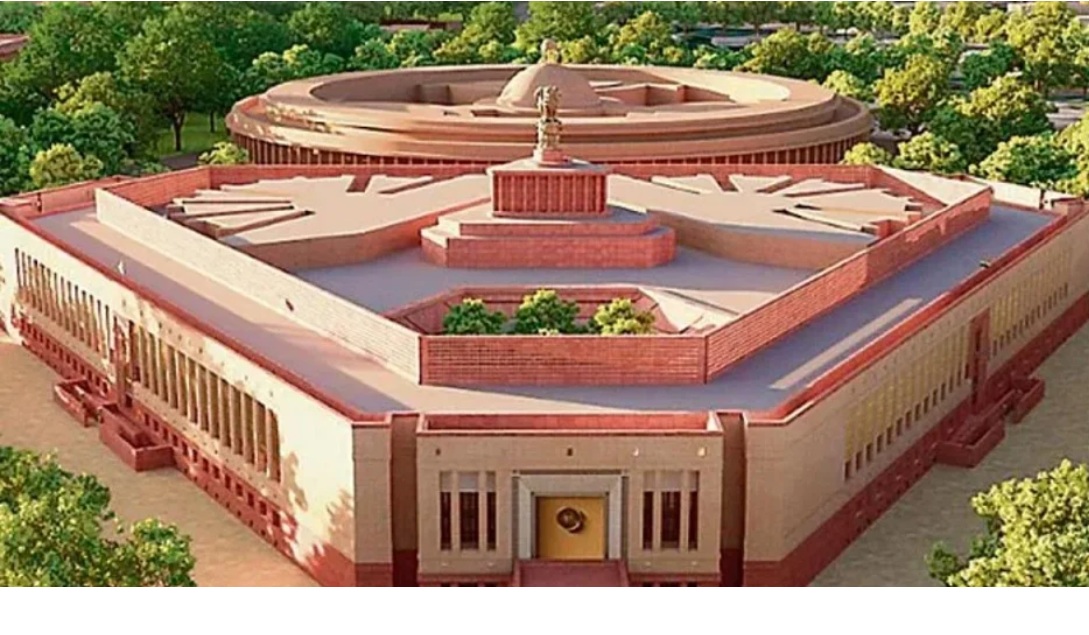
In the grand edifice of New Delhi’s Parliament House, where the echoes of India’s founding vision—liberty, equality, and fraternity—once resonated, a troubling silence has taken hold. The Indian Parliament, envisioned as the people’s sovereign forum, has devolved into a theater of political theater, corporate maneuvering, and chronic disruptions. As Dr. B.R. Ambedkar, the architect of the Constitution, presciently warned in 1949 during the Constituent Assembly debates: “However good a Constitution may be, if those who are implementing it are not good, it will prove to be bad. However bad a Constitution may be, if those implementing it are good, it will prove to be good.” Today, with productivity plummeting, taxpayer funds squandered, and legislative output skewed toward elite interests, the question looms large: Does India’s Parliament still embody democracy, or has it become, in Ambedkar’s stark words, “a democracy in form, [but] a dictatorship in fact”?
This article examines the Parliament’s functioning over the past five years (2021–2025), drawing on empirical data to reveal a body increasingly unmoored from public concerns. Far from deliberating on pressing issues like agrarian distress, healthcare access, or climate resilience, sessions are marred by adjournments, acrimonious protests, and rushed passage of bills that often favor corporate lobbies over the common weal. Jawaharlal Nehru, India’s first Prime Minister, once described democracy not merely as a “form of government” but as “a mode of associated living, of conjoint communicated experience.” Yet, in contemporary India, this associative spirit has eroded, supplanted by a Parliament that appears to safeguard the affluent few at the expense of the many.
A Chronicle of Dysfunction: Productivity in Freefall
The past five years paint a dismal picture of parliamentary inertia. The 17th Lok Sabha (2019–2024) convened for a mere 274 sitting days—the shortest full term since 1952—with an annual average of just 55 days, a sharp decline from the 120–140 days per year in the 1950s. This trend persisted into 2025, with the year logging only 62 sittings by December, underscoring a systemic aversion to deliberation.
Productivity metrics, tracked by the PRS Legislative Research, reveal even graver inefficiencies. In the Monsoon Session of 2025, the Lok Sabha operated at 31% productivity, functioning for 37 hours out of 120 scheduled, while the Rajya Sabha fared marginally better at 38.8% with 41.25 hours. The Winter Session of 2024 was equally chaotic: Lok Sabha at 52% (losing over 65 hours to disruptions), and Rajya Sabha at 39%. Across 2021–2025, the average productivity hovered around 47% for the Lok Sabha, with the 2021 Monsoon Session hitting rock bottom at 21%.
Disruptions—protests over farm laws, electoral bonds, or ethnic conflicts—have normalized adjournments, eroding the Question Hour’s sanctity. In the 17th Lok Sabha, it functioned for only 19% of scheduled time in Lok Sabha and 9% in Rajya Sabha. As critic and former diplomat Pavan K. Varma observed, “Parliament has become a gladiatorial arena where scoring points trumps substantive debate,” echoing Mahatma Gandhi’s lament that true swaraj demands self-restraint, not spectacle.
| Year/Session | Lok Sabha Productivity (%) | Rajya Sabha Productivity (%) | Hours Lost to Disruptions (Lok Sabha) |
| 2021 Monsoon | 21 | 28 | ~77 hours |
| 2023 Monsoon | 18 | 28 | Significant (exact: N/A) |
| 2024 Winter | 52 | 39 | 65+ hours |
| 2025 Monsoon | 31 | 38.8 | ~83 hours |
| Average (2021–2025) | ~47 | ~40 | ~50 hours/session |
Source: PRS Legislative Research and government data
The Taxpayer’s Burden: Squandering Public Funds
This dysfunction comes at a steep price. Running Parliament costs ₹2.5 lakh per minute—or ₹1.5 crore per hour—encompassing salaries, security, maintenance, and utilities. A full six-hour sitting drains ₹9 crore daily, yet disruptions render much of this expenditure futile. In the 2024 Winter Session alone, Lok Sabha’s 65 lost hours equated to over ₹97 crore in wasted taxpayer money.
Annual budgets underscore the scale: Lok Sabha received ₹903 crore in 2025, Rajya Sabha ₹413 crore, with member salaries and allowances alone totaling ₹338.79 crore for the former. Over five years, cumulative expenditure exceeded ₹6,500 crore (₹4,500 crore for Lok Sabha, ₹2,000 crore for Rajya Sabha), yet output remains anemic. As Ambedkar cautioned in his 1953 Rajya Sabha speech: “If I find the constitution being misused, I shall be the first to burn it,” a fiery rebuke to those who treat public coffers as personal fiefdoms.
Elites in the House: A Parliament of the Affluent
The composition of Parliament exacerbates this malaise. In the 18th Lok Sabha (elected 2024), 93% of MPs—504 out of 543—are crorepatis, up from 88% in 2019, with average assets soaring to ₹46.34 crore. The Lok Sabha boasts billionaires like TDP’s Dr. Chandra Sekhar Pemmasani (₹5,705 crore) and BJP’s Konda Vishweshwar Reddy (₹4,568 crore), many from corporate dynasties. Rajya Sabha fares no better: 14% (31 of 225) are billionaires, with BJP holding nine, including industrialists like Rajinder Gupta (₹5,053 crore).
This affluence skews priorities. The “House of the People” now shields business interests, while the “House of Elders” hosts moneyed nominees whose debates, as one critic noted, “lack the depth of national interest.” Ambedkar decried such stratification: “Parliamentary Democracy… is in reality a government of a hereditary subject class by a hereditary ruling class.”
Legislation for the Few: Corporate Wins Over Public Welfare
From 2021–2025, Parliament passed over 150 bills, but scrutiny was perfunctory: 42% received less than 30 minutes of debate in the 17th Lok Sabha. The 2025 Monsoon Session cleared 15 bills amid walkouts, including the Income-Tax (No. 2) Bill and Taxation Laws (Amendment) Bill—reforms easing corporate tax burdens. Corporate-favoring measures abound: the Insolvency and Bankruptcy Code (Amendment) Bill (2021) streamlined asset resolutions for lenders; the General Insurance Business (Nationalisation) Amendment Bill (2021) opened doors to private insurers.
Public-centric bills, like the Assisted Reproductive Technology (Regulation) Bill (2021), exist but are outnumbered by controversial ones: the Waqf (Amendment) Bill (2025), sparking communal tensions; the Essential Defence Services Bill (2021), curbing workers’ rights; and the Citizenship Amendment Act (2019, effects lingering), deemed discriminatory by critics. At least 20 bills since 2021 qualify as controversial, often rammed through without division votes, as with the 2020 Farm Laws—later repealed amid protests. Roughly 60% tilt toward corporate ease (tax, insolvency, privatization), versus 40% for public goods (health, education), per analyses.
| Category (2021–2025) | Bills Passed | Examples |
| Corporate-Favoring | ~90 | Insolvency Amendment (2021), Taxation Laws (2025) |
| Public-Centric | ~60 | ART Regulation (2021), National Anti-Doping (2022) |
| Controversial | ~20 | Waqf Amendment (2025), Farm Laws (2020, repealed) |
Source: PRS Bill Track and Ministry data
Reclaiming the People’s Forum
India’s Parliament, born of anti-colonial sacrifice, now teeters on irrelevance. Influenced by corporate donors—via electoral bonds or lobbying—it prioritizes profit over people, as evidenced by 75% of 2023’s Demands for Grants passing sans discussion. Ambedkar’s verdict rings true: “Democracy in India is only a top-dressing on an Indian soil which is essentially undemocratic.” Gandhi, too, envisioned a democracy of villages, not vestibules of vested power.
Reform is imperative: Mandate 100 sitting days annually, enforce debate minima, cap MP wealth via transparency, and devolve power to local bodies. Only then can Parliament honor Nehru’s vision of “conjoint experience” and Ambedkar’s temple of justice. Otherwise, as the architect himself forewarned, the edifice risks demolition by those it was meant to serve. The people, not the powerful, must reclaim their house.
*Reasearch done by Nanditha Subhadra
