


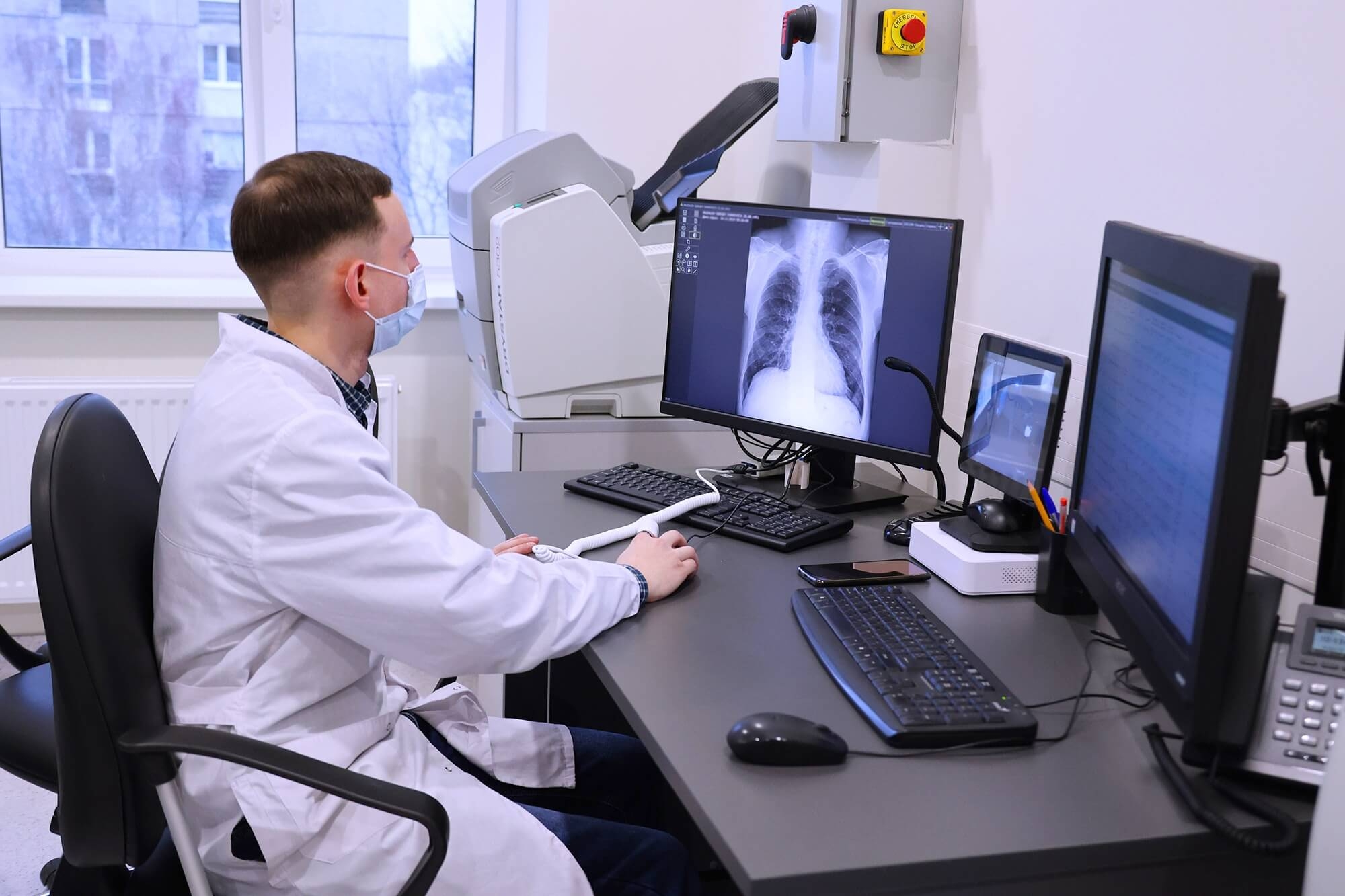
Moscow scientists have discovered that the maximum accuracy and speed of diagnosing hemorrhagic strokes in CT scans is achieved not with complete automation, but with the collaboration of a doctor and AI– with a neural network acting as a “second opinion.” These conclusions were reached during a Moscow experiment on the implementation of computer vision technologies, which compared various formats for using AI services. This was reported by Yuri Vasilev, Medical Director of the Center for Diagnostics and Telemedicine.
Moscow’s healthcare system is systematically introducing AI technologies with a strong focus on safety and reliability. Over a two-year period, specialists conducted monthly monitoring of three AI services and analyzed radiologists’ reports. During this time, more than 3,400 CT scans from 67 Moscow hospitals were reviewed. The specialists compared different AI implementations and found that the highest accuracy and speed in diagnosing hemorrhagic stroke on CT scans were achieved when physicians and AI worked together. In this model, the neural network acts as a “second reader,” rapidly detecting even minimal hemorrhages and performing measurements, while the physician makes the final decision. According to Yuri Vasiliev, this approach has enabled maximal diagnostic accuracy for intracranial hemorrhages, which is critical because timely detection of even minor bleeding allows prompt and appropriate treatment, reduces the risk of severe complications, and ultimately saves lives.
Today, physicians continue to significantly outperform AI by preventing false positives (i.e., not seeing hemorrhages where none actually exist). However, the “Physician + AI” pairing provides optimal results by increasing the accuracy of detecting even small brain hemorrhages and quickly measuring their volume.
In practice, it works like this: immediately after a CT scan, the neural network receives the images and begins analysis. It flags suspicious areas, determines the type of hemorrhage, and generates a preliminary decision. The radiologist receives a “preliminary” result, allowing them to immediately focus on the problematic area and make a final determination. The human factor in this scheme is a “defense mechanism,” so the AI service doesn’t replace the specialist, but rather helps them make decisions more quickly, especially in critical cases.
In clinical practice, the workflow proceeds as follows: immediately following CT acquisition, the neural network receives the images and initiates analysis. It highlights suspicious regions, classifies the hemorrhage type, and formulates a preliminary interpretation. The radiologist then reviews this preliminary output, which allows them to promptly direct attention to the area of concern and render a final clinical decision. In this framework, the human element serves as a critical safeguard, ensuring that the AI service does not supplant the specialist but rather augments decision-making efficiency, particularly in time-sensitive, emergent scenarios.
Developers at the Center for Diagnostics and Telemedicine are constantly improving the algorithms: they incorporate physician input, reduce false alarms, and optimize performance under high workloads. The digital infrastructure that was created has integrated all radiology equipment into a single network, giving radiologists access to cutting-edge computer vision algorithms. AI services in Moscow’s healthcare system today provide a reliable, constantly evolving support system for physicians, ensuring Muscovites receive the highest level of medical care.
Moscow has opened access to its algorithms to regional institutions. Since February 2024, the MosMedAI platform, developed by the Center for Diagnostics and Telemedicine of the Moscow Healthcare Department in collaboration with the Moscow Department of Information Technology, has provided regional physicians with access to AI services for processing CT scans, X-rays, fluorograms, mammograms, and other imaging studies.
