

National leaders convene to shape a safer, more inclusive future for India’s children and youth

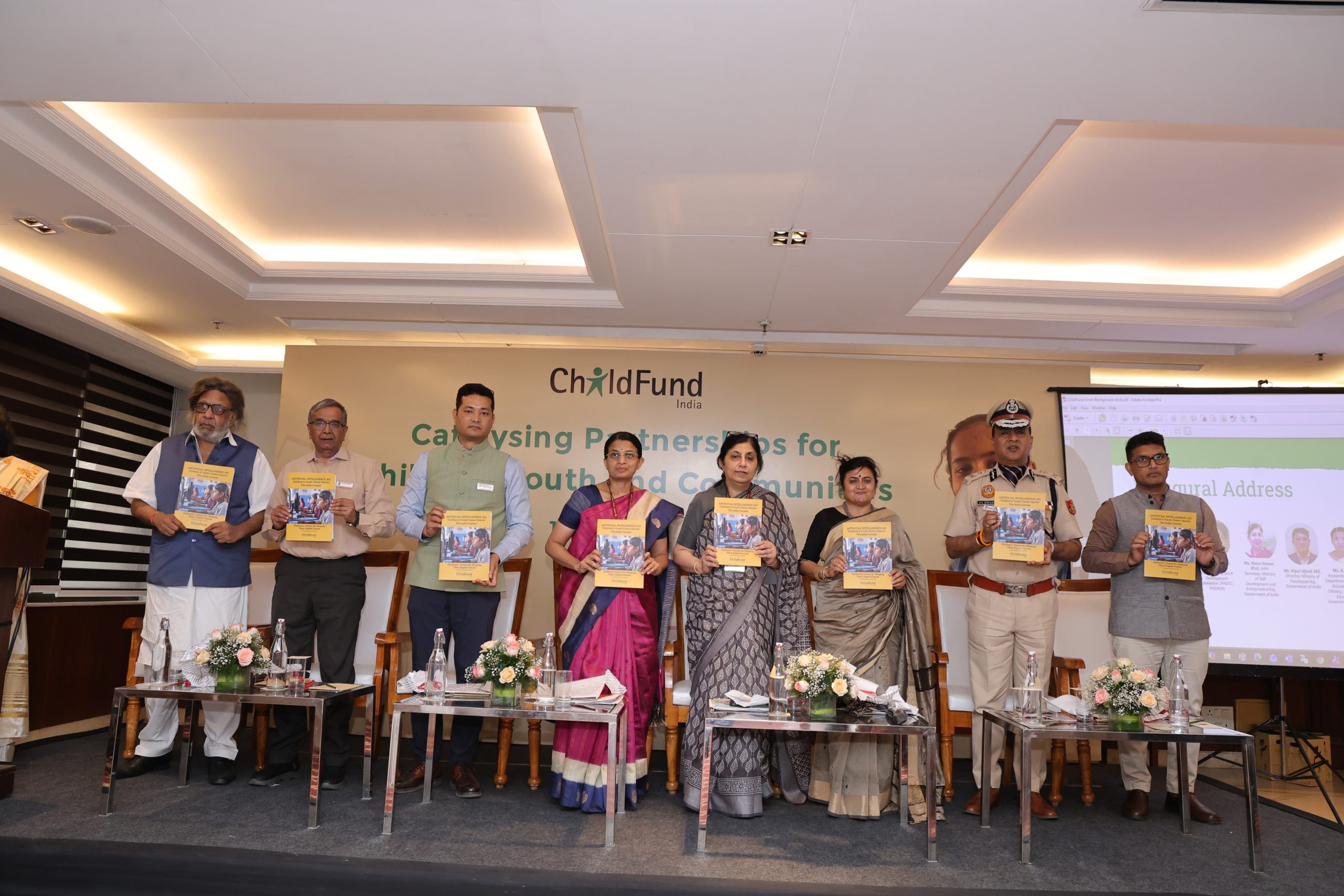
New Delhi : The rapid social, technological, and economic change is reshaping the future of childhood. Against this backdrop ChildFund India recently convened stakeholders in New Delhi for a dialogue on what children need to survive, thrive, and succeed. Titled “Catalysing Partnerships for Children, Youth, and Communities,” the convening brought senior government officials, policymakers, mental health professionals, legal experts, educators, and civil society organisations together under one roof to exchange experiences, explore persistent challenges, define what success for children looks like today, and collectively imagine a stronger, more inclusive future for India’s children and youth. Some participants included Dr. Rashmi Singh, IAS, Secretary, WCD Department, Government of Delhi, Shri Devesh Chandra Srivastava, IPS, Special Commissioner of Police, Delhi Police, New Delhi, Ms. Nuriya Ansari, CEO, Bharti Airtel Foundation, among others.
A defining moment was the release of the Artificial Intelligence (AI) Children & Youth Vision Charter — The India Context, developed by ChildFund India in consultation with children and young people from urban, rural, tribal, and communities across India. Built through a structured process of state-level consultations and a national workshop held in Ranchi, Jharkhand, the Charter articulates children’s collective vision for a digital future that is safe, ethical, and inclusive. It lays out 11 key recommendation by children and youth, covering data protection and privacy, prevention of online abuse and exploitation, control of deepfakes and misinformation, fair and non-discriminatory AI, mental health safeguards, and meaningful youth participation in AI governance.
Dr. Rashmi Singh, IAS, Secretary, WCD Department, Government of Delhi highlighted in her keynote address, “Police departments and panchayats play a crucial role in early identification and protection of children, yet anganwadi areas often remain invisible in our broader mapping of children’s needs, even though it is in these crucial first few years that developmental delays must be recognised and addressed. Opportunities under the Ministry of Skilling also remain underutilised for the communities who need them most, underscoring the need to spread greater awareness of government schemes among those who stand to benefit the most from them. This calls for a holistic approach, where civil society and government collaborate with collective effort, and where women remain at the centre of our interventions. Anganwadis are uniquely placed to bring this intersectionality to life but with 92% of Delhi’s Anganwadi Centres operating from highly constrained spaces, there is a clear lack of customised, Delhi-specific solutions, and a greater role for CSR initiatives to strengthen these centres. To address this, our department has introduced the Delhi Samarth Anganwadi-cum-Palna Scheme, built on six pillars, namely; Paalan-Poshan-Padhai, Creches within Anganwadis, Anganwadi to Home, Pratibhagita, Pragati, and Parivar to ensure a comprehensive, integrated support system for our children and families.”
“At Delhi Police, sensitising communities on rising crimes against women and children remains a top priority, especially as we partner with organisations and families to ensure swift, child-friendly action. Initiatives like ‘Nidar Betiya’ encourage girls to take up self defense workshops, it is one of the country’s largest women’s self-defence drives empower the next generation to stay safe and vigilant. We also encourage children in schools to speak up and report abuse confidentially through letter boxes. While our Yuva programme is designed to connect youth from communities and provide them with vocational training. We also continue to advocate for responsible regulation of OTT content accessible to children,” said, Mr. Devesh Chandra Srivastava, IPS, Special Commissioner of Police, Delhi Police, in his inaugural address.
“Technology in education works best when it empowers teachers, not just children. If used well, AI can reduce administrative burden, improve student engagement, and strengthen learning outcomes. At the same time, closing foundational literacy and numeracy gaps is critical, because the students of today will shape the aspirations of the next generation. We must also recognise that impact requires strong institutions, NGOs should invest in strengthening compliance, systems, and organisational health. The focus must shift from reporting activities to demonstrating outcomes, so that partnerships with CSR are more strategic, sustainable, and effective,” said Ms. Nuriya Ansari, CEO, Bharti Airtel Foundation
“The challenges facing children and young people cannot be addressed in silos. Real progress will come only when families, schools, communities, governments, civil society, industry, and young people themselves work together in meaningful partnership. Technology can be a powerful enabler in this journey, but only if it serves as a tool for inclusion, not exclusion. The need of the hour is to move from fragmented efforts to collective action—because when young people thrive, nations prosper.” Said Mr. Anil Khaitan, Chairman and Member, PHD Rural Development Foundation (PHDCC-PHDRDE)
“For over 40 years, ChildFund India has worked towards a future where every child is happy, healthy, skilled, and safe, both offline and online. As we mark this milestone, we wanted to come together with leaders who have worked tirelessly for children and youth, to reflect on our journey and understand whether we are moving in the right direction. Their experience and insights are invaluable as we continue to shape our path forward for India’s children,” said Mr. Anand Vishwakarma, Executive Director, ChildFund India.
The event also witnessed high-level participation from government institutions such as the Ministry of Skill Development and Entrepreneurship, the Ministry of Panchayati Raj, the Ministry of Women and Child Development, World Health Organisation, the Gates Foundation, among others. The gathering featured over 30 speakers across thematic panels cutting across health, online safety, digital well-being and mental health and education and skilling. The message that emerged was unequivocal: securing the future of India’s children whether in classrooms or on screens, in Anganwadi centres or on digital platforms, in cities or the most remote rural households, requires far more than isolated interventions. It demands bold, coordinated action powered by government leadership, technological accountability, community engagement, and civil society advocacy working together with urgency, scale, and purpose.
