

Nitin Nabin’s Appointment as BJP’s National Working President – A Strategic Infusion of Youth and Organizational Grit

By Suresh Unnithan
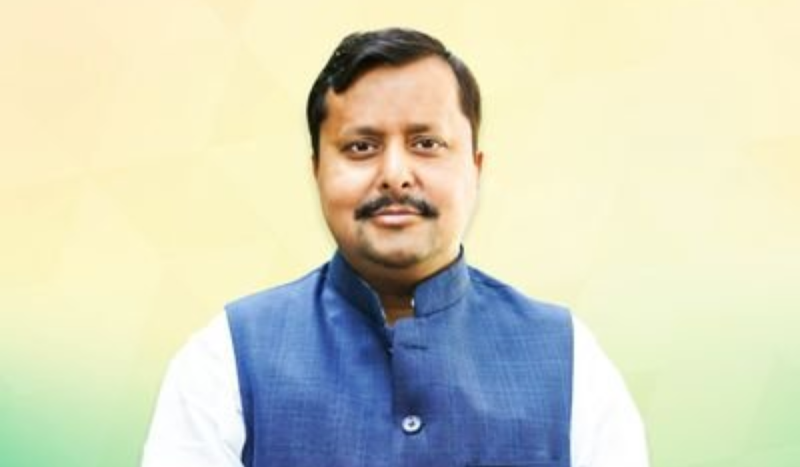
The Bharatiya Janata Party (BJP)’s Parliamentary Board decision on December 14, 2025, to appoint Bihar Minister Nitin Nabin as its National Working President marks a calculated pivot in the party’s leadership architecture. At 45, Nabin becomes the youngest individual to hold this role in BJP’s history and the first from Bihar, succeeding J.P. Nadda, who has helmed the party since 2020. This move, endorsed by Prime Minister Narendra Modi and Home Minister Amit Shah, ends months of speculation about a successor and underscores the Modi-Shah duo’s preference for low-profile, ideologically committed organizers over high-decibel public figures. Far from “sulking” over delays—as some observers have framed the pre-appointment limbo—this selection reflects deliberate caution, prioritizing internal consensus in a party that thrives on disciplined hierarchy.
Nabin, a five-time MLA from Patna’s Bankipur constituency and current holder of Bihar’s Road Construction portfolio in the Nitish Kumar-led NDA government, brings nearly two decades of grassroots experience. As the son of veteran BJP leader Nabin Kishore Prasad Sinha, he has risen through youth wings like the Bharatiya Janata Yuva Morcha (where he served as Bihar president) and key electoral roles, including in-charge for Chhattisgarh polls. His Kayastha background adds a caste-neutral sheen, avoiding overt dominance by upper-caste strongholds and signaling inclusivity within the party’s diverse social base.
For the BJP, Nabin’s elevation is a masterstroke in injecting fresh energy into its vast machinery, which spans over 18 crore members and operates across 47 states and union territories. The party has long emphasized “karyakarta” (worker) culture, and Nabin—described by Modi as a “hardworking karyakarta with strong organisational roots”—embodies this ethos. His appointment signals a generational shift, moving beyond the septuagenarian leadership tier (Modi is 75, Shah 60) toward a mid-40s cadre capable of sustaining the party’s momentum into the 2030s. This is particularly timely as the BJP gears up for state elections in West Bengal, Assam, Tamil Nadu, and Kerala by 2026, where organizational depth will be crucial against regional satraps.
Internally, it reinforces meritocracy over entitlement. Despite being “little known” nationally—a point echoed in media surprise and even opposition jabs labeling it a “parchee system” (quota-driven favoritism)—Nabin’s track record in Bihar’s hyper-competitive politics (winning Bankipur five times) and quiet election management roles prove his mettle. This could boost cadre morale, encouraging mid-level leaders to prioritize execution over visibility. However, his relative obscurity might initially test his authority in RSS-BJP overlaps or among veteran state units, requiring swift alliance-building with figures like Nadda (now freed for government duties). On balance, expect tighter cadre discipline and sharper focus on micro-strategies, like voter data analytics and booth-level mobilization, potentially reducing internal frictions seen in recent assembly poll setbacks (e.g., Haryana 2024).
In Bihar specifically, the gains are immediate and tangible. As the first Bihari in this role, Nabin fortifies the BJP’s NDA flank ahead of the 2025 state polls, where Nitish Kumar’s JD(U) remains a fickle ally. His local clout could streamline coalition coordination, countering opposition narratives of “outsider” dominance and aiding seat-sharing. Nationally, it projects the BJP as a pan-Indian force rewarding loyalty from underrepresented states, subtly countering accusations of Gujarat-centric bias.
Nationally, Nabin’s ascent sustains the BJP’s aura of inexorableness, projecting continuity amid Modi’s third term. It dilutes opposition unity narratives (e.g., INDIA bloc’s post-2024 cohesion) by showcasing internal renewal, while preparing the party for a post-Modi era—whispers of Nabin as Nadda’s full successor by January 2026 amplify this. Politically incorrect as it may sound, this rewards “quiet competence” in a democracy often swayed by charisma, potentially marginalizing flamboyant rivals like Rahul Gandhi or Mamata Banerjee, who rely on personality cults.
Critics, including opposition voices on X mocking the pick as opaque, highlight risks: If Nabin falters in high-stakes polls, it could expose BJP’s “dark horse” gambles. Yet, with Modi’s endorsement (“his energy will strengthen the party”), the floor is set high. In a polarized landscape, this appointment subtly advances BJP’s long game—federal expansion without fracturing its core Hindu-nationalist identity—poised to reshape 2026-2029 contests. For now, it’s less a Bihar windfall than a BJP masterclass in controlled evolution.
