

Nova Spectral AI Raises ₹21.15 Cr to Build India’s Own SWIR Image Sensor Chip for Defence ISR and Consumer Devices

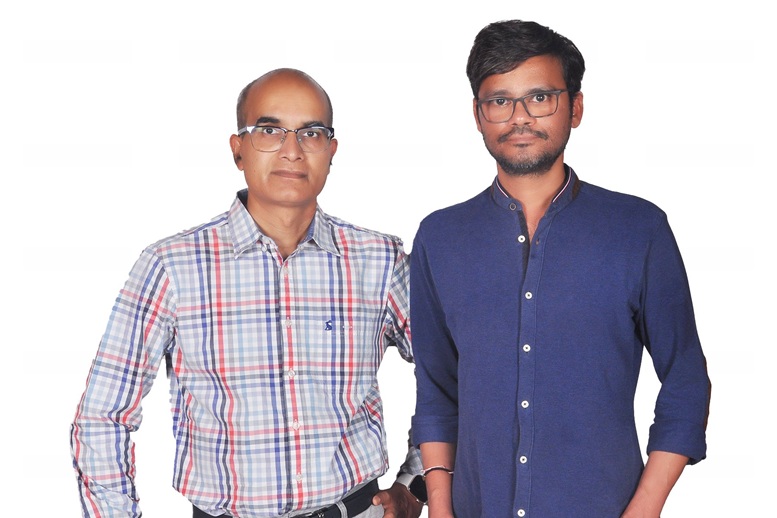
Bengaluru : Nova Spectral AI, the Physical AI Vision Company, has raised ₹21.15 Cr (about US$2.25 million) in a seed round led by Shastra VC, with participation from Equirus InnovateX Fund and angel investors. The company is building India’s first quantum dot short-wave infrared (SWIR) image sensor chip, a technology poised to become critical to machine perception. SWIR lets drones, surveillance platforms, robots, autonomous vehicles and other physical AI systems see, perceive and act intelligently in conditions where conventional cameras fail.
Nova Spectral AI’s technology builds on co-founder and CEO Dr. Anish Priyadarshi’s hands-on work in the field: he has built a complete quantum dot fabrication facility from the ground up and made working indium arsenide (InAs) sensors for SWIR imaging.
In modern warfare, the edge goes to the side that sees first and sees clearly. Recent conflicts across the world have put drones, intelligence, surveillance and reconnaissance (ISR) systems and border security on the front line. Along India’s long and difficult frontiers, these systems must deliver day-and-night, all-weather situational awareness. Drones are getting cheaper and being deployed in large numbers; the sensors that give them sight must keep pace.
Short-wave infrared is a proven way to give them that sight, offering drones, border surveillance and ISR platforms clearer vision at night and through smoke, haze, dust and light fog. Today, SWIR sensors rely largely on expensive indium gallium arsenide (InGaAs) technology, cost thousands of dollars and are largely imported, leaving India’s defence programmes dependent on foreign supply. As India pushes to build its own defence electronics and semiconductors, the case for making these sensors at home has never been stronger. That cost keeps SWIR confined to high-end defence, space and industrial applications, where price is a secondary concern, and has even kept InGaAs-based long-range lidar out of economical cars, sending carmakers to look for other options.
By leveraging existing CMOS-compatible manufacturing processes and InAs colloidal quantum dots (cQDs), Nova Spectral AI aims to make advanced infrared vision more affordable and scalable, targeting sensor costs up to 100 times lower than those of conventional InGaAs technology. In defence, where seeing clearly is a strategic advantage, this would take SWIR beyond high-end systems to a far wider range of drones and ISR platforms deployed by India, while reducing the country’s dependence on imported sensors. The same lead-free, affordable chip would also be viable for smartphones, wearables, robots and cars, opening SWIR to the wider physical AI market.
“India’s armed forces should not have to rely on an imported sensor to see at night or through smoke. We design and build our chip in India, with a roadmap to make the quantum dot materials and readout chip here too. We have an in-principle go-ahead to incubate at IISc Bengaluru, and this funding will build our team there to deliver a field-ready prototype within 18 months,” says Dr. Anish Priyadarshi, Co-founder and CEO of Nova Spectral AI.
“High-end infrared sensors remain among the most import-dependent parts of India’s defence electronics,” says Ashis Nayak, Partner, Shastra VC. “Nova Spectral AI is building a self-reliant alternative with a clear path from India’s defence to the global market, and we are proud to lead this round.”
Krishna Jha, Fund Manager, Equirus InnovateX Fund, adds: “A chip that is sovereign for India and priced for the world is a rare combination.”
“Built in India, for the world. Defence proves the chip at home. Mobile-phone economics takes it everywhere, into a fast-expanding physical AI market headed towards US$100 billion,” says Sanjeev Kumar, Co-founder and Chief Business Officer of Nova Spectral AI.
