


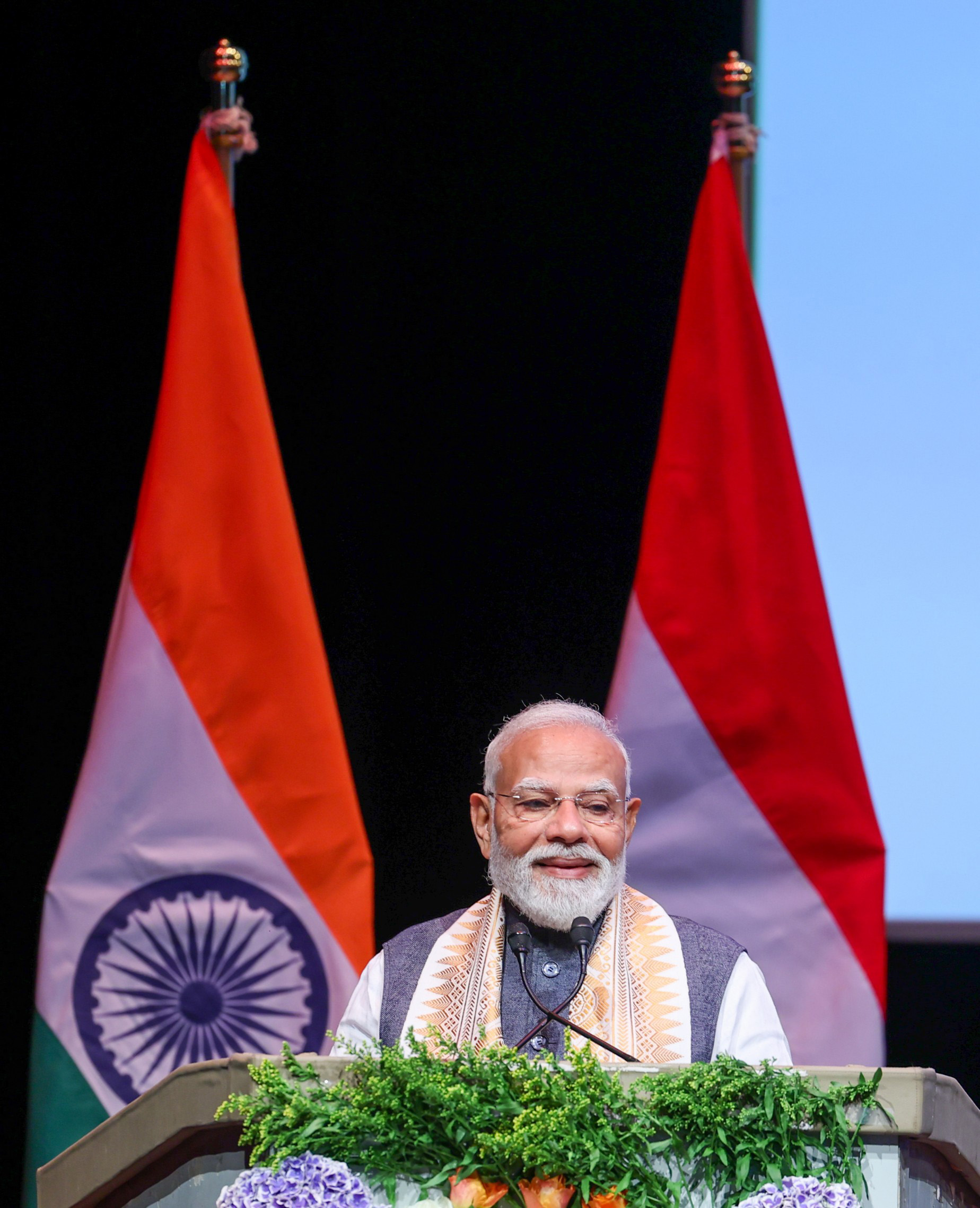
The two-day visit of Prime Minister Narendra Modi to Gothenburg, Sweden, beginning today, marks a historic milestone in the deepening alliance between New Delhi and Stockholm. At the invitation of the Prime Minister of the Kingdom of Sweden, H.E. Mr Ulf Kristersson, this engagement represents the third leg of the Prime Minister’s broader European tour and his first visit to the continent since the landmark India-European Union Free Trade Agreement (FTA) came into force earlier this year.
The visit to the industrial and innovation hub of Gothenburg is designed to review the entire gamut of bilateral relations and explore new avenues of cooperation in an era defined by rapid technological shifts and complex geopolitical challenges. The visit follows a high-growth trajectory in economic engagement, with bilateral trade reaching USD 7.75 billion in 2025 and Swedish foreign direct investment (FDI) into India totalling USD 2.825 billion between 2000 and 2025.
It may be noted that the foundation for this deepened engagement was laid during the Prime Minister’s 2018 visit to Stockholm, which was the first by an Indian leader to Sweden in over three decades. The 2018 visit also saw the hosting of the inaugural India-Nordic Summit, which established Sweden as a primary gateway for India’s engagement with the broader Nordic region, focusing on shared values and mutual prosperity. Since then, the bilateral relationship has moved beyond a simple buyer-seller dynamic toward deep-seated industrial integration and co-development.
Innovation and technology remain the bedrock of this modern relationship, with both nations identifying “perfect complementarity” between their economic strengths. Sweden’s status as one of the world’s most innovative economies provides a natural synergy with India’s massive digital talent pool and expanding startup ecosystem. A standout success in this domain is the Leadership Group for Industry Transition (LeadIT), a joint global initiative launched in 2019 to guide heavy, hard-to-abate industries toward a low-carbon economy. During the COP28 summit, the two Prime Ministers co-launched LeadIT 2.0, emphasising technology transfer, co-development, and an Industry Transition Platform to mobilise financial and technical support.
The economic aspirations of the 2026 visit are significantly supported by the implementation of the India-EU FTA. This “strategic breakthrough” provides unprecedented market access. The agreement is expected to catalyse a massive surge in India’s labour-intensive exports, such as textiles, leather, and engineering goods, while opening doors for high-tech services and investments from Europe. For Sweden, the FTA serves as a tool to reduce dependencies and build a rules-based framework for long-term growth. A unique highlight of the Gothenburg visit will be the Prime Ministers’ joint address to the European Round Table for Industry, a leading pan-European business leaders’ forum, alongside the President of the European Commission, H.E. Ms. Ursula von der Leyen. This interaction underscores India’s rising role as a trusted global partner and a decisive driver of the international economic order.
Defence and security cooperation have also evolved into a central pillar of the bilateral partnership, moving toward unprecedented industrial collaboration and support to “Make in India”. This trust is exemplified by a leading Swedish defence major establishing its first fully owned production facility in India under the MII program. Such investments are not only strategic but also serve as significant drivers of local employment and industrial capacity-building. Beyond conventional defence, the two nations are collaborating on the frontiers of space exploration, with Sweden officially participating in India’s Venus Orbiter Mission by providing advanced scientific instruments for energetic neutral atom analysis. This scientific partnership reflects a shared commitment to high-tech research and the peaceful exploration of outer space.
In conclusion, the Prime Minister’s visit to Gothenburg represents a transformative moment that links historical trust with future-ready economic and strategic goals. By focusing on green transition, AI, resilient supply chains, and emerging technologies, India and Sweden are not only addressing their own developmental needs but are also providing a model for North-South cooperation in a period of exceptional global danger. The synergy between the India-EU FTA, the LeadIT initiative, and deep industrial integration in defence ensures that the India-Sweden relationship will remain a defining pillar of the global strategic landscape for years to come. This mission reinforces India’s commitment to being in the “driver’s seat” of a new, inclusive, and innovation-led international order.
