

Sabotaging UDF Credibility: Congress Minister Bindu Krishna’s Reckless Gesture Threatens Coalition Unity

By Suresh Unnithan
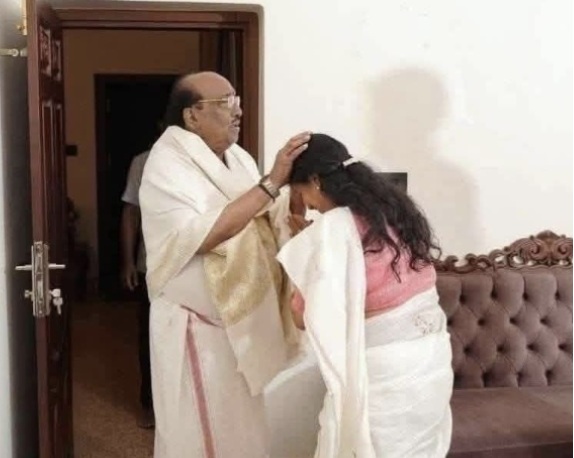
In a shocking display of political indiscretion that has rattled the UDF at the very outset of its tenure, Congress Minister Bindu Krishna has dealt a self-inflicted wound to the alliance. Her visit to Vellapally Natesan, General Secretary of the SNDP Yogam, seeking his blessings is nothing short of sabotaging the credibility of the UDF. As a senior leader from the Congress—the party that leads the UDF—her action carries even greater weight and responsibility. Instead of reinforcing the secular mandate and coalition harmony that delivered a thumping majority, she has undermined the very foundation of the alliance, creating deep fissures at a time when unity is paramount.
Vellapally Natesan’s conduct during the elections was overtly hostile. He unleashed disrespectful, abusive, and venomous language against V.D. Satheesan, the Congress leader who steered the UDF to victory and now serves as Chief Minister. Natesan predicted a humiliating defeat for the UDF, indulged in personal curses, and actively campaigned to prevent Satheesan from assuming power. Even after the results, his antagonism persisted. For a Congress minister in Satheesan’s cabinet to publicly honor such a figure is not mere naivety—it is an act of profound disloyalty to the coalition’s leadership and values.
The damage is especially severe regarding IUML coalition solidarity. Natesan has repeatedly directed communal venom against the Indian Union Muslim League, the second-largest partner in the UDF. He has questioned the League’s secular credentials, sought to polarize communities along religious lines, and attempted to weaken the alliance by targeting its key Muslim component. In this backdrop, Bindu Krishna’s decision to bow before Natesan is a direct affront to the IUML. By legitimizing a leader who viciously attacked a vital coalition partner, a Congress minister has fractured the mutual trust that binds the UDF. The IUML’s vehement criticism is wholly justified. When the leading party in the coalition fails to stand firmly with its allies against such hostility, it erodes the spirit of partnership that secured victory. This gesture has severely strained coalition solidarity, leaving IUML leaders and supporters questioning whether their contributions to the UDF’s success are truly valued.
This incident strikes at the core of the UDF’s secular identity. Voters gave the alliance a clear mandate to uphold secular values and resist divisive casteist and communal forces. Yet, by seeking blessings from someone known for injecting communal poison—particularly against the IUML—a Congress minister has blurred these lines. It creates the impression that the UDF, under Congress leadership, is willing to accommodate voices that sought to divide its own ranks. Such optics are toxic in a coalition where Congress holds the steering role. Any erosion of solidarity with the IUML risks alienating a crucial support base and handing opposition parties ready ammunition to portray the UDF as inconsistent and unreliable on secularism. In a multi-party arrangement led by Congress, coalition solidarity is the bedrock of governance, not an optional courtesy.
The growing demand within Congress and the broader UDF for Bindu Krishna’s immediate ouster from the ministry is therefore not only legitimate but essential. As a Congress minister, she bears a heightened duty to protect the alliance’s credibility rather than sabotage it through individual indiscretions. Her action has brought discredit to the entire UDF by appearing to reward hostility toward the Chief Minister and a key partner with reverence. Allowing this to pass unchallenged would encourage further indiscipline, weaken Satheesan’s leadership, and undermine the Congress’s authority as the leading party.
Defenders may label the visit as routine community outreach, but this rings hollow. Genuine engagement does not demand genuflection before a figure who abused UDF leaders and targeted coalition partners with communal rhetoric. True secular politics requires consistency, loyalty to allies, and fidelity to the mandate. The IUML’s strong objections highlight the depth of the rift and the long-term harm to inter-party relations.
The Congress high command and Chief Minister Satheesan must act decisively. Removing Bindu Krishna from the ministry would reaffirm the UDF’s commitment to secularism, internal discipline, and especially IUML coalition solidarity. It would send an unambiguous message that no minister—least of all from the leading Congress party—can unilaterally damage the unity that brought the alliance to power. Kerala’s voters, who backed the UDF for stable and principled governance, deserve better than such contradictions.
Bindu Krishna’s gesture has triggered an avoidable crisis of confidence. The demand for her ouster is critical to repairing the damage, restoring coalition trust—particularly with the IUML—and safeguarding the UDF’s future. Failure to act would only amplify the sabotage and jeopardize a mandate rooted in unity and secularism.
