


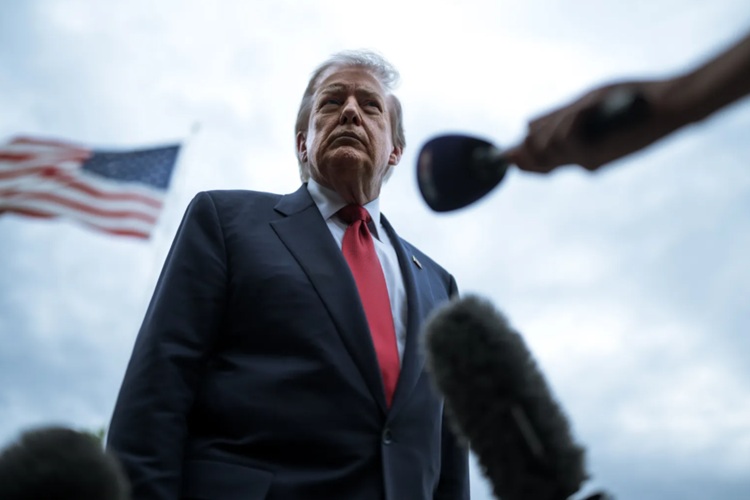
Washington, D.C: In a notable procedural breakthrough, the U.S. Senate voted 50-47 on Tuesday to advance a war powers resolution that seeks to force President Donald Trump to terminate U.S. military involvement in Iran without explicit congressional approval.
The vote marks the first time the chamber has moved forward with such a measure after eight attempts since the conflict—known as Operation Epic Fury—began in late February 2026. While largely symbolic given President Trump’s almost certain veto and the high bar for overriding it, the defection of four Republican senators underscores growing unease within the GOP over the war’s costs, duration, and lack of transparency.
Key Defections and Motivations
Sen. Bill Cassidy (R-La.) provided a pivotal vote to advance the resolution. Fresh off a primary loss in Louisiana—where Trump had endorsed his opponent—Cassidy cited concerns from constituents, including Trump supporters, about the open-ended nature of the conflict.
“While I support the administration’s efforts to dismantle Iran’s nuclear program, the White House and Pentagon have left Congress in the dark on Operation Epic Fury,” Cassidy posted on social media. “In Louisiana, I’ve heard from people… who are concerned about this war. Until the administration provides clarity, no congressional authorization or extension can be justified.”
Joining him were the usual Republican skeptics on executive war powers: Sens. Lisa Murkowski (R-Alaska), Susan Collins (R-Maine), and Rand Paul (R-Ky.). Sen. John Fetterman (D-Pa.) was the lone Democrat to oppose advancing the measure. Three Republicans did not vote.
Senate Minority Leader Chuck Schumer (D-N.Y.) hailed the outcome as evidence of building momentum: “Vote by vote, Democrats are breaking through Republicans’ wall of silence on Trump’s illegal war… Republicans are starting to crack.”
Bill sponsor Sen. Tim Kaine (D-Va.) called for substantive debate on the war’s rationale, strategy, end state, and costs to taxpayers.
Context of Operation Epic Fury
The U.S. campaign, launched in coordination with Israel, targeted Iran’s nuclear facilities, ballistic missile capabilities, navy, and defense infrastructure. The administration described it as a limited, decisive operation, claiming major objectives were achieved before a fragile ceasefire took hold.
However, the conflict has carried real costs: U.S. aircraft losses, service member casualties in related incidents, spikes in global energy prices, and ongoing regional tensions. Critics argue the mission lacked a clear post-strike plan, contributing to economic ripple effects at home.
Public Opinion: Plummeting Support and Broad Disapproval
Recent polling indicates President Trump’s overall approval rating has plummeted below 35% amid the war and associated economic pressures. Several surveys, including a Pew Research Center poll and Reuters/Ipsos, have recorded his approval in the low-to-mid 30s range — marking some of the lowest readings of his second term. Disapproval ratings have climbed to the low-to-mid 60s in these polls.
Majorities of Americans—often around 60-65%—say the decision to go to war with Iran was the wrong one, with concerns centered on economic fallout (gas prices and inflation), mission creep, and insufficient explanation of long-term goals. While Trump retains stronger support among Republican voters (typically 65-80%), independents and the broader electorate have turned sharply negative.
This marks a significant decline from earlier in his term and adds substantial pressure on Republicans heading into the midterm elections.
Limited Practical Impact
The resolution’s advancement is the first step in a long process. Even if it passes the Senate and House, President Trump is expected to veto it. Overriding that veto would require a two-thirds majority in both chambers—an improbable threshold in the current political environment.
Democrats see value in forcing repeated votes to highlight Republican divisions and compel public stances ahead of elections. For Trump and his allies, the focus remains on results: degrading Iran’s capabilities and pursuing “peace through strength.”
This vote is not a decisive defeat for President Trump, but it signals modest erosion of automatic GOP support on an open-ended conflict lacking full congressional buy-in. Combined with his approval rating falling below 35%, sustained economic pain or a fraying ceasefire could intensify pressure on the administration and congressional Republicans.
Whether this leads to meaningful congressional checks—or remains political theater—will depend on developments on the ground in the Middle East, the administration’s transparency, and the war’s ultimate legacy in American voters’ minds. For now, the executive branch retains wide latitude, but the Senate’s action ensures the debate over war powers and presidential accountability will not fade quietly.
