


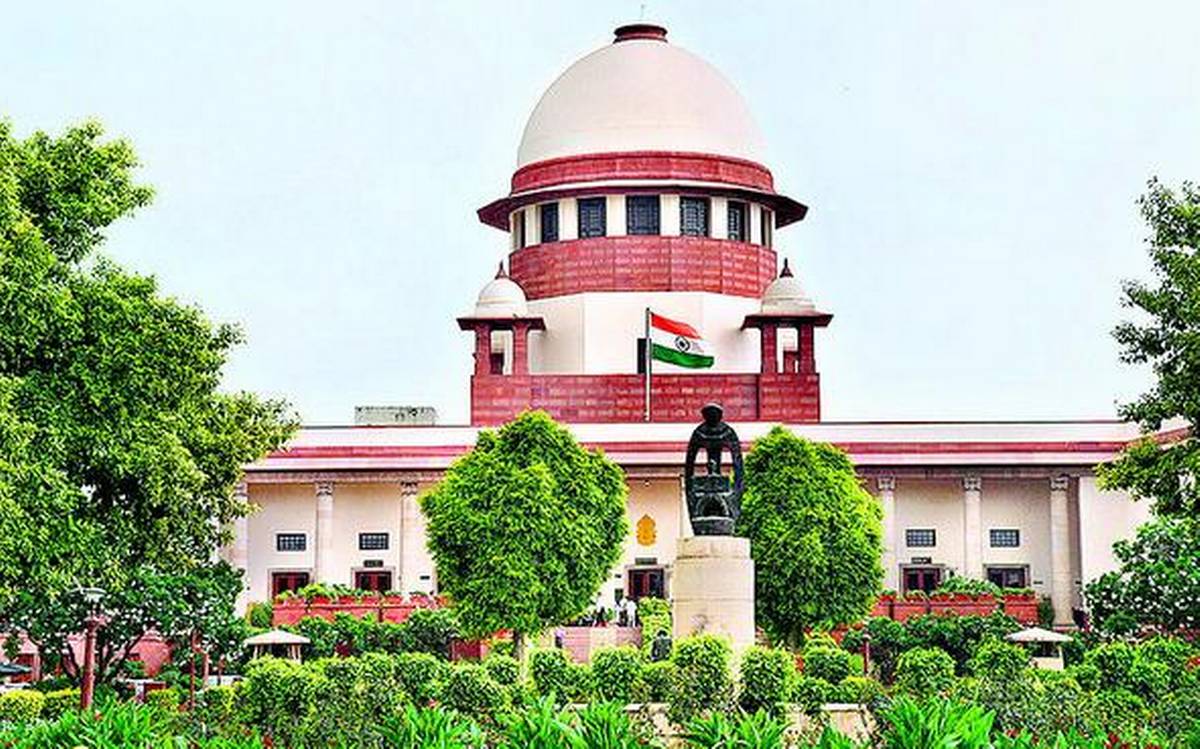
New Delhi: The Supreme Court on Monday strongly observed that the right to peaceful protest is a constitutional guarantee that cannot be denied and that mere agitation cannot justify police excesses, including lathi charges.
A bench comprising Chief Justice of India Surya Kant and Justices Joymalya Bagchi and V. Mohana made the remarks while hearing a batch of petitions alleging police excesses during the July 20 student protests at Jantar Mantar. The demonstrations, organised primarily by the Cockroach Janta Party (CJP), were held over alleged irregularities in the NEET-UG examination and other paper leaks in the education system. Protesters had attempted a “Sansad Chalo” march towards Parliament, during which Delhi Police used lathi charges, tear gas and other force. Several students and police personnel were reported injured.
“Right to peaceful protest is in the Constitution. Right to peaceful protest is absolutely guaranteed. That cannot be denied. Merely because there is agitation cannot justify police excess,” the Chief Justice observed. He further stressed that “just because there is an agitation does not mean there should be a lathi charge” and underlined that self-discipline is integral to the democratic process.
The bench indicated that it may consider evolving an all-India protocol for handling peaceful protests. The protocol, the court said, should ensure proper space for peaceful demonstrations while enabling authorities to deal with anti-social elements. “There should be a protocol when someone wants to agitate peacefully. Proper space for that. There is no impediment in that regard. But if there is any anti-social element that can be dealt with,” the CJI remarked, adding that the issue is not confined to Delhi alone and requires uniformity across the country.
The court also noted that injuries to police personnel are of equal concern and that any excesses—whether by police or protesters—must be examined independently and dispassionately. It directed that the matters be listed for further hearing.
The July 20 incident had drawn widespread attention, with video footage circulating of the police action and subsequent condemnation from the Supreme Court Bar Association, which described the force as “excessive and disproportionate.” The protests later contributed to the resignation of the then Union Education Minister Dharmendra Pradhan.The apex court’s observations reaffirm the constitutional protection of peaceful assembly while signalling a possible framework to balance protest rights with public order across India.
