


Bengaluru : Rural women in India possess valuable traditional skills and indigenous knowledge; however, these capabilities often remain confined to low-paying, informal, and subsistence-oriented livelihood activities. Persistent patriarchal socio-cultural norms, restricted mobility, and systemic barriers to financial literacy, digital inclusion, and market access limit their ability to translate these capabilities into viable, scalable, and formally established enterprises.
Skillpreneurship bridges the gap between skill acquisition and enterprise creation by equipping rural women to transform their traditional skills and locally available resources into viable, income-generating businesses. By strengthening entrepreneurial capabilities, financial autonomy, and market participation, it fosters sustainable livelihoods, stimulates grassroots economic development, and enhances women’s agency in household decision-making and community development.
Putting this philosophy into motion, the Entrepreneurship Development Institute of India (EDII), Ahmedabad has launched its Eco-Action Learning Centre (ELC) in Bengaluru, strengthening its efforts to empower rural women through entrepreneurship, technology-enabled skill development and sustainable livelihood opportunities. With more than 2,000 rural women trained and over 600 women having initiated new enterprises or expanded existing businesses across its Bengaluru and Manchar centres, the initiative is creating pathways for women to translate practical skills into income-generating ventures.
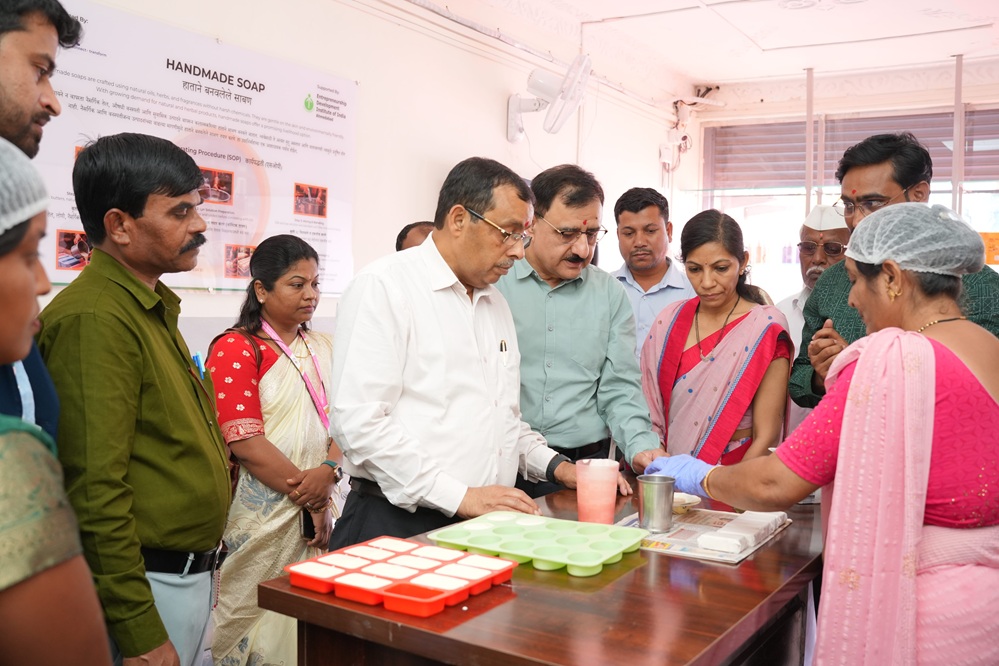
The Eco-Action Learning Centre provides rural women with hands-on training, access to relevant machinery and equipment, technology demonstrations and continued business support. The initiative focuses on helping women identify viable livelihood opportunities, develop market-ready products and build enterprises rooted in local resources and market demand.
Highlighting the impact of the initiative, Dr. Sunil Shukla, Director General, EDII, “At EDII, Entrepreneurship is a powerful pathway to rural women’s economic independence. Through the Eco-Action Learning Centre, we are equipping women with practical skills, technology and enterprise support to transform their capabilities into sustainable businesses.”
Sharing the vision for the initiative, Dr. Raman Gujral, Director, Department of CSR Partnerships, EDII said, “With 2,000+ women trained and 600+ enterprises launched and expanded, the ELC demonstrates the potential of entrepreneurship to drive grassroots transformation. At EDII, our vision is to scale this impact across India and create sustainable livelihood opportunities for more women.”
Across Bengaluru and Manchar, EDII has conducted 46 training programmes, offering rural women hands-on training in food processing, cold-pressed oil extraction, solar dehydration, bakery production and mushroom cultivation. Equipped with specialised machinery, solar dryers and facilities for hydroponics and sustainable fodder production, the centres combine practical skill development with entrepreneurship training to help women develop market-ready products and build sustainable businesses.
The programme’s impact is reflected in the journey of Ruba Treesa, a Bengaluru-based entrepreneur who established Roma Care, a brand offering handmade soaps, handwash, phenyl and other home-care products after undergoing EDII’s training programme. With support from the ELC, she refined her products, while WeAct helped her explore exhibitions, market linkages and e-commerce opportunities.
Another beneficiary, Shubhangi Jybeep Lagad from Bighi, Pune, established Shubh Swad Masale after training in value-added spice products. With EDII’s support in obtaining licences and completing statutory compliances, she expanded her home-based business into a local market shop. Today, her enterprise generates a monthly income of over ₹15,000.
Looking ahead, EDII plans to expand the ELC model to Chennai in 2027–28, targeting 2,000 women through skill development and enterprise support. By 2030, the institute aims to establish five Eco-Action Learning Centres across India and support more than 10,000 women, creating greater opportunities for rural women to build sustainable enterprises and strengthen local economies.
****
