

The Great Indian Election Tamasha: Blushes, Billions, and the Taxpayer’s Eternal Comedy Show

By Suresh Unnithan
In the flickering fluorescent glow of a small electrical shop in Pattazhy, Pathanapuram assembly constituency, Kerala, I was earnestly negotiating the price of a few LED bulbs. The shopkeeper and I were locked in that sacred Indian ritual of bargaining when the Congress candidate swept in like a minor monsoon, complete with a trailing entourage of workers looking suitably devoted.
“Namaskaram! Sukhamalle?” he boomed in warm Malayalam, his face lit up with the enthusiasm of a long-lost relative who had just spotted his favourite nephew. “Enta ivide? Family ellam sukhamano?
He rattled off the questions with the effortless familiarity of someone who had attended my wedding, named my children, and possibly attended my thread ceremony. I stood there holding two 9-watt bulbs like they were Olympic torches, completely floored. When I finally gathered courage and asked in polite confusion, “Sir, ningal enne really ariyumo?” his confident smile froze mid-bloom. A classic Kerala blush crept up his neck, turning his face the exact shade of a ripe mango left too long in the sun. There was an awkward two-second silence that felt like an entire power cut. One loyal worker quickly jumped in: “Suresh ji, sukhamllee?.”
Relief washed over the candidate like a sudden voltage surge. Another patented blushing smile—the kind that says “Vote for me and I’ll pretend we’re childhood friends forever”—and he patted my shoulder, blessed the shopkeeper with a few more generic well-wishes, and floated out to greet the rest of the street like a Malayalam movie hero exiting after a dramatic scene.
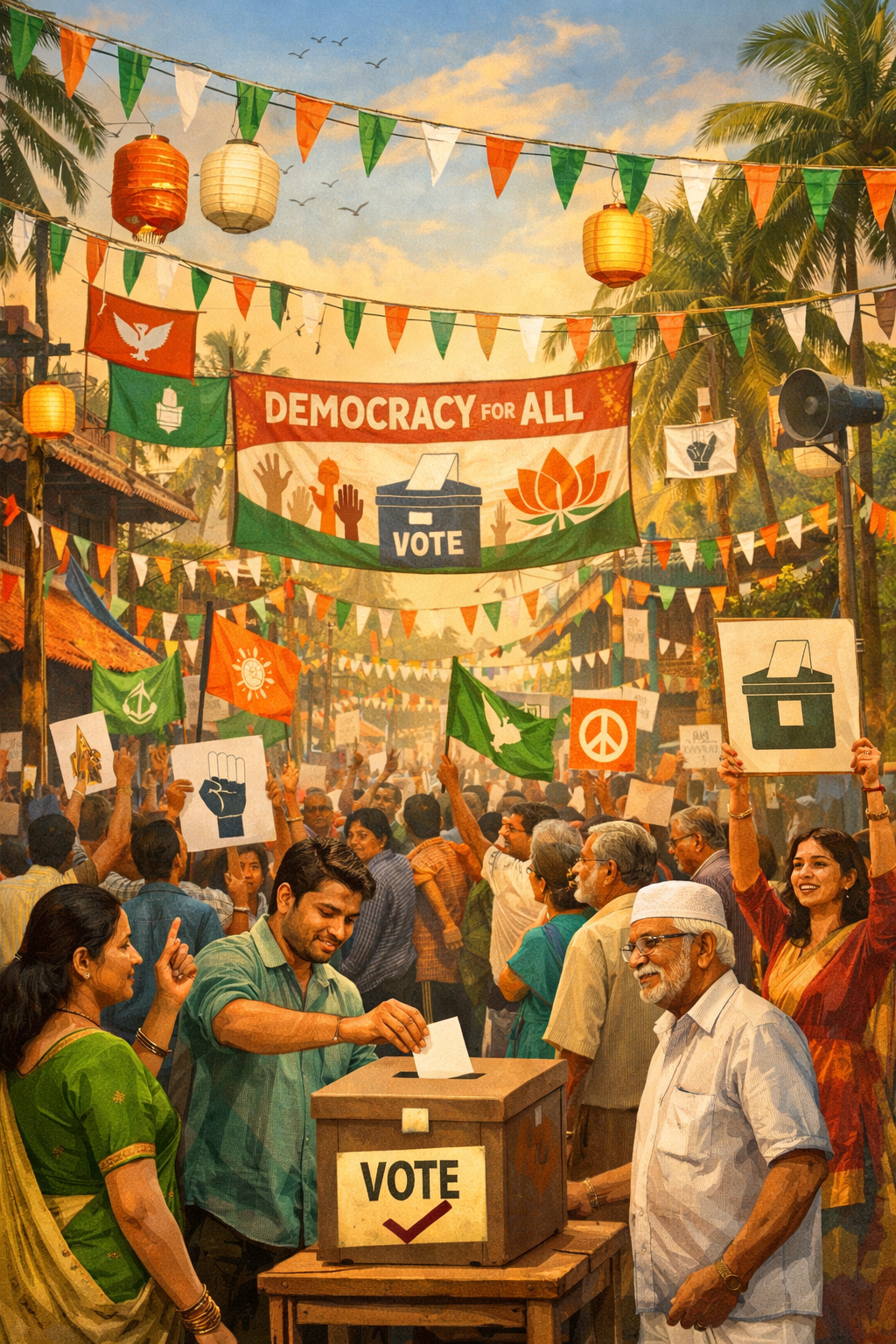
This, dear reader, is the true face of Indian electoral romance. Half a dozen states are heading to polls next month, and the air is thick with fake nostalgia, flex banners, and the faint scent of desperation mixed with coconut oil. Politicians are out canvassing like over-enthusiastic uncles at a family function who suddenly remember every cousin’s name after checking the family WhatsApp group. “We’ve known you since before you were born!” they declare, eyes twinkling with the sincerity of a fox eyeing a henhouse. It’s heartwarming. Or it would be, if it weren’t so hilariously hollow.
But let’s talk cash, because in India elections aren’t won on smiles alone—they’re won on crores. The Election Commission, in its adorable naivety, caps spending at ₹40 lakh per assembly candidate. Cute. Like telling a wedding planner in Kerala to keep it under one lakh. In practice, the money flows like the Periyar in monsoon: posters that could wallpaper the Himalayas, helicopter joyrides, paid crowds cheering like they’ve just won the lottery and “gifts” that mysteriously appear in voter hands. Where does it all come from? Not the candidate’s piggy bank. It’s the great Indian election economy—black money, “donations,” and IOUs that will be cashed the moment the winner takes oath.
So who really benefits while the tax-paying public foots the bill? Not you, the noble voter shuffling to the booth like a sleep-deprived zombie. The real MVPs are a cosy little club.
First, the politicians themselves—from the panchayat member dreaming of a new scooter to the MP eyeing a ministerial bungalow. Once elected, they swap the humble “servant of the people” act for a maharaja lifestyle. Official salary? A modest snack. Perks? A five-course feast on public money: bulletproof SUVs (because potholes are dangerous), palatial houses with AC strong enough to freeze the Arabian Sea, foreign “study tours” that suspiciously resemble family holidays, and lifetime pensions even if they warm the seat for five minutes. They contest not to serve, but to be served—on silver platters carried by the very taxpayers they once blushed at in shops.
Next, the media barons. Elections are their Diwali, Holi, and wedding season rolled into one glorious TRP orgy. TV channels run 24/7 “debates” that are basically shouting matches with better graphics. Print dailies swell with full-page ads. Digital platforms drown in sponsored “analysis.” Billions flow in while anchors solemnly intone, “Democracy is at stake!” Yes, and so is their quarterly bonus. Without elections, half these channels would be selling samosas by the roadside.
Then come the unsung heroes: the printer-bhaiyas and banner-wallahs. Their machines churn out millions of airbrushed smiles and slogans like “Development with Dignity” (translation: “Dignity for my bank balance”). The flex industry booms so hard it could single-handedly boost GDP—if only the posters weren’t destined to clog drains and provide nesting material for stray cows the day after results.
Add caterers for rallies, auto-rickshaw fleets for processions, chaiwallahs doing record business, and “event managers” who turn dusty maidans into temporary theme parks. Elections are Keynesian stimulus on steroids—except the multiplier effect multiplies mostly into the pockets of the connected.
And the voter? Ah, the eternal “andhabhakt”, the true hero of this farce. We know the game. We know the promises will evaporate faster than dew in a Kerala summer. Yet we line up dutifully, press the button for the hand, the lotus, or the hammer-and-sickle, often out of caste loyalty, fear, or sheer habit. “This time will be different,” we whisper, even as the potholes deepen and the power cuts lengthen. We cheerfully elect our future exploiters, and then complain about the loot. It’s collective masochism wrapped in a tricolour.
Elections have become less about choosing leaders and more about running the world’s most expensive recurring business. Billions circulate—for posters, ads, helicopters—greasing palms, egos, and the occasional Swiss account. The public gets temporary entertainment and false hope. The politicians get five years at the buffet. The media and printers get richer. The taxpayer? A fresh bill and another blushing smile.
As the campaign dust settles, one eternal truth remains: the faces may change, the parties may swap benches, but the hollowness stays the same. Indian elections prove Abraham Lincoln’s famous line with a desi twist—“Government of the people, by the people, for the people” has quietly become “Government of the politicians, by the politicians, and most definitely for the politicians.”
