

The Lease That Would Not Die: How Achutha Menon’s 1970 Blunder Locked Kerala Into Mullaperiyar

By Suresh Unnithan
Every monsoon, Mullaperiyar returns as Kerala’s unfinished argument with itself. This time it has returned with a ₹1 crore legal notice—and with the same old refusal to name the decision that locked the State into the bargain. Thiruvananthapuram-based practising advocate Jija James Mathew Kandathil and Jaihind TV have been served the notice after a live broadcast. She has decided to fight the case. The defamation file can wait. The 29 May 1970 papers cannot. Those papers, signed when C. Achutha Menon headed a CPI-led ministry, did not “revise rent.” They resurrected a colonial lease that should have been allowed to die. That was the blunder.
Downstream Idukki lives under a masonry dam it does not operate. Tamil Nadu lives on water it will not surrender. Courts recycle their own decrees. Parties perform panic. And every new safety committee orbits a deed Kerala itself signed, collected rent under, and has spent fifty years pretending not to own.
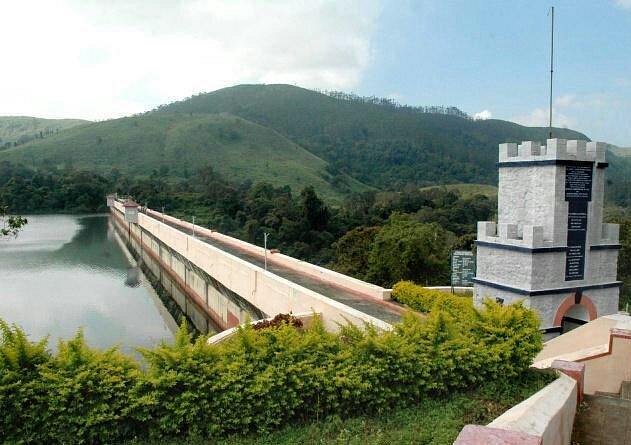
The 1886 lease was already a humiliation. The Maharaja of Travancore granted the Secretary of State for India a 999-year lease of about 8,000 acres in the Periyar basin so that a dam could be built and water turned westward into the Madras Presidency. Rent was a joke. Fishing rights went with the grant. Construction finished in 1895. The dam has always stood on land that became Kerala; it has always been run for irrigation that became Tamil Nadu’s.
After 1947 Kerala had a clean legal theory. The instrument was an act of state between a princely ruler and the colonial power. Section 7(1)(b) of the Indian Independence Act extinguished certain treaties and agreements with Indian States. The first Communist ministry under E.M.S. Namboodiripad in 1957 should have revoked the pre-Independence agreement between British rule and the Maharaja of Travancore. Talks in 1958, 1960 and 1969 showed that Thiruvananthapuram knew the window was open. No government used it. Left alone, the lease would have had a natural death. In 1970 Achutha Menon gave it life.
On 29 May 1970 two supplemental agreements were executed between the Governor of Kerala and the Governor of Tamil Nadu. The first is the killing text. Its recitals declare that “the rights, liabilities and obligations of the parties under the Principal Deed have devolved on the Government of Kerala and the Government of Tamil Nadu they being successors in interest.” That one sentence buried the lapse theory.
Tamil Nadu surrendered fishing rights; Kerala took them back, subject to not touching irrigation and power. Rent rose to ₹30 an acre, revisable every thirty years from that date. The option of another 999-year extension was deleted. Then came clause 3, the sentence that still rules the dispute: “Save as varied as aforesaid the Principal Deed and all the conditions and covenants thereof shall remain in full force and effect.”
The second instrument of the same day legalised Tamil Nadu’s hydro-electric use of Periyar waters with retrospective effect from 1954, leased another 42.7 acres for power works, and fixed a derisory tariff—₹12 per kilowatt-year up to 350 million units, ₹18 thereafter—with no review of the power terms.
This was not a tweak. It was a re-enactment. Kerala accepted successor status. Kerala accepted rent. Kerala left the 999-year term standing. That is not sloppy drafting. It is a political choice.
In Mullaperiyar Environmental Protection Forum v. Union of India (2006) the Court held that the 1886 instrument was an ordinary lease, not a political treaty beyond review, and allowed the water level to be raised to 142 feet after strengthening. The heavier blow fell in State of Tamil Nadu v. State of Kerala (Original Suit No. 3 of 2006, decided 7 May 2014). A Constitution Bench held that Kerala was estopped from pleading that the 1886 lease had lapsed—precisely because of the 1970 supplemental agreements. Those agreements ratified the original lease; Section 108 of the States Reorganisation Act continued the predecessor liabilities; the lease did not die under the 1947 Act; and Kerala could not take the rent and the fishery and then deny the contract. The 2006 Kerala statute that tried to cap the reservoir at 136 feet was struck down in its application to Mullaperiyar.
Kerala still argues that the 1970 instruments were not executed in the form required by Article 299 of the Constitution. Article 299 requires that a contract made in the exercise of the executive power of a State be expressed to be made by the Governor and executed on his behalf in the manner he directs. In the present context that is Kerala’s last technical card: a defect of form, it is said, can unmake the bargain. The 2014 Bench was not persuaded. Even assuming a formal defect, decades of performance, collection of rent, exercise of fishing rights, and the express words of ratification could not be wished away. A government that lived off the deed is poorly placed to say the deed never existed.
That is why 1970 is fatal. Estoppel by conduct, statutory continuity, Article 295 succession, and Article 131 as the forum for inter-State contractual rights all bite because Menon’s ministry recited successor status and declared the principal deed still in force. Refuse to sign in 1970, and those doctrines lose their teeth. Sign, and they become the cage.
Defenders call the package realism: fishery recovered, rent raised, the second millennium of lease struck out, power regularised for a token payment. That is bookkeeping. The asset surrendered was the right to treat 1886 as a dead colonial instrument. After 29 May 1970 the fight was no longer about whether a princely grant survived Independence. It was about whether a State that had signed as successor could walk away from its own signature.
The timing is the indictment. Achutha Menon headed a CPI-led coalition that needed Congress support and stability after the collapse of the EMS ministry. Interstate water files were treated as files, not as sovereignty. Mullaperiyar was handled as a rent revision and a fisheries swap. The 999-year clause was left standing because killing it would have required a confrontation the ministry would not risk. The papers do not explain the politics of that refusal. They do record its cost. That cost is written into every later judgment.
Every later government inherited the estoppel. Safety panels, a proposed new dam, the Dam Safety Act, fresh suits—none of them repeals clause 3 of the 1970 amending deed. Safety and title are different questions. A 130-year-old lime-surkhi masonry dam in a seismic belt is a legitimate fear. Courts have so far accepted that it can be strengthened and run at 142 feet, and that Tamil Nadu’s rights under 1886 and 1970 survive until a lawful substitute exists. A new dam built at Kerala’s cost does not automatically kill the lease.
Colonial injustice created the original imbalance. The Menon government nationalised it. It took a disputed pre-constitutional grant and restated it as a post-constitutional contract between two States. Every later cry that the lease lapsed in 1947 collides with Kerala’s own recital that the obligations had already devolved. The first Communist ministry should have revoked the agreement. No government did. In 1970 Menon revived it.
